
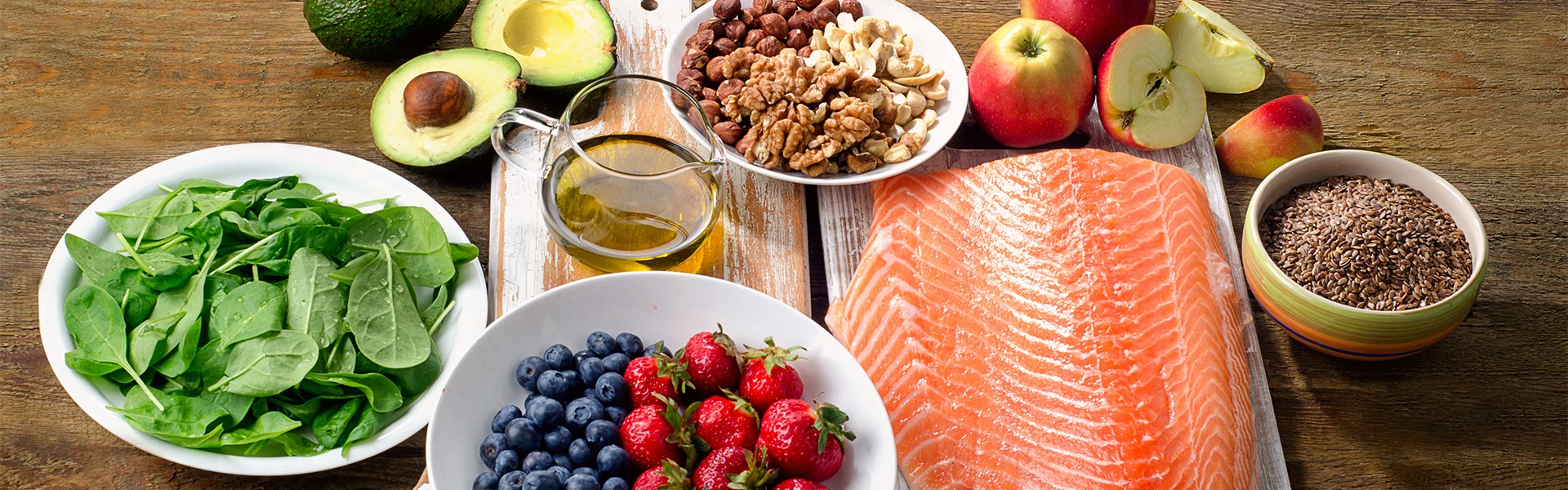
The top 10 foods for healthy skin
The health of our skin is influenced by various factors. In addition to sufficient sleep, relaxation and exercise, nutrition plays a major role. In this article, we present ten foods that can contribute to your skin health. First, we will give you a brief overview of the nutrients that play a role in this process.
The key points
- Vitamins A, C and E, B vitamins, omega-3 fatty acids, selenium, zinc, silicon, iron, manganese and proteins promote skin health.
- Water is the basic building block for healthy skin. The DGE recommends that adults drink at least 1.5 litres of water per day.
- The most important factor for health, and therefore also for healthy skin, is a varied and balanced diet.
- For healthy skin, eat avocados and nuts, sweet potatoes, spinach and berries, lentils and tofu, oatmeal, salmon and eggs.
The most important nutrients at a glance
The human skin is our largest organ, protecting the body from the sun, cold and pathogens. The skin is a reflection of our nutrient supply and is particularly sensitive to vitamin deficiencies. A lack of vitamin C reduces collagen formation, and a vitamin A deficiency causes our skin to dry out noticeably quickly. As the skin consists of 80 percent water, it is also important to drink enough fluids.
Vitamins A, C and E are antioxidants and have a protective effect on our skin. Vitamin A promotes skin cell renewal, vitamin C supports wound healing and vitamin E helps protect against UV damage.
B vitamins support the skin barrier and are essential for cell health. Biotin (B7), niacin (B3) and pantothenic acid (B5) are particularly important.
Omega-3 fatty acids and selenium have anti-inflammatory properties and strengthen the skin barrier.
Zinc and silicon promote skin regeneration and cell renewal.
Iron and manganese are important for cell metabolism and blood circulation in the skin.
Proteins provide the building blocks for collagen and elastin, which are responsible for the elasticity and structure of the skin.

Water – the basic building block for healthy skin
Water is the basic building block for healthy skin. The German Nutrition Society (DGE) recommends that adults drink at least 1.5 litres of water per day.
Drinking enough water helps your body maintain its moisture balance. It promotes skin elasticity and helps protect the skin from drying out.
In addition to water, unsweetened tea is also a good source of fluid.
The 10 best foods for healthy skin
The most important factor for health, and therefore also for healthy skin, is a varied and balanced diet.
We have put together a list of ten foods that are particularly rich in the nutrients mentioned above.
| Top 10 foods | Important nutrients | Further examples |
|---|---|---|
| Avocados | Omega-3 fatty acids, vitamin E, zinc and silicon | High-fat foods, e.g. olive oil, chia seeds and almonds |
| Nuts | Omega-3 fatty acids, vitamin E, zinc and protein | |
| Sweet potatoes | Provitamin A and vitamin C | Fruit and vegetables, e.g. carrots, peppers, leafy vegetables, apples and citrus fruits |
| Spinach | Provitamin A, vitamin C, silicon, iron and manganese | |
| Berries | Vitamin C and manganese | |
| Lentils | B vitamins, zinc, iron and protein | Legumes, e.g. chickpeas, beans and tempeh |
| Tofu | B vitamins, zinc, iron and protein | |
| Oats | B vitamins, zinc, iron and manganese | Whole grain products, e.g. brown rice and quinoa |
| Salmon | Vitamin A, omega-3 fatty acids and zinc | Animal-based foods, e.g. herring, poultry and dairy products |
| Eggs | Vitamin A, B vitamins, zinc and protein |
Avocados and walnuts – foods high in fat
- Avocados are rich in omega-3 fatty acids, vitamin E, zinc and silicon.
- Nuts, such as walnuts, contain high levels of omega-3 fatty acids, vitamin E, zinc and protein.
- Other suitable foods in this category include olive oil, chia seeds and almonds.
Sweet potatoes, spinach and berries – fruit and vegetables
- Sweet potatoes are high in provitamin A and vitamin C.
- Spinach is a good source of provitamin A, vitamin C, silicon, iron and manganese.
- Berries provide the body with vitamin C and manganese.
- Other suitable foods in this category include carrots, peppers, leafy vegetables, apples and citrus fruits.
Lentils and tofu – legumes
- Lentils are an excellent source of B vitamins, zinc, iron and protein.
- Tofu provides protein, iron, zinc and selenium.
- Other suitable foods in this category include chickpeas, beans and tempeh.
Oatmeal – whole grain products
- Oatmeal is a valuable source of B vitamins, zinc, iron and manganese.
- Other suitable foods in this category include brown rice and quinoa.
Salmon and eggs – animal-based foods
This might also interest you
Storing berries: what you need to know
Storing berries without loss of quality: How to preserve flavor and freshness. Tips for correct storage in the refrigerator or freezer. Find out more now.

Freezing tempeh – the perfect method
Learn how to freeze and preserve tempeh. Get all the information about this food’s nutritional values and storage.

Egg freshness test: how to check their shelf life
When you look inside your refrigerator, do you often ask yourself whether your eggs are still good to eat? We’ll show you some really easy egg freshness tests!