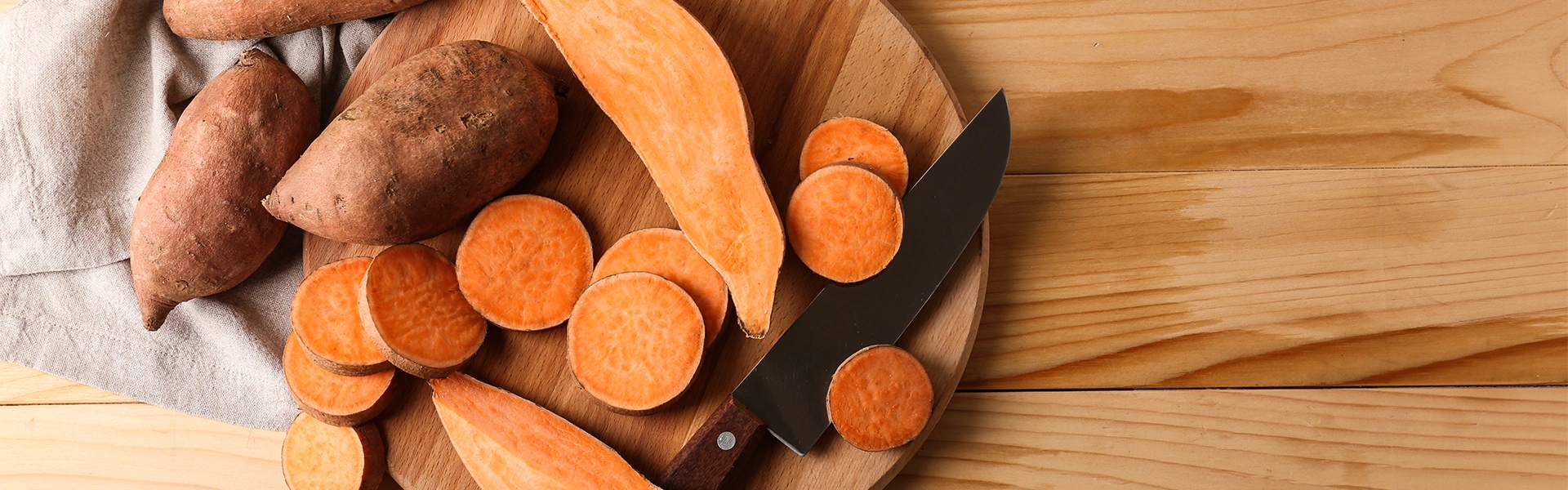
Sweet potatoes: nutritional values and calories of the vegetable
Sweet potato lives up to its name. The flavor really is sweet and it can still be used in a similar way to the potato. The sweet potato and its nutritional values are impressive: however, it's not as closely related to potatoes as its name might suggest. We've more to tell you about this all-rounder in the vegetable aisle.
Storage time*
| Larder compartment 12 °C | 30 days |
| Refrigerator compartment 7 °C | 12 days |
| Freezer compartment -18 °C | 1 month |
The key points
- Rich in nutrients: sweet potatoes provide complex carbohydrates, beta-carotene, vitamins C and E, as well as potassium, magnesium, iron and copper.
- Healthy: they have antioxidant properties, aid digestion and help regulate blood pressure.
- Calorie content: with 108 kcal per 100 g, it is relatively high in energy, but nutrient-dense and filling.
- Correct storage: stored in a cool, dark and well-ventilated place (optimally at 12 °C), it will remain fresh and nutritious for up to 30 days.
What vitamins and nutrients are found in sweet potatoes?
Sweet potatoes are particularly rich in starch and protein. The high mineral content including potassium, magnesium, iron and copper, but also vitamins E and C make sweet potatoes valuable nutritionally. Yellow-flesh varieties also contain a lot of vitamin A. In terms of calories, sweet potatoes have an energy content of 108 kcal or 452 kJ per 100 g, making them relatively high in calories compared to other vegetables.

How healthy are sweet potatoes?
With its nutritional values, the sweet potato is considered a real superfood and impresses with its high content of valuable nutrients. It provides many complex carbohydrates, which cause blood sugar levels to rise slowly and thus keep you feeling full for longer. Particularly noteworthy is its high beta-carotene content, a precursor of vitamin A, which can support vision and has antioxidant properties. The tuber is also rich in fiber, which can aid digestion, and potassium, which can regulate blood pressure. Due to their low fat content and high levels of secondary plant compounds, sweet potatoes promote a balanced, health-conscious diet with their nutritional values.
How can you preserve the nutritional value of sweet potatoes?
When buying, select only firm, bulging and undamaged tubers which feel heavy. Once you are home, you should store the sweet potatoes in a dark, cool and well ventilated place. Do not store sweet potatoes in a refrigerator under 10 °C otherwise unwanted browning will appear. However, higher temperatures of over 16 °C will cause the tubers to germinate and spoil prematurely. They can be stored for up to 12 days at a room temperature of around 20 °C.
Your sweet potatoes will keep for up to 30 days at 12 °C in the larder compartment of a Liebherr appliance. If you follow these simple storage tips, you will be able to enjoy sweet potatoes and their nutritional benefits for a long time to come.

Where does the sweet potato come from – and what makes the batata so special?
The potato originally comes from South America. It was the Spaniards who brought the tuber to Europe in the 15th century. Today, therefore, it is not only grown in the tropics and subtropics, but also in Italy, Portugal and Spain. The botanical name for the sweet potato is Ipomoea batatas and it's therefore also known as batata. It is the starchy tuber of the sweet potato plant. The skin of the sweet potato can have a light brown, reddish or even purple color. The inside of the tuber, on the other hand, tends to be white, yellowish or deep orange in color. The large root tubers can weigh up to three kilograms, the average weight, however, is only 300 g.
*All specifications given are to be considered as guideline values, and depend in each case on the type of food and on the proper storage without interruption of the cold chain from harvest/production through to the Liebherr appliance. Should food products have information about minimum shelf life, the date on the packaging always applies.