Pumpkin: nutrients and vitamins of this classic autumn vegetable
Whether providing gruesome grins for Halloween, a comforting soup, vibrant salads or much more: With its nutritional value and taste, pumpkin is a true all-rounder. It’s important to note, not all pumpkins are the same. Not all pumpkins are edible. Read on to find out which pumpkins can be healthy and the nutrients they contain.
Storage time*
| Larder compartment 12 °C | 60 days |
| Refrigerator compartment 7 °C | 13 days |
| Freezer compartment -18 °C | 12 months |
The key points
- Only eat edible pumpkins: Decorative pumpkins contain toxic bitter substances (cucurbitacins) and are not suitable for consumption – always check the label.
- Versatile varieties: hokkaido and butternut squash are low in calories and have tender flesh.
- Valuable nutrients: pumpkins provide potassium, iron, vitamins B, C and E, as well as secondary plant substances.
- Don’t underestimate the seeds: pumpkin seeds are rich in protein and unsaturated fatty acids and can be used to produce nutritious pumpkin seed oil.
Pumpkin – list of contents
Origin and non-toxic pumpkin varieties
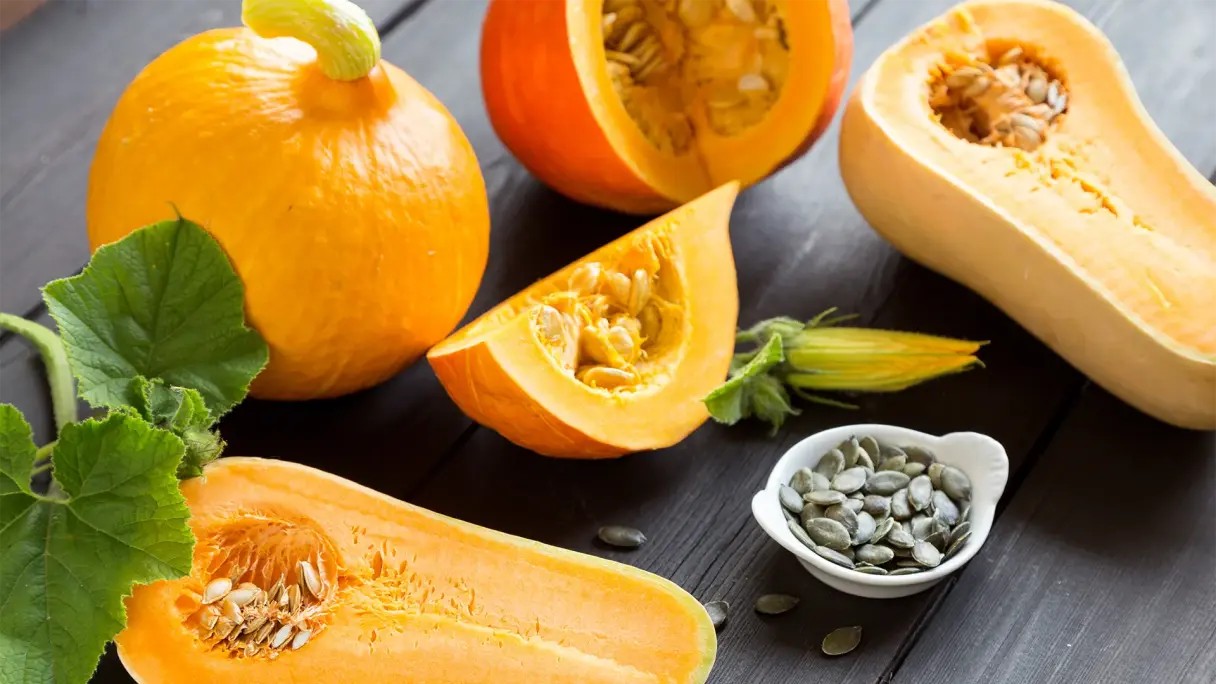
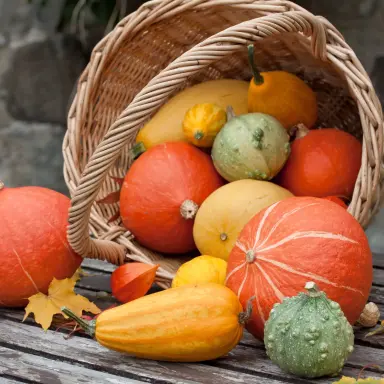
All 27 or so species of pumpkin originate from Central and South America. From these, around 800 different cultivars have been bred, of which over 100 are edible. What you may find surprising Botanically speaking, pumpkins are berries. Whether yellow, orange, green, white, black, spotted, striped, oval, round or pear-shaped, and whether warty or smooth, pumpkins hold even more secrets for us to discover.
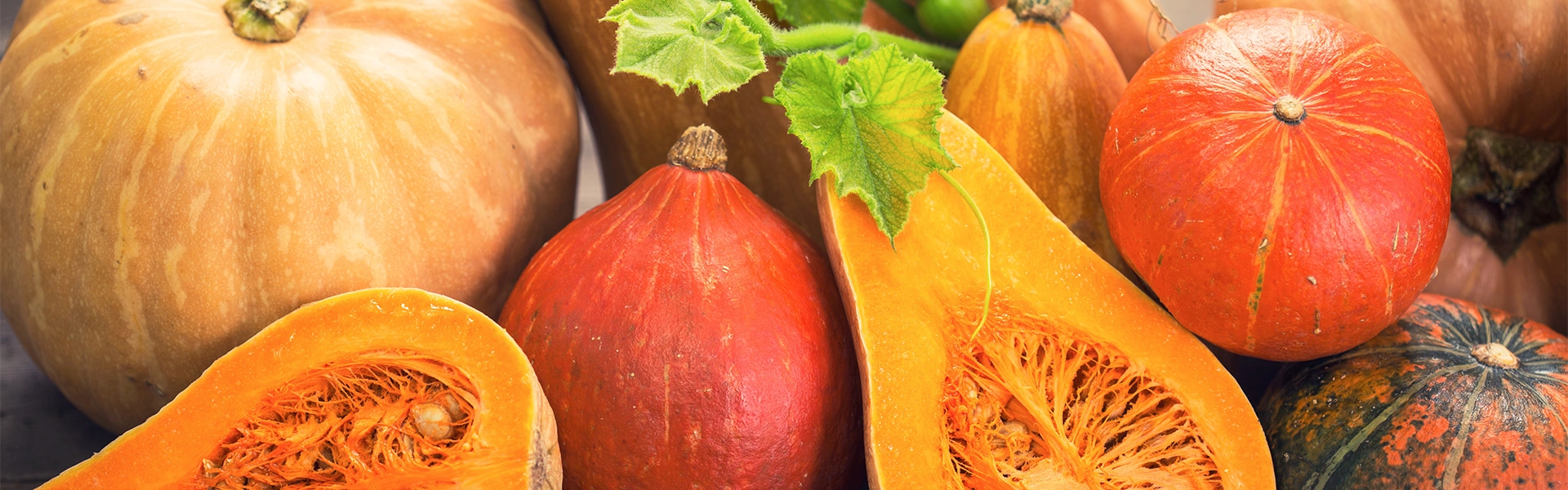
Hokkaido pumpkin is by far the most popular cultivar, this orange favorite wins fans with its delicious firm yet not-so-fibrous flesh. What’s more, Hokkaido pumpkins are very easy to prepare and very low in calories. This makes it ideal for calorie-conscious diets.
Butternut squash is also one of the most popular types of pumpkin due to its slightly nutty flavor and particularly tender flesh. The cream-colored skin is easy to remove, and the flesh is pleasantly low in fiber and buttery soft. Despite its rich flavor, butternut squash is relatively low in calories.
When buying pumpkins, always check whether they are edible or decorative pumpkins. As they contain bitter-tasting, toxic substances known as cucurbitacins, gourds are only suitable for use as decoration, and must not be confused with edible pumpkin. When cooked, the taste of these substances is often no longer discernible. You must therefore only eat varieties that you know for certain were being sold as edible.
The vitamins and nutrients in pumpkins
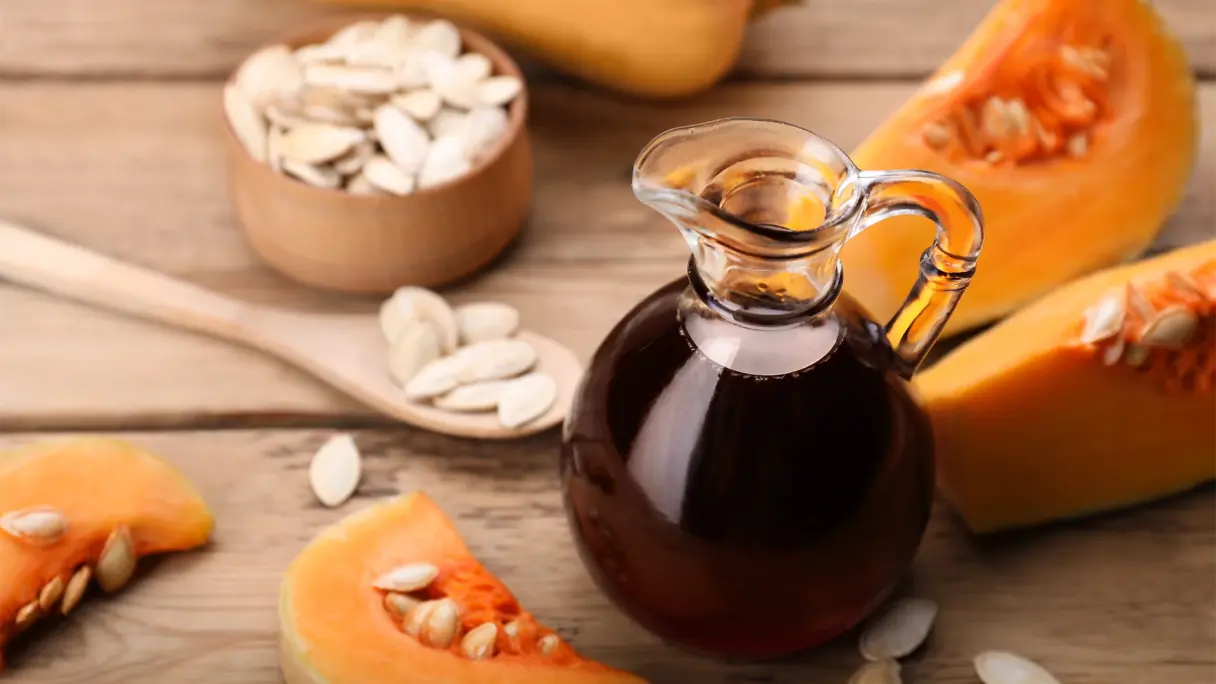
Pumpkins enrich our diet enormously, as they contain extremely valuable nutrients. Having an average of 25 calories per 100 g, this fruit vegetable is considered very low in calories, as 90 percent of it consists of water. Pumpkins also contain plenty of potassium, calcium, iron, phosphorus, zinc and selenium, as well as vitamins C, E and B. Pumpkins have a diuretic effect and, thanks to their high fiber content, also aid digestion. What is more, they are packed with carotenoids and other secondary phytochemicals. These substances have antioxidant properties, making them useful for boosting the immune system and protecting against illness.
The seeds are usually discarded. But they actually contain flavorful seed oil and valuable micronutrients. 100 grams of pumpkin seeds contain approximately 559 kilocalories. However, the pumpkin seeds also contain 30 grams of protein and just under 50 grams of fat, of which around 21 grams are polyunsaturated fatty acids, such as linoleic acid.
To enjoy pumpkins and their nutritional value for a long time, you should store them correctly. Pumpkins will keep in a refrigerator for around 13 days. If you only want to use half a pumpkin, the rest can be stored for up to a year in a freezer, ideally already chopped up – but uncooked. This allows you to enjoy pumpkin and its valuable nutrients all year round.
*All specifications given are to be considered as guideline values, and depend in each case on the type of foodstuffs and on the proper storage without interruption of the cold chain from harvest/production through to the Liebherr appliance. Should food products have information about minimum shelf life, the date on the packaging always applies.