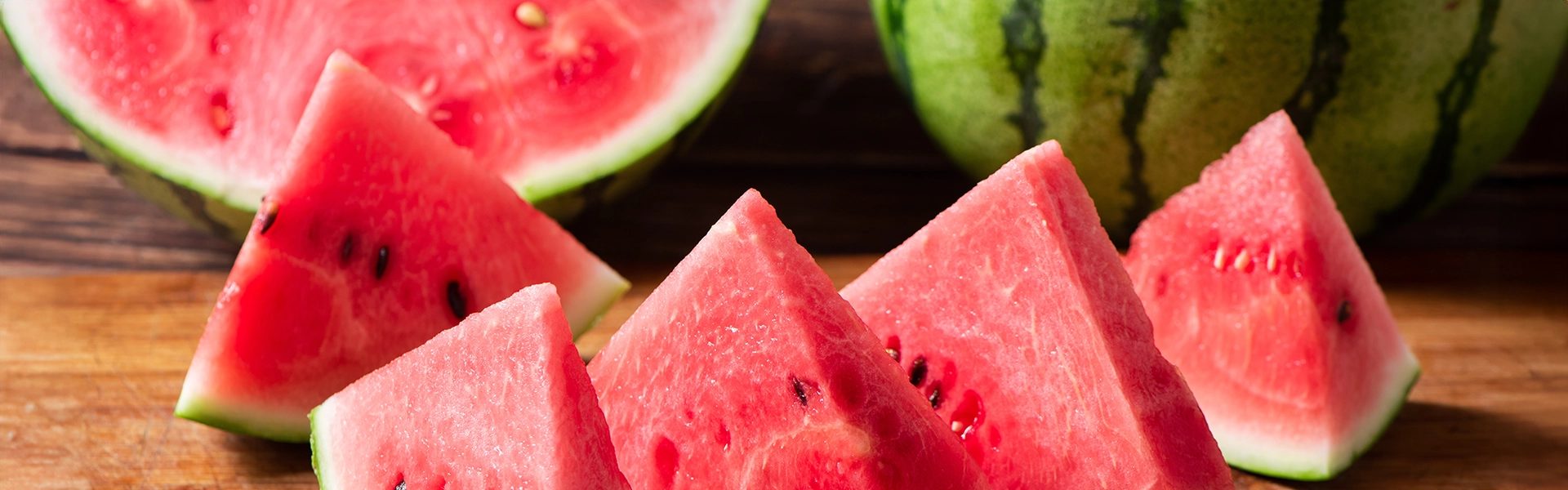
Watermelon – a healthy, low-calorie refreshment
With a high water content of around 95 %, watermelon is ideal for refreshment and helps to maintain fluid levels. In this article, you will learn everything about the nutritional values, vitamins and calories in watermelon, as well as tips on storage and preparation. We also clarify whether dogs can eat watermelon and how you can barbecue the fruit to perfection.
Storage time*
| EasyFresh safe 7 °C with air regulation plate | 10 days |
| Refrigerator compartment 7 °C | 8 days |
| Freezer compartment -18 °C | 12 months |
The key points
- Low in calories: only 24 kcal per 100 g.
- Rich in vitamins: contains vitamins A and C.
- Water content: consists of 95 % water.
- Storage: keeps fresh in the refrigerator for up to 10 days.
- Dogs: yes, they can eat watermelon, but without the seeds and rind.
Watermelon – list of contents
- Watermelon: cultivation, origin and the question – fruit or vegetable?
- Watermelon: nutritional values, and vitamins and their health benefits
- Are dogs allowed to eat watermelon?
- Storing watermelon correctly: tips for maximum freshness
- Barbecuing watermelon: a refreshing recipe for summer
- This might also interest you
Watermelon: cultivation, origin and the question – fruit or vegetable?

The watermelon originates from South Africa, where it grows in optimal climatic conditions. It requires plenty of sun and dry, sandy soil. It grows wild there and often has a bitter taste. The seeds are roasted and eaten as a snack.
Although watermelon (Citrullus lanatus) is often considered a fruit, botanically it belongs to the fruit vegetable family. It belongs to the cucurbit family (Cucurbitaceae), which also includes pumpkins, cucumbers and courgettes.
When buying watermelon, pay attention to the sound: a dull sound when tapped indicates that the melon is ripe. If, on the other hand, it sounds hollow and metallic, it is not yet ready for consumption.
Watermelon: nutritional values, and vitamins and their health benefits
Watermelon is not only refreshing, but also rich in nutrients. It contains vitamins C and A, which are important for the immune system and skin health. It also provides minerals such as iron and is low in sodium. A 100 g piece of watermelon has only 24 kcal. Their high water content ensures that you feel full quickly without consuming many calories. The antioxidants contained in watermelon can also contribute to kidney health.
Are dogs allowed to eat watermelon?
Yes, dogs can eat watermelon, but the seeds should be removed as they are difficult to digest. The fruit is a healthy, low-calorie treat for your four-legged friend and can help refresh them on hot days. Be sure to offer the watermelon in small pieces and without the rind to minimize the risk of gastrointestinal distress.
Storing watermelon correctly: tips for maximum freshness
To preserve the freshness of watermelon, it is recommended to store it in the refrigerator. It stays fresh for up to eight days in the normal refrigerator compartment, but for 10 days in the EasyFresh safe. Alternatively, it can be stored in a cool, dark cellar for up to two weeks or in the freezer for 12 months. Be careful not to leave the melon lying around for too long, as it can become mealy.
Barbecuing watermelon: a refreshing recipe for summer
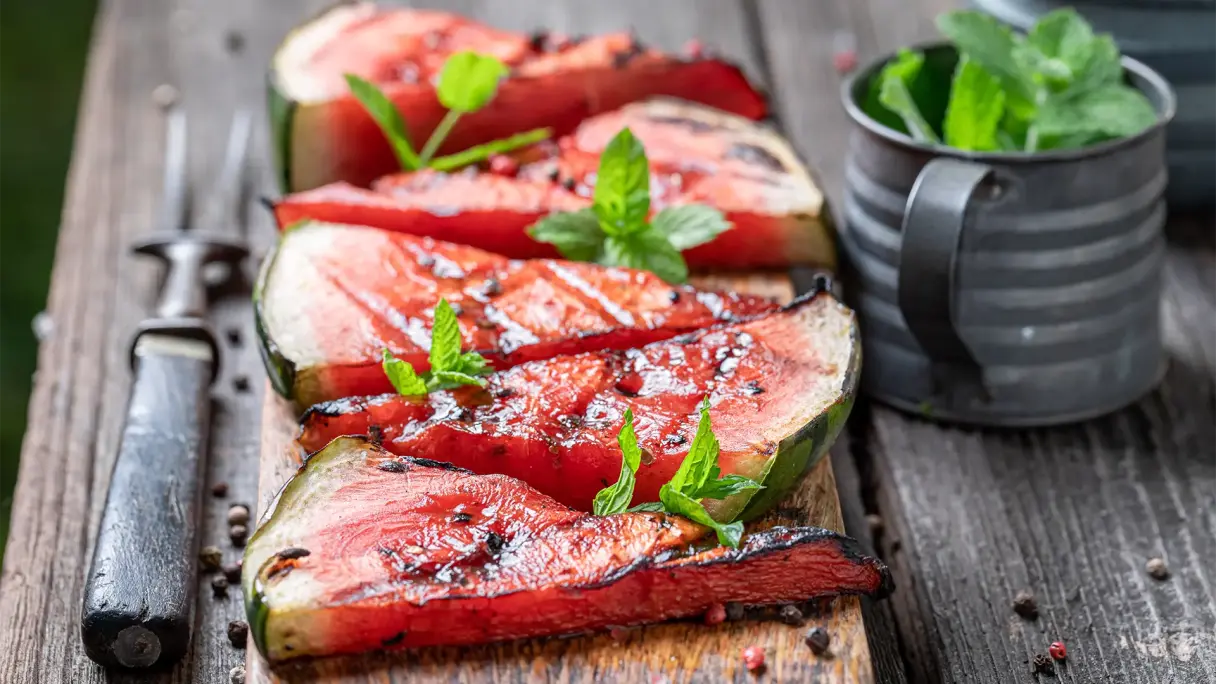
Barbecue watermelon for a unique taste experience! Cut the melon into thick slices and barbecue them for 2–3 minutes on each side. This intensifies the sweet flavor and gives the melon a smoky note. Serve the barbecued pieces with feta cheese or mint for a refreshing side dish.
*All specifications given are to be considered as guideline values, and depend in each case on the type of food and on the proper storage without interruption of the cold chain from harvest/production through to the Liebherr appliance. Should food products have information about minimum shelf life, the date on the packaging always applies.