Carrots are vitamin-rich all-rounders in your kitchen
Carrots are one of the most popular vegetables – not only because of their sweet, mild flavor, but also because of their health benefits. They provide important vitamins, are low in calories and versatile. Find out why carrots are so healthy, what nutrients they contain, when they are in season, and what you should look out for when growing your own.
Storage time*
| BioFresh Fruit & Vegetable safe just above 0 °C with high humidity | 80 days |
| EasyFresh safe 7 °C with air regulation plate | 50 days |
| Refrigerator compartment 7 °C | 40 days |
| Freezer compartment -18 °C | 12 months |
The key points
- Nutrient profile per 100 g: 25 kcal, 6 g carbohydrates, 0.2 g fat, 1 g protein, 3.6 g fiber
- Vitamins and minerals: rich in beta-carotene, vitamin C, B6, folic acid, potassium and magnesium
- Low in calories and satiating: ideal for a healthy diet and suitable for losing weight
- Health effects: support vision, skin regeneration, immune system, and digestion
- Use: versatile raw, cooked, fried, in juice, salad, stew, or cake
- Season: bunched carrots from May/June, washed carrots in summer/autumn, stored carrots from December
- Storage: without greens, cool, dark and moist
Nutritional values, calories and use
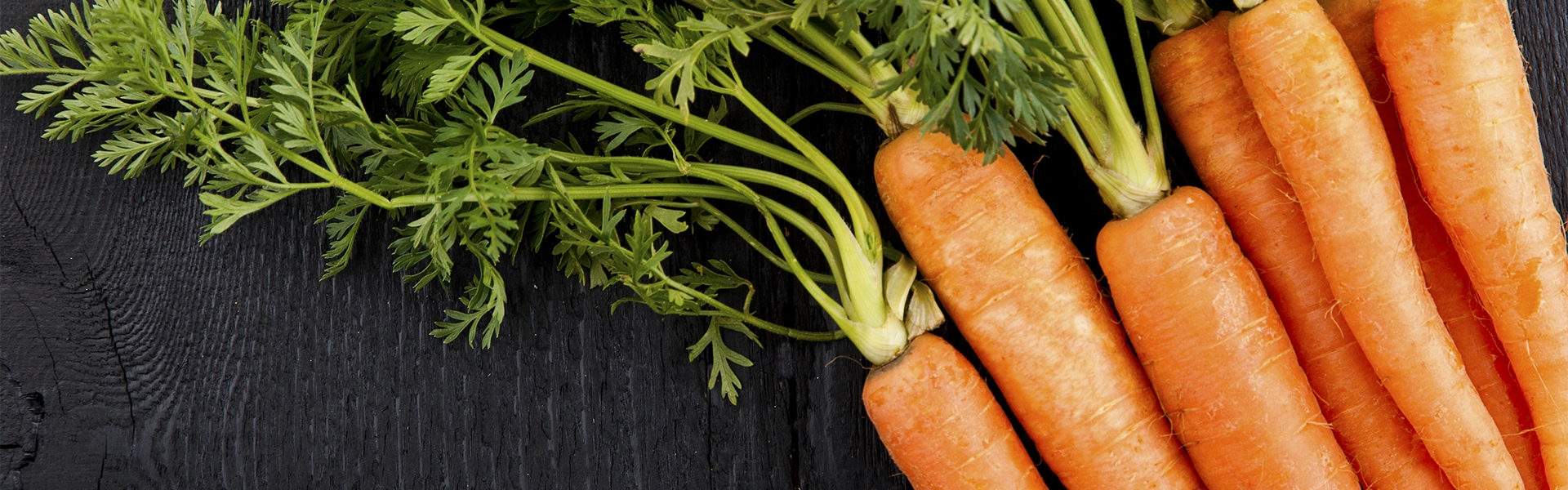
Carrots belong to the umbellifer family and are root vegetables. Some languages have multiple names for carrots, like “Karotte” and “Möhre” in German, but they’re all the same vegetable.
Carrots are particularly low in calories: 100 grams only contain around 25 kcal, which makes them an ideal part of a healthy diet. Their high water content of around 86 percent, paired with around 6 g of carbohydrates and a fiber content of 3.6 g, ensures a long-lasting feeling of fullness.
| Energy | Water content | Carbohydrates | Fat | Protein | Fiber |
|---|---|---|---|---|---|
| 25 kcal / 100 g | 86 g / 100 g | 6 g / 100 g | 0.2 g / 100 g | 1 g / 100 g | 3.6 g / 100 g |
They also contain valuable micronutrients such as potassium, magnesium and phosphorus as well as numerous vitamins, including beta-carotene, vitamin A and vitamin C.
| Vitamin | 100 g contains | Minerals | 100 g contains |
|---|---|---|---|
| Vitamin C | 7 mg | Potassium | 320 mg |
| Beta-carotene | 8.5 mg | Calcium | 41 mg |
| Vitamin A | 1.7 mg | Magnesium | 17 mg |
| Vitamin B1 | 70 μg | Sodium | 60 mg |
| Vitamin B2 | 50 μg | Phosphorus | 36 mg |
| Niacin | 600 μg | Iron | 0.4 mg |
| Vitamin B6 | 300 μg | ||
| Folic acid | 17 μg | ||
| Vitamin E | 1 mg |
The abundance of beta-carotene in particular – the precursor of vitamin A – is a hallmark of orange-colored carrots. As beta-carotene is fat-soluble, the vegetables should always be eaten with a little fat to optimize nutrient absorption. For example, in the form of a few drops of vegetable oil or a pat of butter. Cooking them also has advantages: heat breaks down cell walls, making nutrients more available to the body. In fact, cooked carrots are even healthier than raw ones in this respect.
Cooked carrots not only retain their sweetness, but heating them also brings out their full nutritional potential. However, this also changes the glycaemic index – this increases when carrots are cooked or pureed, which is why diabetics in particular are better off eating raw carrots.
The uses of carrots are extremely varied: they can be eaten raw, boiled, steamed, fried, or juiced. Whether in salads, soups, stews, as a vegetable garnish, in smoothies or even in sweet dishes such as cakes or jams – scarcely any other vegetable can be used in so many different ways. Their greens are also edible and can be cooked with them.

Carrots and their health benefits
Carrots are considered a real power vegetable for good reason. They provide the body with a wealth of nutrients, including beta-carotene, which is converted into vitamin A and helps to regenerate the skin and maintain vision. A vitamin-A deficiency often manifests itself in vision problems. However, carrots cannot improve eyesight.
Supplemented with vitamin K, folic acid, B vitamins, magnesium, iron, and secondary plant substances, such as carotenoids and bioflavonoids, carrots support the immune system, and have an antioxidant and anti-inflammatory effect.
Their high content of pectin – a soluble fiber – ensures good digestion and a long-lasting feeling of satiety, making them an ideal choice for healthy weight loss. Carrots can also help with diarrhoea. Acidic oligogalacturonides are formed from pectin during prolonged cooking. These oligogalacturonides can bind to the intestinal walls and prevent harmful bacteria from adhering there (e.g. E. coli, which often causes diarrhoea). Instead, they are excreted.
To keep carrots fresh and nutrient-rich for as long as possible, you should remove the greens immediately after purchase and store the roots in a dark, cool and moist place. You can wrap them in a damp cloth and store them in the refrigerator. Carrots keep for up to 40 days in the normal vegetable compartment, and in Liebherr’s BioFresh safe at just above 0 °C, they even stay fresh for up to 80 days. Sliced and steamed, you can freeze them and store them for around twelve months.
Carrots – seasonal and home-grown
The carrot season in Germany begins in June. Initially, it is mainly bunched carrots that are sold – tender, sweetish carrots with greens that are delivered fresh from the field directly to the vegetable shelves. These will remain available into the summer.
From late summer, washed carrots follow: these are thicker, more robust carrots without greens, which are washed, packaged, and sold after harvesting. They contain more fiber and less sugar than bunched carrots and are easy to store. These carrots continue to dominate the domestic supply well into the winter.
From December onwards, the particularly long-lasting late carrots, which have been stored in soil and wooden crates and are available throughout the winter thanks to their varietal characteristics, go on sale. With bunched, washed and late carrots, the carrot in its various forms accompanies us in the kitchen almost all year round
If you want to grow carrots yourself, you can start planting in March or April. The plants usually take three to four months to reach harvest maturity. Loose, stone-free soil, even watering, and regular hoeing promote healthy root growth. A partially shaded to sunny location is particularly important, although direct midday sun should be avoided in high summer if possible. With a little care and the right timing, you can harvest fresh home-grown carrots from summer right through to autumn.
FAQ
Carrots are healthy because they are rich in nutrients such as pro-vitamin A (beta-carotene), vitamin C and important minerals such as potassium and magnesium. These vitamins and minerals strengthen the immune system, promote vision and support skin regeneration. The high fiber content helps digestion and ensures a long-lasting feeling of fullness, which is beneficial for healthy weight loss. Cooked carrots are particularly rich in nutrients, as the heat makes the nutrients more readily available.
Carrots are low in calories (only 25 kcal per 100 g) and can easily be eaten every day without exceeding your calorie intake. A portion of around 100 to 150 g a day is enough to reap the health benefits. Their satiating effect makes them ideal for a balanced diet. However, you should not eat too much, as excessive amounts of beta-carotene can color the skin.
All the different types are botanically the same vegetable. In some places, there are different names used predominantly in different regions. But the different names refer to the same root vegetable.
The carrot is a vegetable, or more precisely a root vegetable. It belongs to the umbellifer family and grows underground.
Carrots were originally grown in colors such as purple, yellow, red or white. These varieties originated mainly in regions such as Persia (modern-day Iran and Afghanistan), where the first cultivated carrots originated over 1000 years ago. The orange carrot as we know it today was probably deliberately bred in the 17th century in the Netherlands. There is a popular, perhaps apocryphal theory that Dutch breeders developed the orange carrot as an homage to the House of Orange-Nassau, i.e. the Dutch royal family. The orange variety then spread throughout Europe.
*All specifications given are to be considered as guideline values, and depend in each case on the type of food and on the proper storage without interruption of the cold chain from harvest/production through to the Liebherr appliance. Should food products have information about minimum shelf life, the date on the packaging always applies.