
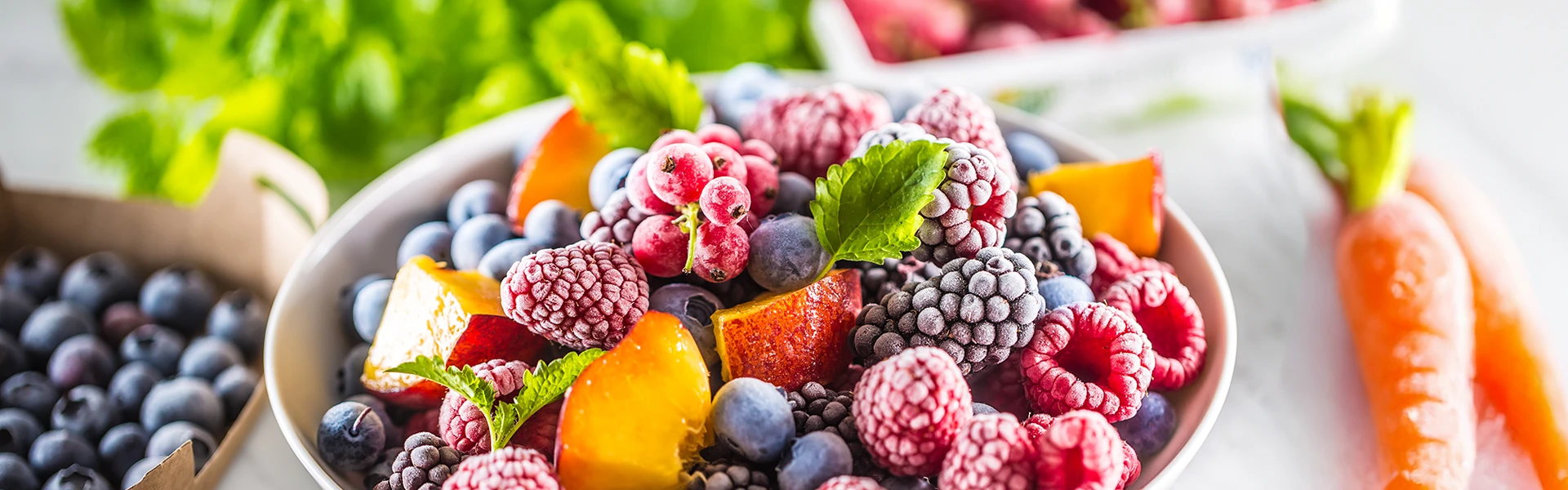
Fresh or frozen fruit and vegetables?
When we eat fruit and vegetables, we want to consume something delicious with as many healthy nutrients as possible. In the supermarket, we’re spoiled for choice: Should we choose fresh or frozen fruit and vegetables? Find out which products really contain more nutrients and why this is the case in the article below.
The key points
- "Fresh" doesn't necessarily mean fresh: fruit and vegetables sold in supermarkets lose valuable vitamins when they’re transported long distances.
- Frozen products often contain more nutrients: shock freezing is the best way to preserve vitamins and minerals.
- Correct storage matters: fresh produce is kept fresh for longer with the appropriate refrigeration/freezing technologies.
- Gentle preparation: steam rather than boil and place frozen vegetables straight from the freezer into the pan to prevent any loss of nutrients.
Fresh or frozen fruit and vegetables – list of contents
- From field to fresh produce aisle: vitamins in frozen fruit and vegetables are often richer in nutrients
- What’s surprising is that frozen fruit and vegetables are actually healthy!
- Frozen vegetables vs. fresh vegetables? Our preference is home-grown
- Whether you opt for fresh or frozen fruit and vegetables: preparation is everything!
- This might also interest you

From field to fresh produce aisle: Vitamins in frozen fruit and vegetables are often richer in nutrients
If you compare the vitamins in fresh and frozen fruit and vegetables, you’ll quickly realize: “fresh" doesn't necessarily mean fresh. The fruit and vegetables straight from the fresh produce aisle may seem healthier compared to frozen vegetables, but in most cases they have already travelled many miles. Food has the highest nutrient content immediately after it is harvested. It’s important to note that the goods don't end up on our plates straight away, but instead have to endure lengthy detours via the wholesaler. It's from there that they then make their way to the supermarket. Fruit and veg is often stored here for several days before it ends up in our shopping basket.
The problem with this long journey is that the vitamins, which are sensitive to light, oxygen and heat, are lost during transport. In the supermarket, for example, spinach may already contain up to 50 % less vitamin C than immediately after harvesting. If stored incorrectly, mould may also form. That’s why it’s crucial to store fresh produce correctly to make sure that fruit and vegetables retain their valuable vitamins. The refrigerators from Liebherr offer the ideal solution: technologies like BioFresh keep food fresh for longer with the optimum temperature and humidity. DuoCooling keeps refrigeration and freezing separate. This ensures that food doesn’t dry out and no odours are transferred.
What’s surprising is that frozen fruit and vegetables are actually healthy!
Despite the common assumption that frozen fruit and frozen vegetables are less healthy, they contain lots of nutrients. That’s because the fruit and vegetables are blanched with a little water immediately after harvesting and then shock frozen using the quick-freezing method. So, the delay between harvesting and freezing is often just a matter of hours. Freezing preserves the vitamins and nutrients and on route to the supermarket none of this nutritional goodness is lost. Shock freezing also means that the taste and consistency stays the same.
However, under no circumstances should the cold chain be interrupted. If the frozen fruit and vegetables form a large clump, then this indicates that at some point they have already been defrosted.
Frozen vegetables vs. fresh vegetables? Our preference is home-grown
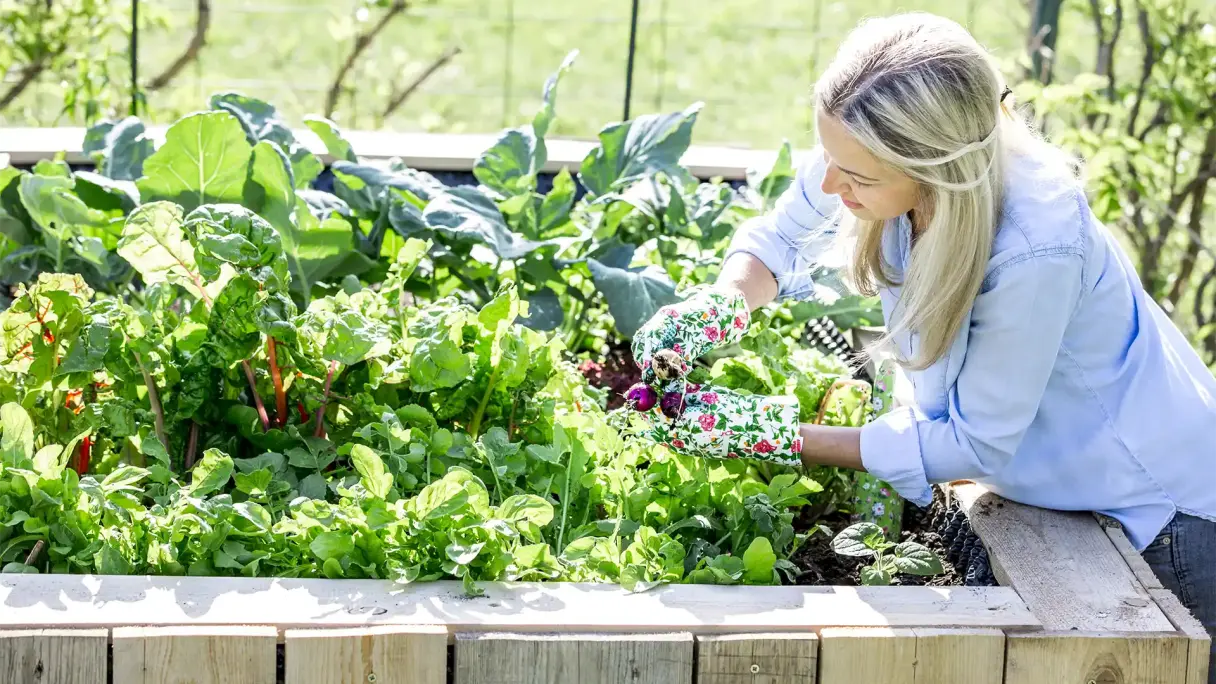
Fruit and vegetables grown at home always taste better! When freshly harvested, they also have the highest nutrient content. This also means you can also be certain that neither chemical pesticides nor genetically modified seeds were involved. If you have a particularly abundant harvest, freeze everything you can’t eat immediately in your freezer so that you’ll still be able to enjoy your vitamin-rich harvest in the winter.
Whether you opt for fresh or frozen fruit and vegetables: Preparation is everything!
When it comes to the question of whether frozen fruit and vegetables are healthier than fresh ones, it’s all about the preparation. If you boil the vegetables for too long and use too much water, almost all the important nutrients are lost. It is best to steam them in a water bath to preserve as many vitamins and minerals as possible. You should put the frozen vegetables directly into the pan or pot without defrosting and do not let them defrost at room temperature. To make sure frozen fruit is still healthy to eat, it’s preferable to defrost it gently in your refrigerator.
This might also interest you
Storing fruit and vegetables – refrigerator or room temperature?
Find out how to store fruit, how to keep fruit flies away and how to store vegetables correctly.

Organizing the refrigerator: clear, efficient and smart
From reusable containers to temperature zones: Organising the refrigerator, saving space and keeping food fresh for longer.
Superfood list for the summer – our top 10
Find out what’s behind the fruits and seeds on the superfood list. Are they really that healthy? Everything you need to know about local and regional alternatives.