
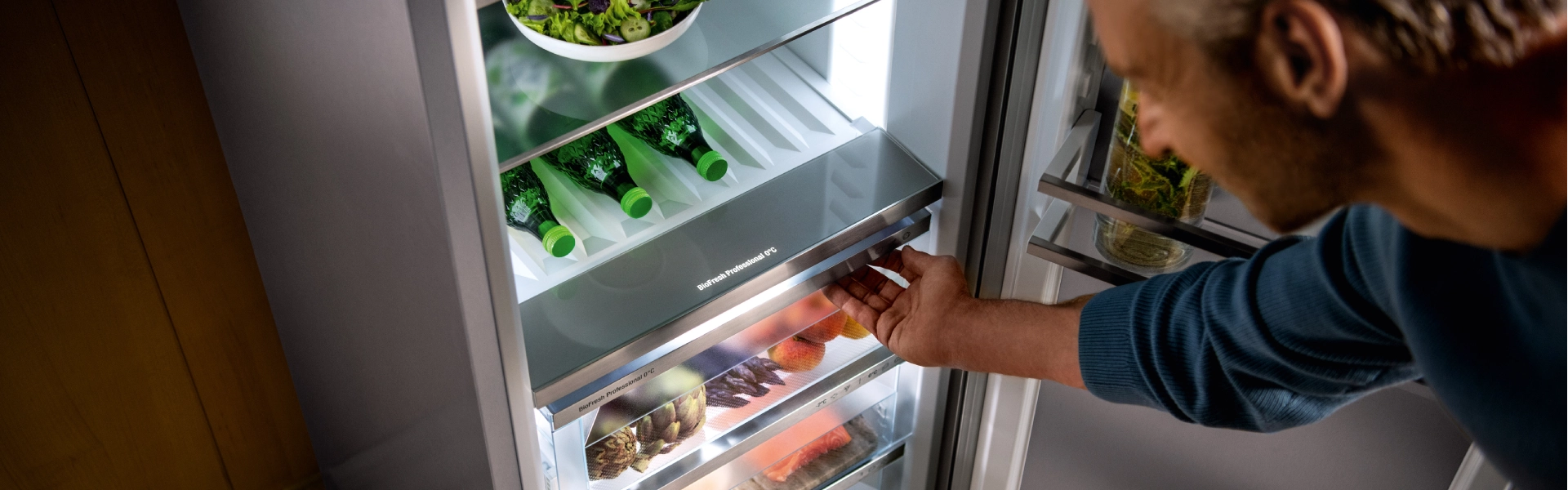
Organizing the refrigerator: clear, efficient and smart
Organizing the refrigerator: your refrigerator, your rules! With our help, you will learn all the tips and tricks to create a personal organisation system for your refrigerator that suits your lifestyle. Save yourself time in your everyday life and see how your food stays fresh longer and you throw out less.
The key points
- Use reusable containers to organize your refrigerator and dispose of plastic packaging and cartons from the supermarket.
- Put frequently used products, products that will expire soon, or products you want to use soon at the front where you can see them.
- Further back you can store new purchases and products with a longer shelf life.
- Use vinegar or lemon juice and water to make an antimicrobial and environmentally friendly cleaner.
- Clean the refrigerator at least every two months.
- Only use clean cutlery when removing portions of food.
Organizing the refrigerator means: using space efficiently
With the help of a well organized refrigerator, you can use the available space efficiently and keep a clear view of what you have at all times.
Organizing the refrigerator starts at the supermarket: in general, to avoid packaging waste, you should refrain from using plastic packaging, boxes and trays from the supermarket and, if possible, replace them with a reusable alternative that you have brought along. For a better overview, you can note the product and date of purchase on the outside.
Clear storage containers let you organize the contents of your refrigerator clearly and efficiently. And there is no one-size-fits-all solution. Each household has different preferences, which is why a personal organisation system is so important. There are a wide range of organizing systems and containers to suit your specific needs. Choose between baskets, boxes, turntables and stacking aids in different shapes and sizes.
Start by putting pre-cooked meals and leftovers in resealable boxes. Opened products such as cheese or sausages can also be stored more visibly if they are transferred and not stored in open plastic packaging.
Modern storage containers keep in smells, are suitable for microwaves and dishwashers, and can often also be stacked. Use transparent glass containers to see what’s inside at a glance, or colorful versions to color code your individual system.
Store the products you use most often at the front. You should also place products that you want to use up in the near future in the immediate field of vision to better remember them. If you buy a new yoghurt and have older ones in the refrigerator, the new yoghurt goes to the back so that you have the older ones at your fingertips. And leave some space to store food as you go, such as leftovers from dinner, or a deal you didn’t want to miss.
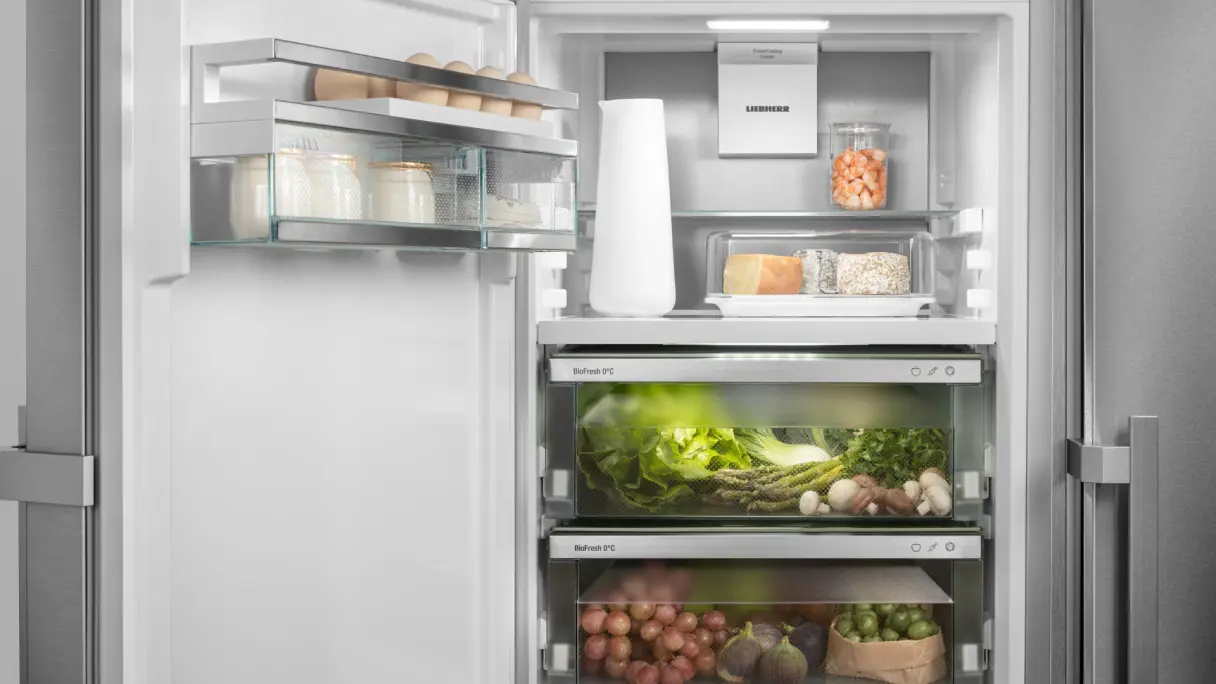
Organizing the contents of your refrigerator
Always try to store each food group in an assigned location. Sort your food according to the storage conditions. Each refrigerator model has different temperature zones, depending on its design and age. A Liebherr refrigerator with BioFresh safes, which offer optimal storage conditions (humidity and temperature) for fruit and vegetables as well as milk and meat products, is set out differently to a refrigerator without freshness technology. You will find more details on the storage conditions and infographics here: put things in the right place. Enjoy for longer.
When you organize your refrigerator as described in the first sections of this article, your refrigerator won’t just always look tidy; you’ll also be able to find all the food quickly and easily. Forgotten products in the back corner are now a thing of the past.
One area that is often forgotten is the freezer compartment. This can be an especially chaotic area in many households. If you have multiple freezer compartments, we suggest sorting items by food groups: fruit and vegetables in one, meat and fish in another and fruit and ice cream in their own compartment. We also recommend using containers or freezer bags here too, and labelling them with the date and contents.
Reorganizing the refrigerator
Reorganizing your refrigerator means you first have to clear out the refrigerator.
Get rid of products that have gone past the use-by date, and feel and smell products that have gone past the best-before date.
Non-perishables that you won’t eat yourself for various reasons can often find a happy home with your friends or neighbours. Next, while you clean the refrigerator, you can store the remaining products in a cooler bag or with your favorite neighbour.
For cleaning, remove all loose items such as glass shelves and inserts from the refrigerator to clean them individually. Now that the refrigerator is cleared out, it’s easy to give all of the corners a wipe. You can easily clean the drainage hole for condensation with a cotton swab. Apply a little water and washing-up liquid to the seal to avoid damaging the rubber.
Before storing, you should also thoroughly wipe sauce bottles and lids to remove any dried residue.
Use a more environmentally friendly cleaner instead of a synthetic chemical one. In this way, you avoid harmful residues on the surfaces that could come into contact with your food. You can mix vinegar in a ratio of 1:2 or lemon juice in a ratio of 1:1 with water and get an effective but harmless cleaner. Then rinse with clean water.
Keeping the refrigerator organized in the long term
If you want to organize your refrigerator efficiently in the long term, good preparatory work pays off and also saves you a lot of time and effort. Regular use can quickly lead to mess. Well-thought-out organisation means you can not only clean up your refrigerator, but also clear it up in a long-term way that saves space and keeps things clear. The established rules of order help you to maintain the organisation and coordinate it with all members of the household.
Seal the food in an airtight and clean way. When you take individual portions from the jam or your favorite dish, use clean cutlery so the product will keep for longer.
As you take a lot of food out of the plastic packaging or the box after you have bought it anyway, we recommend to go for unpackaged food directly and reduce avoidable plastic waste.
You should clean the refrigerator every four to six weeks to keep your supplies clean.
If you store a food group such as cheese in larger storage containers, you will have better access than if it is in lots of small boxes.
Once a year, you should also defrost, clear out and thoroughly clean the refrigerator and freezer at the same time. However, this is not necessary if your model has NoFrost technology. This technology freezes frozen food with cooled air and dissipates humidity to the outside. This means that your Liebherr freezer compartment does not freeze over and remains energy-efficient.
Also, keep in mind which products actually belong in the refrigerator. Generally, these are only open products or leftovers and food that is also chilled in the supermarket. In addition, many fruits and vegetables remain fresh for longer in the BioFresh Fruit & Vegetable safe.
If you take this into account, there is more room for other groceries. Exotic fruits, bananas and stone fruit, avocado, aubergine, potatoes, onions and garlic should not go in the refrigerator.Spicy sauces, honey and olive oil can also be stored at room temperature. Citrus fruits quickly lose their flavor in the refrigerator. Bread is better frozen and toasted quickly before adding your favorite toppings.
This might also interest you

Refrigerator rules for the office – a few valuable tips
Does your refrigerator in the office keep causing trouble? We’ll tell you a few simple rules to help you make the best use of the refrigerator in your office.

Planning your weekly shop
Planning your weekly shop: saving time and money, enjoying a balanced diet and preventing food waste.

Tips to prevent food waste – too good for the bin!
Discover three tips to prevent food waste and save in the long run. Read how you can budget smart and conserve resources!