
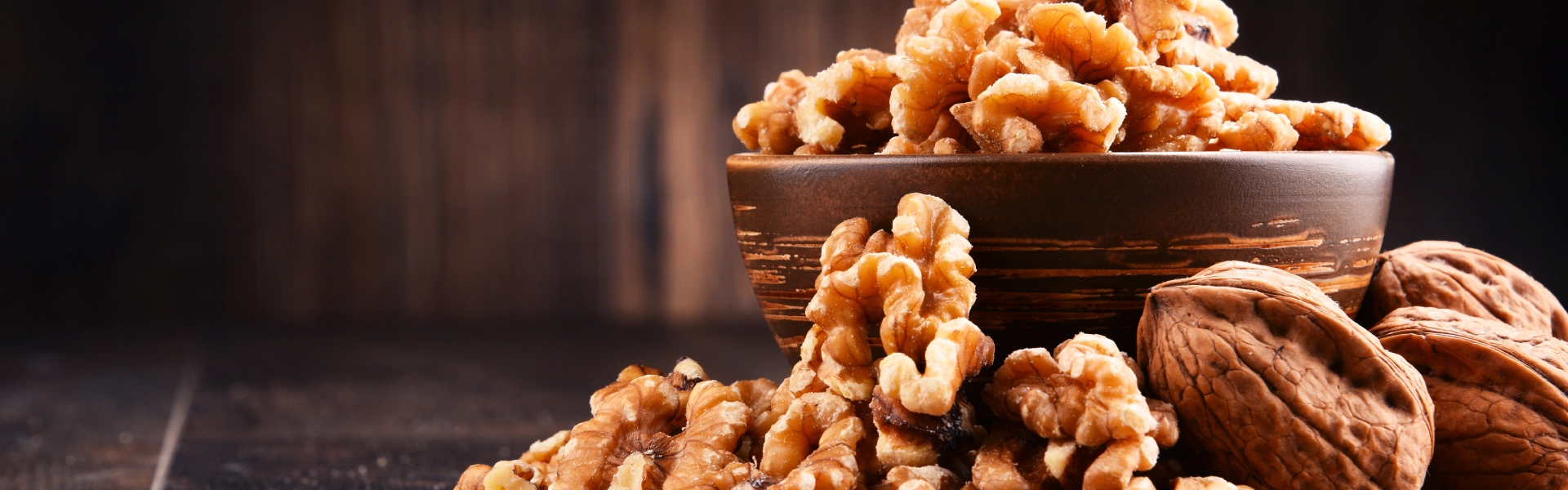
Walnut – packed full of nutrition and great flavor
Among the nuts and drupes, walnuts are considered as having particularly high health benefits. Even the ancient Romans valued the walnut and its nutritional values for its healing properties, and they even attributed magical powers to it. But that's not the only reason we like to eat them. We also love their mild, nutty and slightly sweet taste - as a snack as well as in both sweet and savory dishes. Read on to find out more about the nutritional values of the walnut, its flavor and what you need to consider when you buy and store it.
Storage time*
| Refrigerator 7 °C | 180 days |
| Room temperature 20 °C | 90 days |
| Freezer compartment -18 °C | 12 months |
The key points
- Walnuts contain a rich supply of nutrients: unsaturated fatty acids, protein, vitamins (A, B, E, folic acid) and minerals such as magnesium, potassium and iron.
- Their slightly sweet, nutty taste makes them very versatile – you can enjoy them as a snack, in pastries or in savory dishes.
- Note the weight and any noises when you buy them: high-quality walnuts are heavy and don’t rattle when you shake them.
- Cracked walnuts spoil faster – so it’s best to buy them in their shells and store them in a cool place.
The walnut and its nutritional values – list of contents
Growing walnuts
Let's start with the facts about the walnut. The botanical name of the real walnut tree is “Juglans regia”. As its royal title (“regia”) suggests, the deciduous tree can reach an impressive and stately height of up to 30 metres. Walnuts have been widespread in the world for several thousand years, which is why their origin still cannot be determined for certain. Connoisseurs believe they originate in South-east Europe, Asia Minor, Near and Central Asia, as well as China.
Walnuts are cultivated all over the world, for example in China, France and Italy, and, in some areas, also in Turkey and Spain. California produces 20 percent of the world's harvest, as does China.
Use our tips and tricks for a straightforward “walnut hunt”. It is best not to pick the walnuts, but to collect them up as soon as they have fallen from the tree. Normally, if they are ripe, the nuts fall to the ground without their green outer skin. If this is not the case, remove the green shell before drying so that the nuts do not go mouldy.
Walnuts: nutritional values and vitamins
Walnuts are known for their high nutritional values. But is that true? Let's take a look at the obvious issue first, the fat content. With a fat content of 66 percent, the walnut is definitely a rich nut. What's interesting is that it's the nutritionally-valuable unsaturated fatty acids which are particularly important here. The wrinkled nuts also contain 14 percent protein and six percent carbohydrates. But not just that. They also contain minerals such as potassium, magnesium, calcium and iron. Their great health benefits are also justified by the vitamins A, B and E, as well as the folic acid they contain.
Uncracked walnuts can be stored in the refrigerator for up to 180 days. They’ll stay fresh at room temperature for 90 days. Cracked walnuts can be stored wrapped up securely in the refrigerator for around four weeks. Walnuts contain valuable nutritional values and unsaturated fatty acids, which will quickly become rancid if they’re not stored correctly.
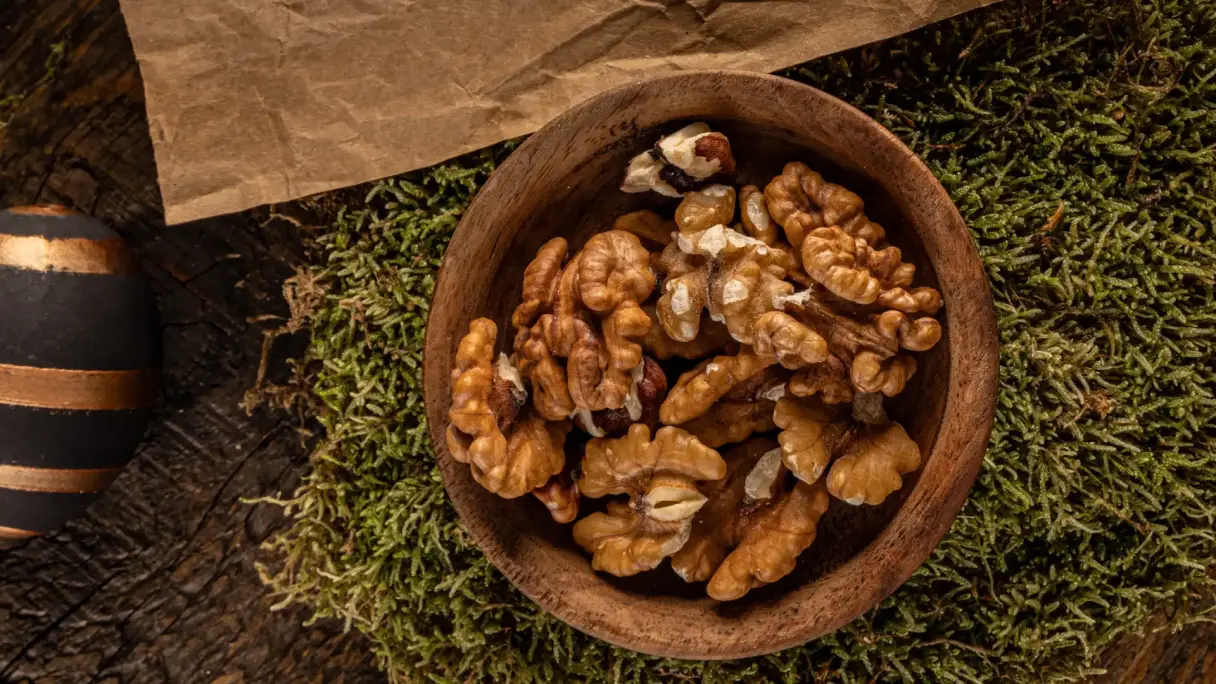
Walnut varieties: how to use the nut
As with so many foods, the range of different walnut varieties is almost infinite. But let’s introduce some of them anyway. The most common type of walnut is the real walnut, also called the Persian or European walnut. It goes well with sweet and savory dishes. The black walnut is much rarer, with a thick shell and intense flavor. Due to its high fat content, it is particularly suitable as a baking ingredient. The Sorrento walnut is also excellent quality. The well-known Italian variety has a smooth shell, is smaller than its relatives and is often used in the confectionery industry because the nut meat is easy to remove.
But regardless of the variety you choose, which quality characteristics should we rely on when purchasing? Good quality, unshelled nuts can be recognized by their heavy weight. Also, they shouldn't rattle when shaken.
If you are buying walnuts that have already been cracked, you should be aware these will very quickly become rancid. Purchasing whole nuts is therefore a good idea. So what’s the easiest way to get to the tasty kernel? The nutcracker is, of course, one option. However, if you don't have one to hand, try the following. A fine seam can be seen on the hard shell of the walnut. The walnut halves can easily be levered open at this seam - it is best to use a blunt cutlery knife. This works particularly well on the wider side (opposite the more slender tip).
*All specifications given are to be considered as guideline values, and depend in each case on the type of foodstuffs and on the proper storage without interruption of the cold chain from harvest/production through to the Liebherr appliance. Should food products have information about minimum shelf life, the date on the packaging always applies.
This might also interest you
Tiger nuts – the underestimated nutrient bomb
Fat-soluble vitamins
Read on to learn more about fat-soluble vitamins and why it is important for many vitamins to be ingested together with oil or fat.
Top 10 foods that provide energy!
These ten foods provide us with plenty of energy. Which foods are particularly suitable for breakfast and which for lunch? Find out more!