
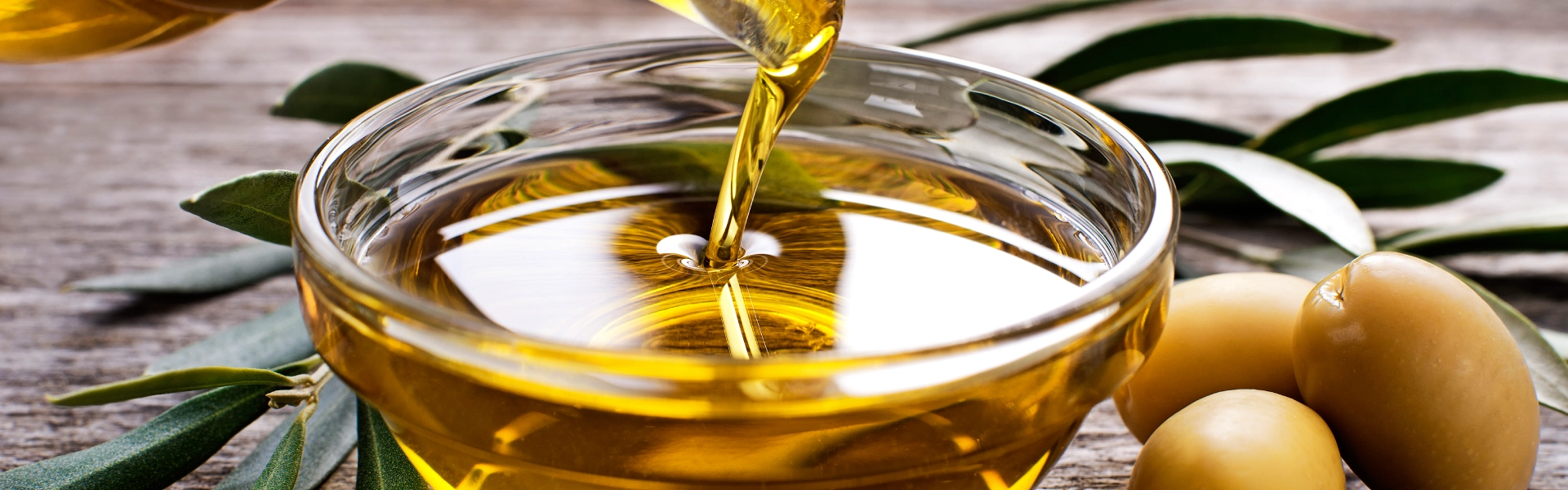
Olive oil: use nutrient-rich oil for frying
Whether it’s with Mediterranean vegetables, salad or pasta: Olive oil is a great addition to numerous dishes. You’ve also probably heard about the health benefits of using olive oil. So should we or should we not use this oil generously in cooking? However, many people have heard the myth that you shouldn’t use olive oil for frying. Find out here what you need to know about olive oil and how this myth came about.
The key points
- Olive oil has a variety of uses – not just for salads; it’s also suitable for frying if the temperature’s right.
- The smoke point is decisive: virgin olive oil is suitable for gentle frying up to approx. 180 °C; refined olive oil is also suitable for higher temperatures.
- Virgin olive oil in particular contains many unsaturated fatty acids and fat-soluble vitamins.
- Quality makes all the difference: pay attention to the quality class – “extra virgin” represents the highest quality.
Olive oil for frying – list of contents
Production and properties of olive oil for frying
This high-quality oil comes from olives, as the name suggests. Olives are the fruit of the olive tree, which belongs to the Oleaceae family of plants. Olive trees feel particularly at home in areas with hot summers and cold winters, which is why a large proportion of olives are cultivated in countries in the Mediterranean region. However, there are differences in the taste of the oil depending on its variety, the production techniques used and the unique microclimate of the region the olives are grown in. So not all olive oil is the same!
On bottles of olive oil, the indication of origin provides information about where the olives were grown. We can also choose between different quality classes of olive oil. Virgin olive oil is obtained exclusively by mechanical pressing without the addition of heat and is therefore also referred to as cold-pressed oil. The extra virgin olive oil designation ensures a particularly high quality. A large amount of mono-unsaturated fatty acids and nutritionally beneficial fat-soluble vitamins are what make virgin olive oil so healthy.
Other pressing processes require the addition of heat and the extracted oil must then undergo a purification process known as refining. Refined oil loses a large proportion of its beneficial ingredients and is for the most part colorless and neutral tasting. However, it also has a longer shelf life and can withstand higher temperatures during cooking than virgin olive oil. You should also use refined oil for preparing baby food because of the purification process.
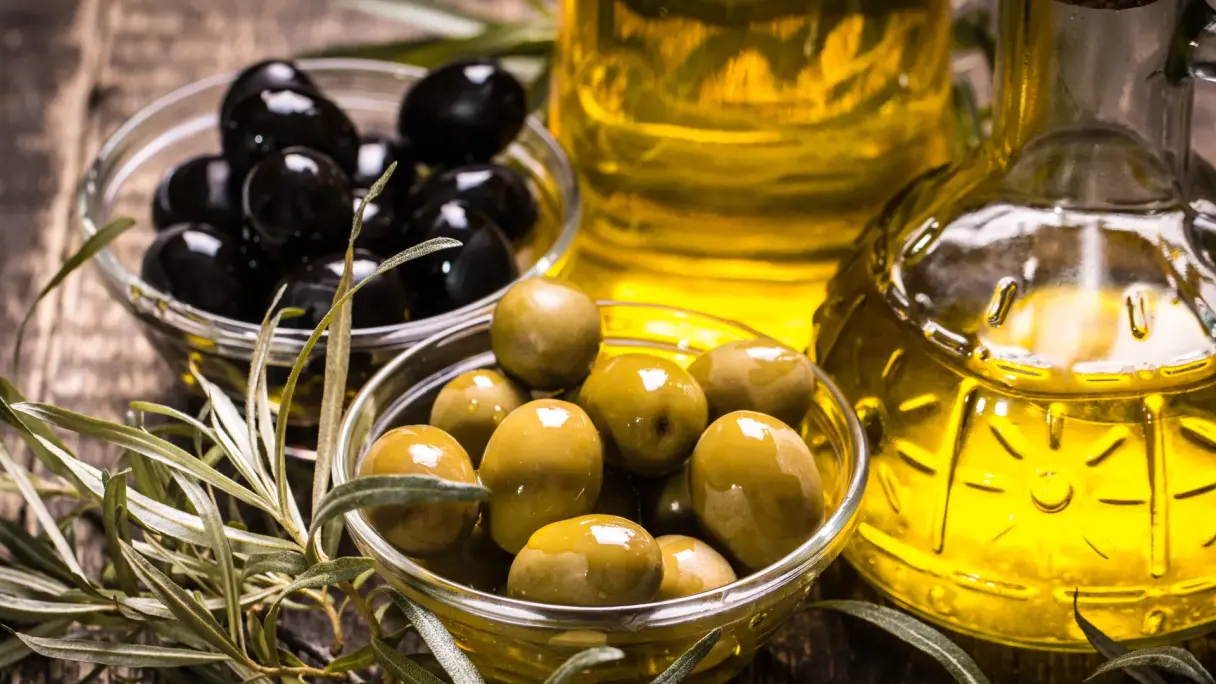
Which olive oil for frying? The smoke point is decisive!
The crucial factor when you’re deciding whether you can heat olive oil is to consider the smoke point. At this temperature, an oil visibly begins to smoke as the fatty acids begin to break down. In general, the more unsaturated fatty acids an oil contains, the lower its smoke point. However, with a high proportion of mono-unsaturated fatty acids, the smoke point is higher than for oil that has a high proportion of poly-unsaturated fatty acids. Virgin olive oil, with its high proportion of mono-unsaturated fatty acids, has a smoke point around 180°C. Refined olive oil has an even higher smoke point. Some unsaturated fatty acids are converted into saturated fatty acids during refining.
Do not heat an oil to temperatures above its smoke point. Since virgin olive oil has numerous health benefits, it is preferable to use it for cooking methods that do not exceed 180 °C. Therefore, use virgin olive oil for cold dishes, meals cooked in the oven below 180 °C and gentle frying. For hot frying, however, refined oil is preferable.
This might also interest you
Fat-soluble vitamins
Read on to learn more about fat-soluble vitamins and why it is important for many vitamins to be ingested together with oil or fat.
Shelf life of butter: does butter belong in the refrigerator?
Shelf life of butter: read on to find out why butter should be kept in the refrigerator and how to make butter easy to spread.
Organizing the refrigerator: clear, efficient and smart
From reusable containers to temperature zones: Organising the refrigerator, saving space and keeping food fresh for longer.