Past its best-before date but still edible?
Many people tend to equate the best-before date with the use-by date. As a result, food that has passed its best-before date often ends up in the bin, even though it would still have been perfectly fine to eat. But if the best-before date isn’t the same as the use-by date of food, what does it actually mean? Read on to find out how best-before dates and use-by dates should be interpreted.
The key points
- Best-before date: unlike the use-by date, many products are still edible after this date.
- Use-by date: applies to perishable foods and must not be exceeded.
- Sensory test: if the best-before date has expired, rely on your senses and check the smell, appearance and taste.
- Retail: products that are past their best-before date can be sold provided they are in good condition.
Best-before date – list of contents
What does the best-before date mean?
Everyone in Germany is familiar with the best-before date, but what does it actually mean? So just what does that little date on our food mean? The best-before date guarantees that a product will retain its quality until that date. Once the date has passed, there may be a loss of quality, for example, in the form of lower vitamin content or a loss of color and flavor. However, this does not mean that the food is no longer safe to eat and its shelf life will generally be longer. To determine whether something is still edible, you should rely on your eyes, nose and tongue. If food in your refrigerator-freezer has an unusual taste, smell or appearance, or a strange consistency, you should refrain from consuming it. The longer the shelf life of food according to its best-before date, the longer it will remain edible after that date.
It is permissible to sell food with an expired best-before date. Food that is close to or has already passed its best-before date is usually discounted in shops to encourage its rapid sale. All that is required is that the good condition of the food is guaranteed. Even if a buyer deliberately chooses a product with an expired best-before date, they are still entitled to complain if the quality is reduced. Certain products are exempt from the best-before date requirement under EU regulations in order to prevent food waste. These relate to food products whose quality does not change during long-term storage, such as chewing gum, wine, table salt or vinegar.
The difference between best-before date and use-by date
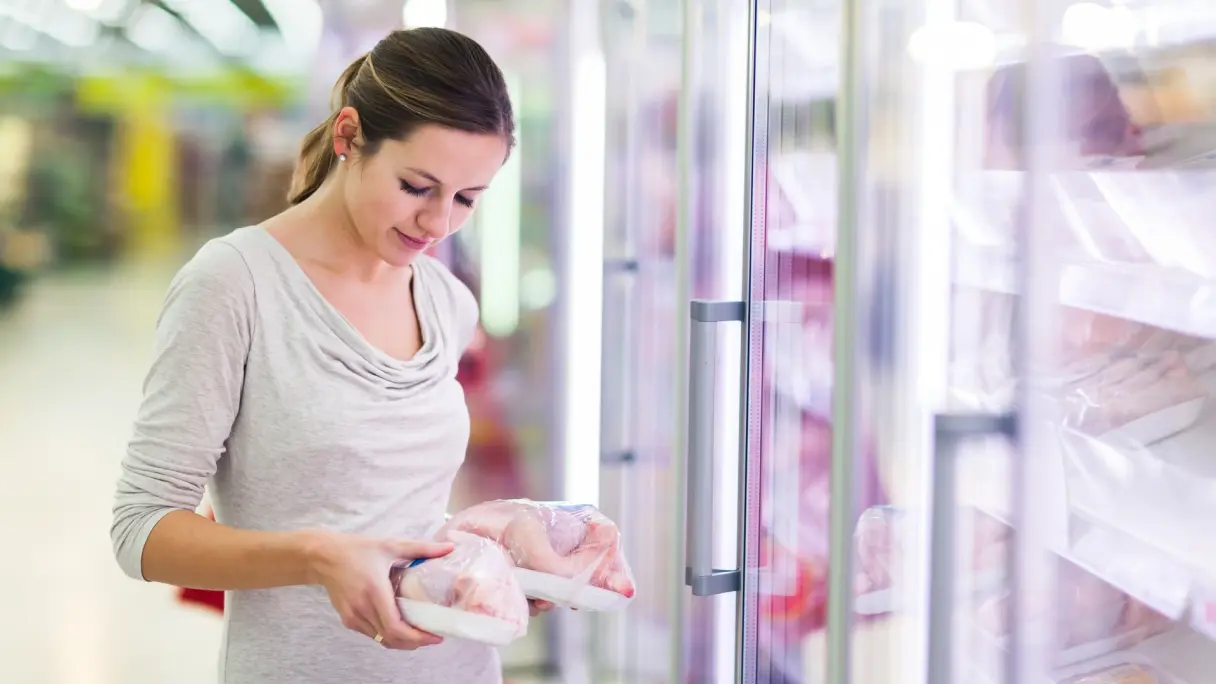
There is a clear distinction between the best-before date and the colloquial term ‘expiry date’. What is commonly called the expiry date should, when referring to food, more accurately be referred to as the use-by date. This is usually labeled ‘use by’ and can be found on the packaging of highly perishable foods such as fish, meat or sausages. If these have passed their use-by date, they should be disposed of immediately. Because once that date has expired, these foods may be harmful to your health. The sale of food with an expired use-by date is therefore prohibited.
The use-by date is often accompanied by a storage temperature specification of between +2 °C and +4 °C. This is not a problem for supermarket refrigerators and chest freezers, but most domestic appliances are set to a much warmer temperature of +4 °C to +8 °C. If you lower the temperature of the entire refrigerator, its energy consumption will increase significantly and it will become an unsuitable environment for other food.
As many consumers equate the best-before date with the use-by date, a lot of food that is still edible ends up being thrown away. Most of the food thrown away is fruit, vegetables and baked goods, most of which is still largely intact and therefore still edible. In addition to the wasted product itself, one also needs to think about all the energy that went into its production, processing, packaging, transport and storage. This waste causes shortages and price increases for raw materials. So don’t be afraid to ignore the best-before date on your food and trust your senses!
This might also interest you
Egg freshness test: how to check their shelf life
When you look inside your refrigerator, do you often ask yourself whether your eggs are still good to eat? We’ll show you some really easy egg freshness tests!
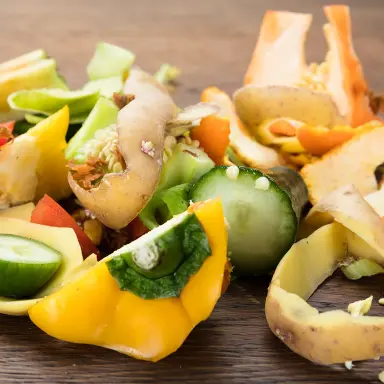
Five tips for reusing food waste
Food upcycling: we’ll show you how you can turn food that you would otherwise throw away or leftovers into delicious dishes.