Why you should decant wine – and how to clean the decanter
A decanter made of high-quality crystal is a vital utensil for wine connoisseurs to savor the perfect drink. Liebherr wine expert Frank Kämmer explains why decanting wine in a carafe is so important and how best to clean it.
The key points
- Oxygen supply: young wines become rounder, old wines develop aromas.
- Sediment separation: mature red wines may contain sediment.
- Cleaning the carafe: after decanting, carafes should be cleaned regularly.
Decanting wine – list of contents
Why decant wine? The role of oxygen in the enjoyment of wine
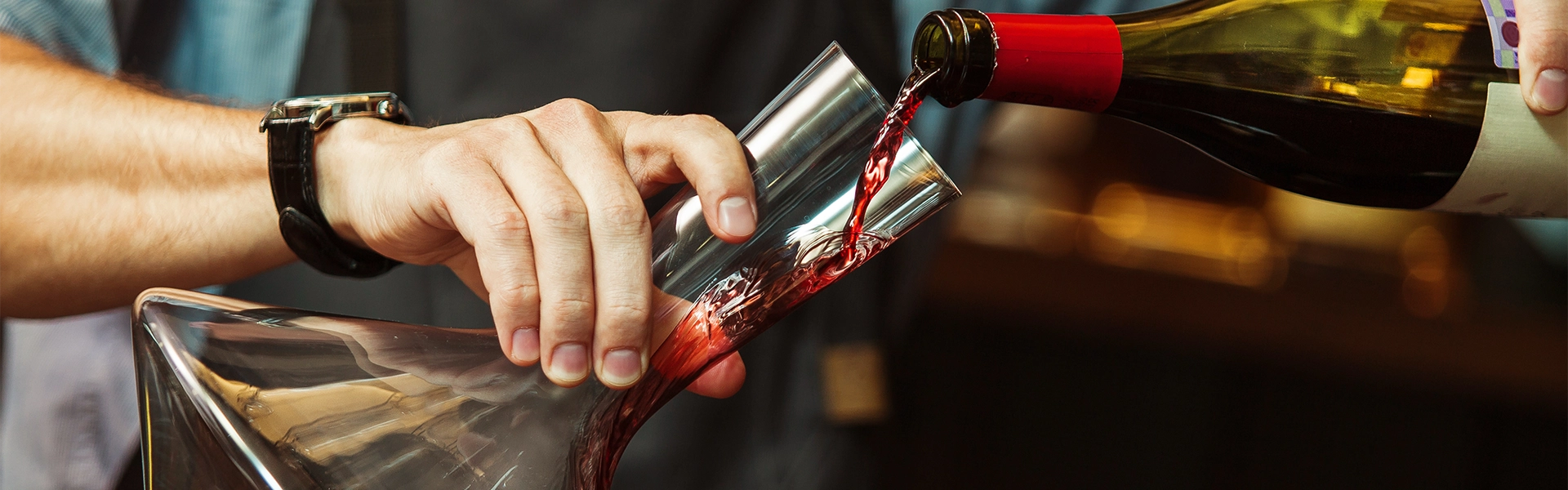
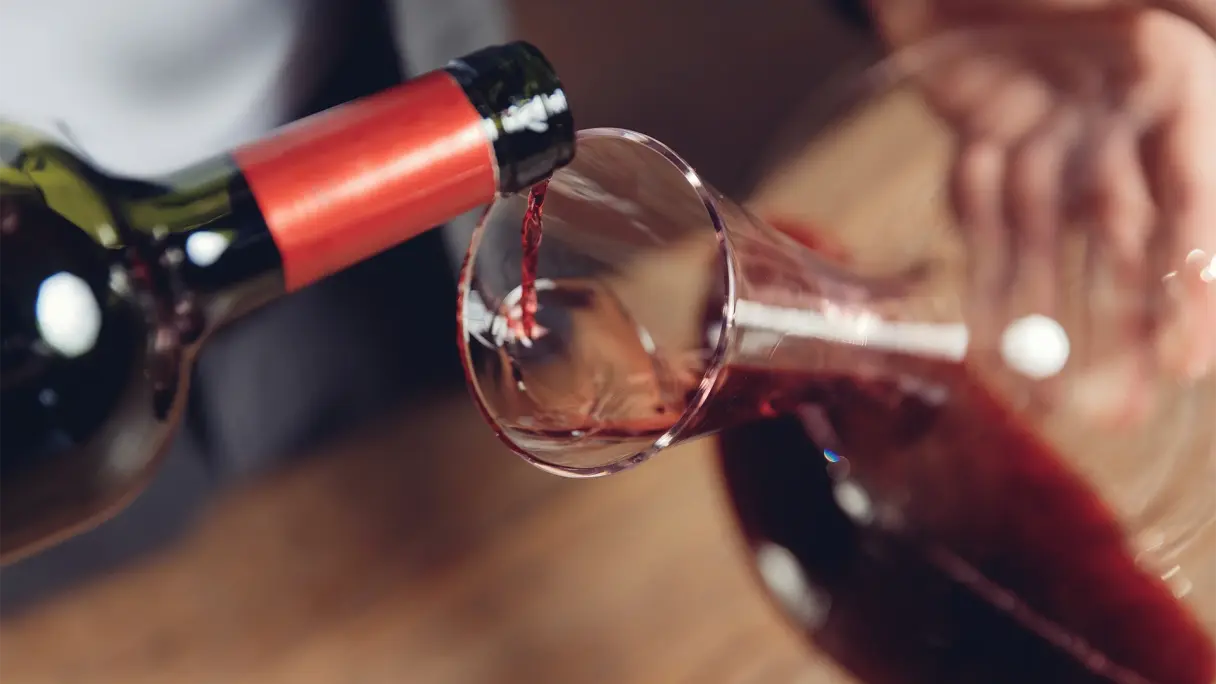
Particularly with high-quality red wines, it is absolutely essential to decant, which means carefully transfer, the wine into a decanter.
There are three reasons for doing this:
- The supply of oxygen makes a young wine become more mature and rounded, softening the astringent tannic acid.
- Mature red wines sometimes have some sediment in the bottle. If the wine is transferred carefully, it is left behind in the bottle, allowing you to enjoy the clear wine from the decanter.
- Very old wines may taste slightly dull or even stale shortly after they are opened. This is where the supply of oxygen helps the wine to develop its bouquet and possibly make disruptive substances like the volatile acetic acid evaporate.
But in addition, some characterful white wines can also benefit from being left to breathe in the air in the decanter.
How to clean the decanter after decanting
However, anyone who frequently decants wine into a carafe will eventually be confronted with the problem that, despite careful rinsing after use, unsightly residues or cloudiness caused by the wine will build up over time. The shape of many carafes with narrow necks often makes mechanical cleaning with a bottle brush impossible or very difficult.
However, experienced sommeliers have a trick up their sleeve for this:
Limescale and wine residues in the carafe are best removed by filling it with warm water and adding 1-2 denture cleaning tablets. Leave to stand overnight, then rinse thoroughly several times and the wine carafe will look as good as new.

The author
Frank Kämmer
I have worked for many years in high-end restaurants and during this time became one of the top sommeliers in Europe. In 1996, I achieved the title of Master Sommelier; the highest international qualification in my profession. Today, I work full-time as a consultant in the international wine and gastronomy industry. I have also published numerous books on wines and spirits and was the first German to be accepted into the British Circle of Wine Writers.