Ten professional tips for serving sparkling wine and champagne
When pouring sparkling wine and champagne, things can go wrong. In this article, we will tell you what to look out for to avoid anything spoiling your sparkling wine enjoyment.
The key points
- Do not store sparkling wine for longer than a year.
- Chill thoroughly before opening.
- Secure the cork when opening.
- Hold the bottle at an angle to prevent the wine from foaming over.
- Serve high-quality sparkling wine in tulip-shaped glasses.
1. Do not store for too long
The majority of sparkling wines do not improve with age and taste best upon leaving the winery.
The rule of thumb for champagne is that a bottle should not be older than one year. Any bottle left over from last year’s celebrations is therefore likely to have lost much of its fruitiness and finesse by the turn of the year.
2. Chill thoroughly
Sparkling wine and champagne taste better if they have been chilled for a considerable time before opening, at best overnight. With a champagne bucket and ice water, you can achieve the correct drinking temperature relatively quickly, however, rapid cooling is not always effective with regards to finesse, particularly with high-quality wines. Moreover, chilling the bottle overnight enhances the CO₂ binding process.
3. Open the bottle safely
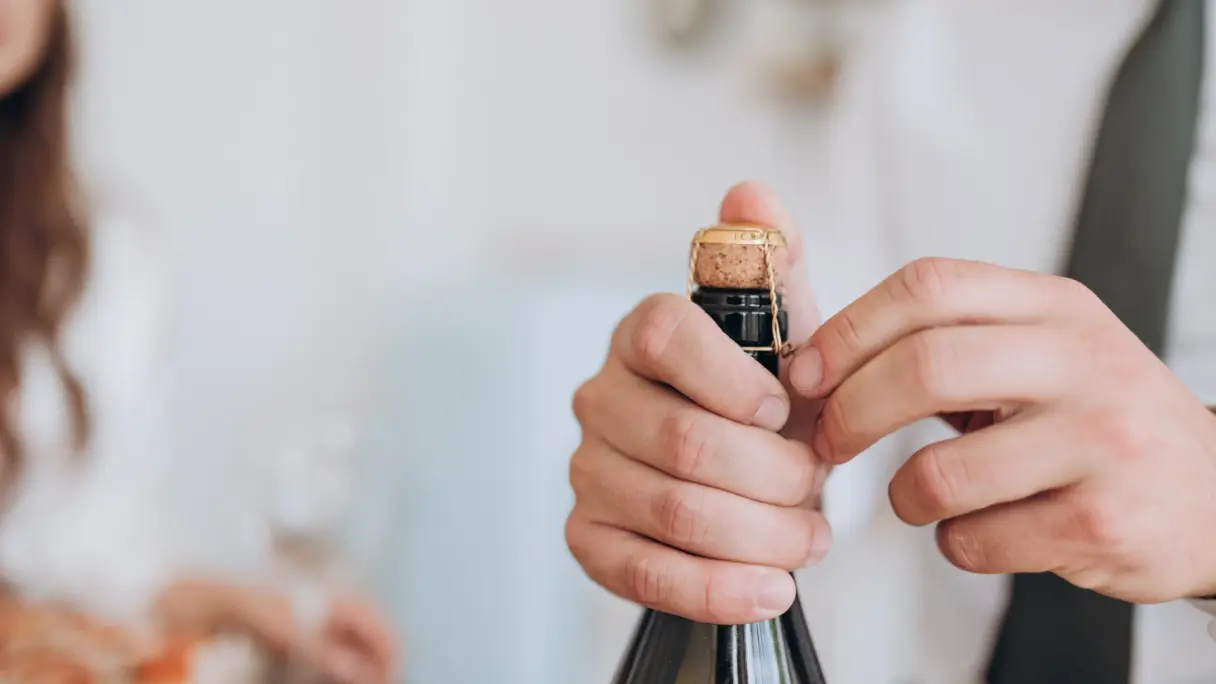
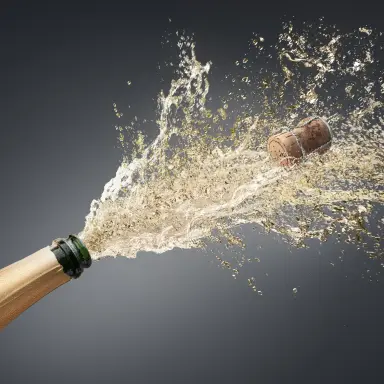
As soon as you release the protective wire cage over the cork (known as the muselet), you must always keep a finger over the cork for safety. Do not aim the bottle at yourself or anyone else when opening. The pressure in a champagne bottle can amount to four times the air pressure in a car tyre, and a champagne cork that shoots off can fly through the air at up to 50 km/h. Face and eye injuries caused by improperly opening sparkling wine and champagne bottles are by no means a rare occurrence.
4. Turn the bottle
How to spot a professional when opening the bottle? An amateur holds the bottle still and turns the cork. However, a professional holds the cork still and turns the bottle – this gives you better leverage.
5. Hold at an angle
If you hold the bottle at an angle when opening, this increases the surface area of the sparkling wine in the neck of the bottle. This allows the pressure to escape better and therefore prevents the wine from foaming over.
6. A slow fizz instead of a quick pop
Even when you’re looking to create a cheerful atmosphere: particularly with high-quality sparkling wines, you should avoid a loud pop when opening and instead allow the cork to slowly ease out, creating a quiet fizzing noise.
7. Tulip instead of coupe
Champagne coupes, which people recognize from 1960s James Bond films, are mainly suitable for serving dessert in. High-quality sparkling wines, however, should always be drunk from flutes, or even better, from tulip-shaped glasses.

8. Clean glasses
Lime deposits or impurities in the glass act as a nucleation point for the released carbon dioxide, causing the wine to foam excessively and therefore go flat quicker. Therefore always make sure to use clean polished glasses.
9. Pour at an angle
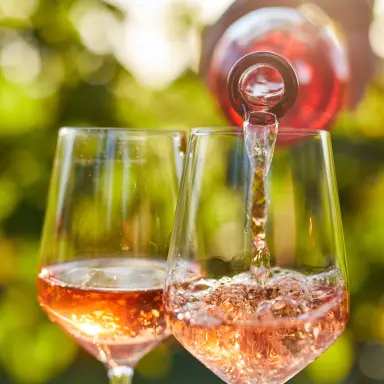
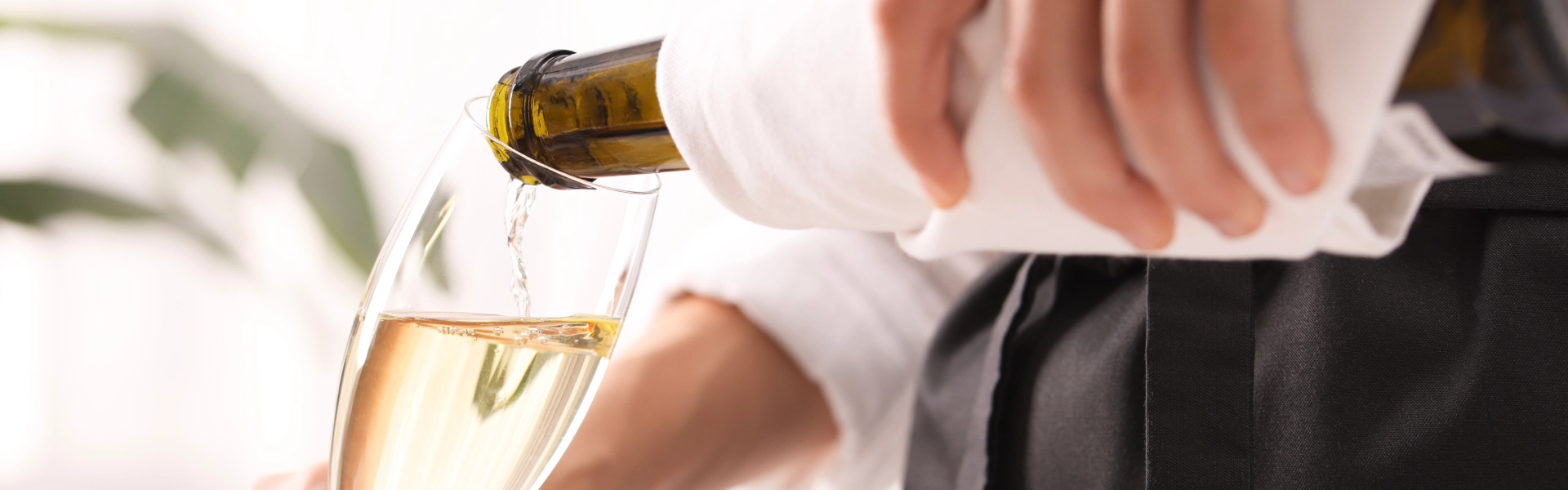
When pouring, pick up the glass and hold it at an angle, as this significantly reduces the loss of released CO₂ and prevents the wine from foaming over.
10. Reseal the bottle
If there is wine left over in the bottle that you would like to drink the next day, reseal the bottle as tightly as possible and store it cold. If you don’t have a special champagne stopper, you can use a standard wine cork.
However, the idea of sealing the bottle by sticking a silver spoon in the neck of the bottle does not work at all.

Meet the author
Frank Kämmer
I have worked for many years in high-end restaurants and during this time became one of the top sommeliers in Europe. In 1996, I achieved the title of Master Sommelier; the highest international qualification in my profession. Today, I primarily work as a consultant in the international wine and gastronomy sector. I have also published numerous books on wines and spirits and was the first German to be accepted into the British Circle of Wine Writers.