Wine accessories: this is the basic equipment all wine lovers should have
The market offers a wealth of accessories and countless gadgets intended to make wine even more enjoyable for connoisseurs. But which wine accessories do you really need? Liebherr master sommelier Frank Kämmer gives his advice.
The key points
- High-quality glasses in different shapes are important.
- A simple lever cork screw is essential.
- Decanting improves the taste and removes any sediment.
- Storage in a cool, dark place is crucial for wine.
Wine accessories – list of contents
Wine accessories: what you really need
Anyone who views a bottle of wine as more than just a pleasant-tasting drink is bound to have given some thought to just how you can handle this fine grape juice to do it justice. But in actual fact, there are four main things that you should pay particular attention to. These wine accessories are essential:
1. Wine glasses
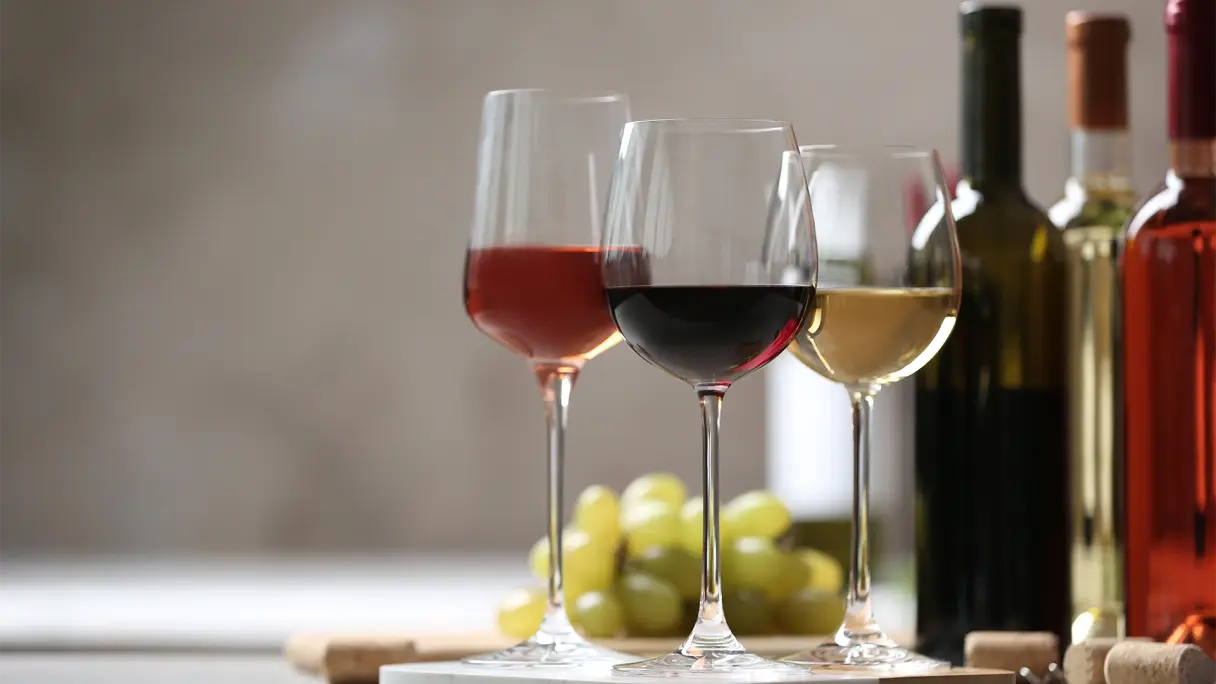
Good wines need good glasses to present their quality in full. A high-quality wine glass is noted for having an array of characteristics. For example, the volume should always be commensurate to the intensity and complexity of the wine. The proportion of the glass body to the stem should be balanced so that the glass is easy to tilt when the wine is poured in. High-quality glasses are usually particularly thin-walled and – very importantly – have a polished rim rather than the bulge that is usually found on simple glasses. But the material itself also has an impact on the enjoyment of the wine. For example, wines served in high-quality crystal glass usually have a more intense and clearer aroma than in simple, cheaper types of glass. For your basic equipment, you should focus on four glass shapes:
- A fairly small universal white wine glass
- A slightly larger version for fuller-bodied white wines, rosé wines or lighter red wines
- A larger, tulip-shaped glass for fuller-bodied red wines
- A slim, tulip-shaped glass for sparkling wines
- If you wish, this selection could be supplemented with a balloon glass for Burgundy wines
2. Cork screw
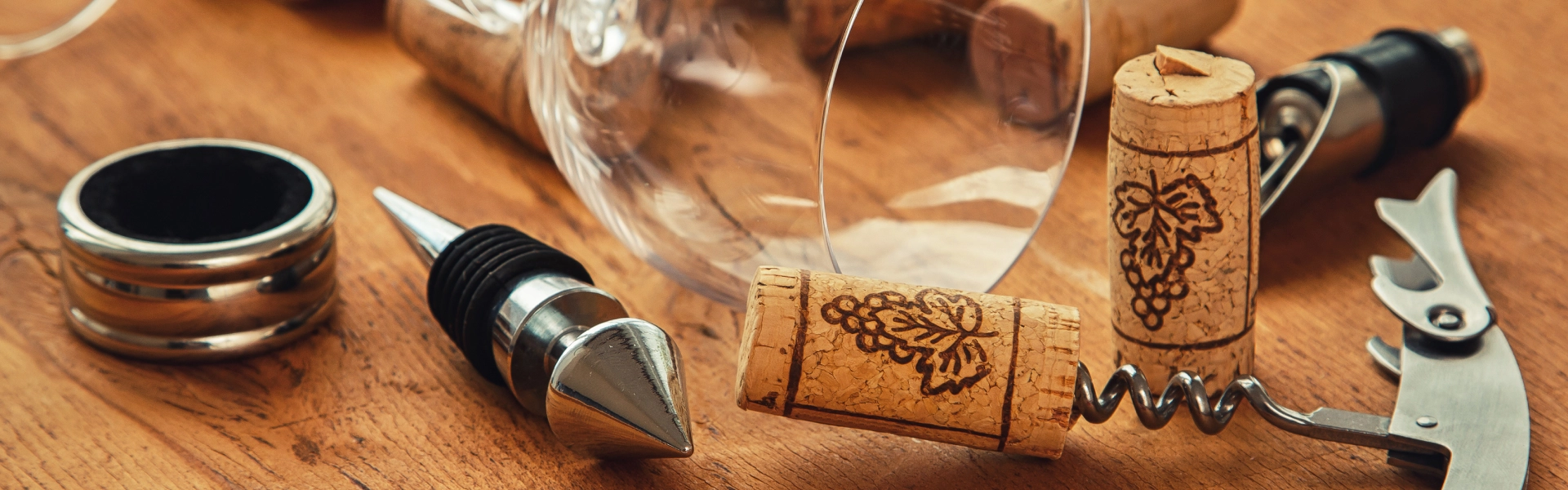
Even the very finest wines will bring little joy if the process of opening the bottle becomes a hassle. So a decent cork screw is essential – and yet there are still plenty of households that don’t have one. But it really doesn’t have to be an expensive high-tech device. A simple lever cork screw, also known as a waiter’s knife, as is often provided as a promotional gift by vineyards or wine shops, is quite sufficient. Even professional sommeliers almost always use just this simple tool.
What matters here is that the spike that drills into the cork is spindle-shaped, so you could stick a toothpick into its axis. This shape is needed to reliably remove even corks that are firmly stuck in the bottle. By contrast, standard household cork screws usually have a spike that is reminiscent of a drill and gets much less grip in the cork.
3. Carafe
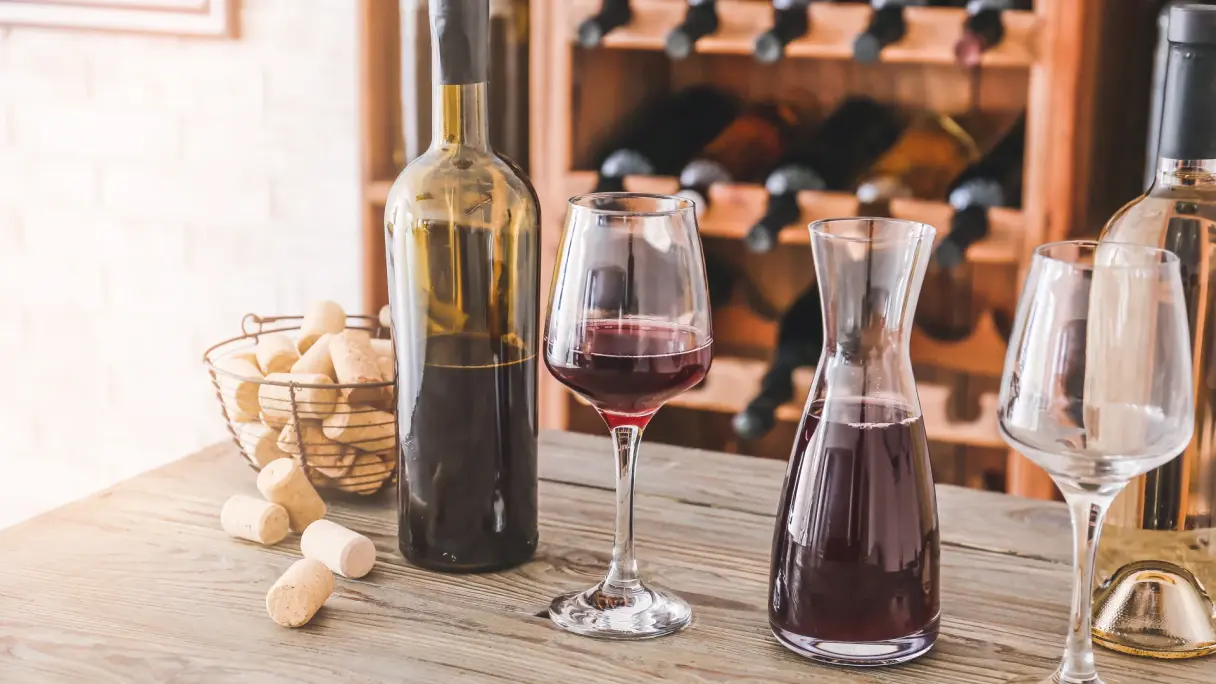
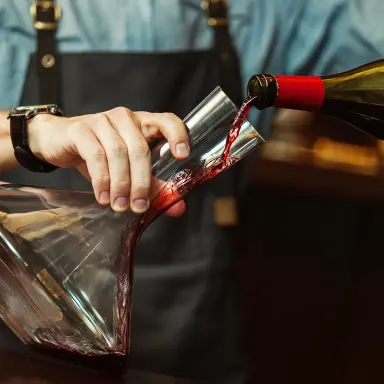
A carafe for serving your wine should by no means be regarded merely as a feature of fine dining. Especially with some high-quality red wines, decanting, which is the process of transferring the wine into a carafe, can also have a really important bearing on how the wine tastes. There are three reasons for doing this.
First: the supply of oxygen makes a young wine becomemore mature and rounded, softening the astringent tannic acid.
Second: mature red wines sometimes have some sediment in the bottle. This is retained by carefully decanting the bottle.
Third: certain wines may taste slightly dull or even stale shortly after they are opened. This is where the supply of oxygen helps the wine to develop its bouquet; with very old wines, this may possibly make disruptive substances like the volatile acetic acid vanish. But even some characterful white wines can also benefit from being left to breathe in the air in the carafe.
4. Wine cellar or wine refrigerator
If you want to enjoy your bottles of wine not just for a short time, but also over a longer period, maybe even over many years, you need to think about the correct storage conditions for your treasured bottles. This is because excessively high or frequently fluctuating temperatures, vibrations or intense light during storage can quickly cause losses in quality. So storing your bottles on a shelf in the kitchen should be limited to just a few weeks, if at all.
If you want to enjoy drinking your fine wines for longer, set up a place to store them in the cellar (cool, dark and vibration-free). However, if you don’t have a suitable cellar, you should consider purchasing an appropriate wine refrigerator. Liebherr-Hausgeräte GmbH offers a wealth of appliances to choose from.

The author
Frank Kämmer
I have worked for many years in high-end restaurants and in this time became one of the top sommeliers in Europe. In 1996, I achieved the title of Master Sommelier, the highest international qualification in my profession. Today, I work primarily as a consultant in the international wine and gastronomy sector. I have also published numerous books on wines and spirits and was the first German to be accepted into the British Circle of Wine Writers.