
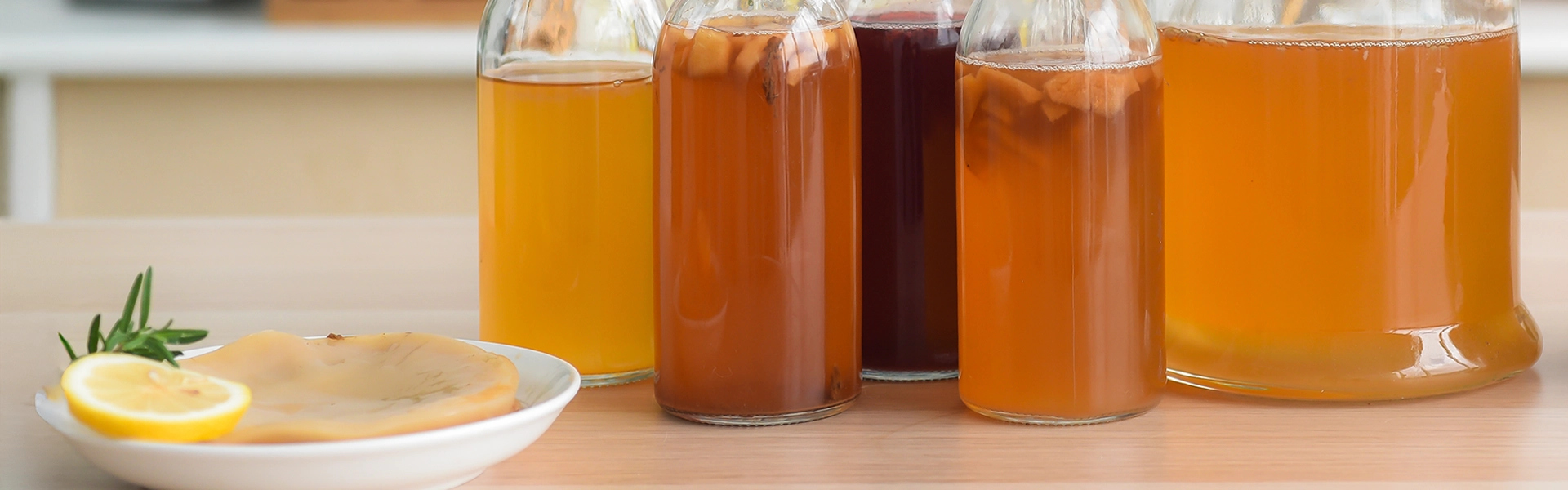
How to store Kombucha mushrooms!
Kombucha – the new trendy drink for unique pleasure and gut health! Sweetened tea is processed by hard-working microorganisms such as bacteria and yeasts: And the sour and tangy drink is ready. Read on to find out how best to store and preserve the finished drink and Kombucha mushrooms.
The key points
- Kombucha SCOBYs can be stored in the refrigerator for up to nine months.
- When stored in the refrigerator, the container should be sealed with a lid.
- Make sure that the SCOBYs are always covered with liquid.
- To activate the SCOBY, place it in a container with preparation liquid and ready-fermented Kombucha (ratio 1:1) at room temperature. Cover the container with an air-permeable cloth.
- Leave the mixture to stand for at least 30 days. Do a taste test: if the Kombucha is more acidic, the microorganisms are active – otherwise leave to stand for longer.
Storing Kombucha mushroom – list of contents
What is a Kombucha SCOBY?
In Kombucha mushrooms, a symbiosis of bacteria and yeasts creates an energetic working group that unites within a dense and at the same time rubbery surface: This is known as the Kombucha mother. The Kombucha mother is often referred to as the SCOBY. This acronym comes from “symbiotic culture of bacteria and yeasts”. Once a SCOBY has found its way into your home, it needs to be looked after regularly, just like a pet. But don't worry, Kombucha mushrooms are easy to care for and require merely the right food and a pleasant location.
If you have already brewed Kombucha tea, you will know that the SCOBY continues to grow and after a while it looks as if several layers of pancakes are floating around in the tea mixture. To store Kombucha mushrooms correctly, you now need to: carefully separate the different layers of the mushroom and place them in a SCOBY hotel. The offspring can simply stay there until they find a new home.
SCOBY hotel – cleaning and preparation
The Kombucha mushroom can be stored in a SCOBY hotel. Here, the SCOBYs are stacked tightly in a large glass jar, together with some preparation liquid and ready-made Kombucha. Make sure you clean the glass jar thoroughly beforehand without leaving any detergent residue behind, as this could kill the Kombucha mushroom. When transferring the SCOBYs, you should also wash your hands thoroughly beforehand or wear gloves. Rinse the SCOBYs with lukewarm water and remove any dark threads that may be hanging down. Thread-like structures and dark deposits at the bottom of the vessel indicate an excess of yeasts, which can impair the result.
Feeding SCOBYs in the hotel
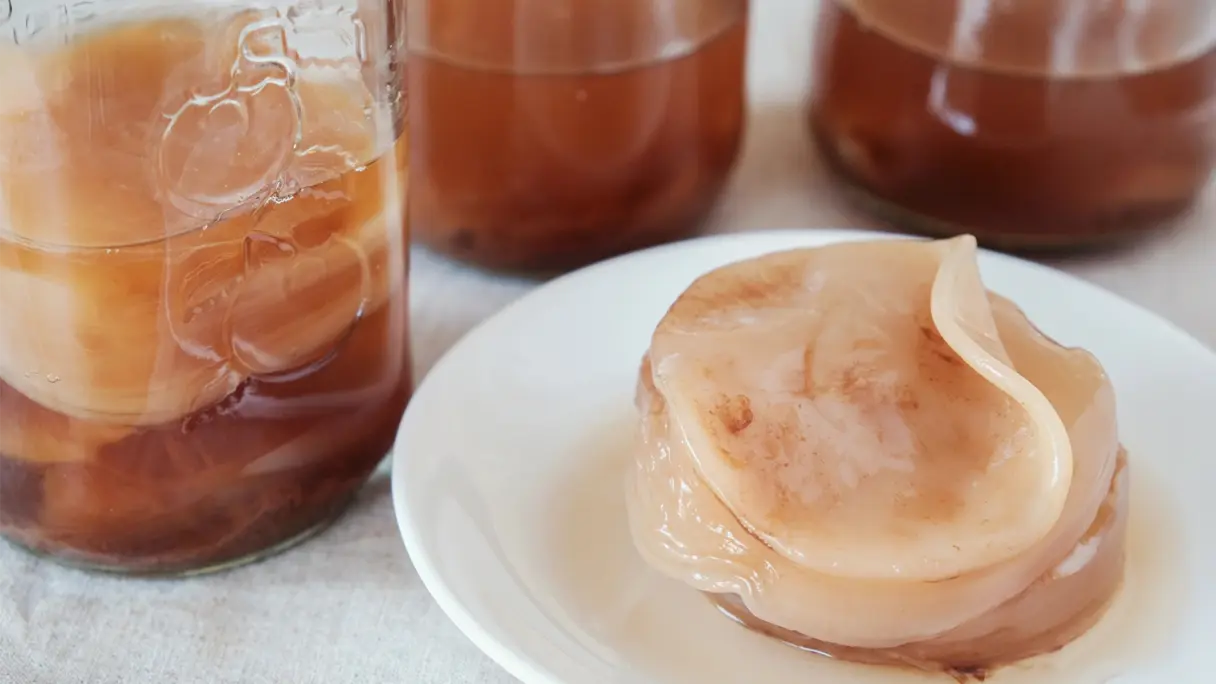
If the SCOBY is a thick disc, use a clean pair of scissors to cut the SCOBY into thinner layers. Thinner SCOBYs help to ensure that more oxygen can circulate in the SCOBY hotel. If you want to store your Kombucha mushrooms, some preparation liquid is essential. This consists of ready-madeKombucha, which tends to be very acidic, and freshly brewed, sweetened tea (starter preparation) in a ratio of one to one (1:1). Ideally, the preparation liquid should have an acidic pH value of around 3.0 to 4.5 to inhibit the growth of undesirable microorganisms. Strain the ready-made Kombucha beforehand to remove excess yeast.
SCOBY hotel – location and storage
You can place the hotel in a light-protected place in the kitchen at room temperature. It is important not to seal the container, but cover the opening with a kitchen towel or straining cloth and a (rubber) band. This will prevent other creatures such as vinegar-loving fruit flies from making themselves at home. Here, too, the SCOBYs will continue to grow and multiply diligently in the vertical.
Storing Kombucha mushrooms at room temperature has the advantage that the SCOBY quickly becomes active in a new preparation. However, the liquid must be replaced frequently, as the living SCOBYs metabolize the sugar and live in a fairly acidic environment after a while. The preparation liquid should always be replaced if the liquid is very acidic – this is the case after three to four weeks at the latest. Kombucha mushrooms can be stored away from the hotel. However, you should make sure that you rotate the SCOBYs inside the glass. You can also remove a SCOBY from the hotel in the meantime and swap it for the one from your active preparation.
Tips at a glance – storing Kombucha mushrooms
1.Cleaning the glass container: Clean with vinegar and hot water.
2. Remove the SCOBYs: Remove with clean hands or gloves.
- Separate the layers carefully.
- Remove dark yeast threads.
- Stack the SCOBYs in the glass jar.
3.Adding liquid: Pour ready-made Kombucha as well as freshly brewed, cooled and sweetened tea into the container in a ratio of 1:1.
- Strain the ready-made kombucha to remove yeast.
- Add 100 g of sugar to one litre of tea.
4. Regular care: Always keep SCOBYs covered with liquid and change the liquid every three to four weeks. Cold storage is another option that requires you to change the liquid at much greater intervals.
Kombucha in the refrigerator
You can also store the Kombucha SCOBY hotel in your refrigerator. Seal the container with a lid. The SCOBYs can slumber here for up to nine months. Make sure that the they are always covered with liquid to prevent mould formation.
The reason for mould formation is the fact that the bacteria and yeasts are barely active due to the lower ambient temperature. As a result, you do not need to replace the liquid as often – every two months is sufficient. Another disadvantage is that the SCOBY takes longer to become active again after hibernation. You can slowly get the yeasts and bacteria used to working again by leaving the desired SCOBY to rest for at least 30 days in a container with new preparation liquid and a dash of ready-made Kombucha at room temperature between 22 and 26 °C. After this time, the microbes should be back in their working areas. Ultimately, a taste test helps to determine whether the Kombucha mushroom is fit again after 30 days or whether you should wait a few days longer. Has the preparation become more acidic? Then the microbes are active again!
You can find ready-made Kombucha drinks on the internet and on many supermarket shelves. Make sure that the drinks are kept chilled as this means that they have not been pasteurized and therefore still contain the full probiotic microbial power. You should store the drink in therefrigeratorafter opening, as the microbes will continue to work and the Kombucha will become increasingly acidic over time at room temperature.
Freezing Kombucha mushrooms
Your freezer can serve as an alternative storage option for the SCOBY. Before placing the SCOBY in the freezer, you should immerse it thoroughly in Kombucha liquid and seal it in an airtight container or bag. The freezing process slows down the metabolism of the microorganisms almost completely, which leads to a longer shelf life. Scientific studies indicate that both the quantity and the activity of microorganisms can decrease over time. While some microorganisms can withstand sub-zero temperatures, others die off. When storing Kombucha mushrooms, this can lead to the SCOBY no longer being able to be fully reactivated even after thawing, and an imbalance between yeasts and bacteria.
Making your own Kombucha
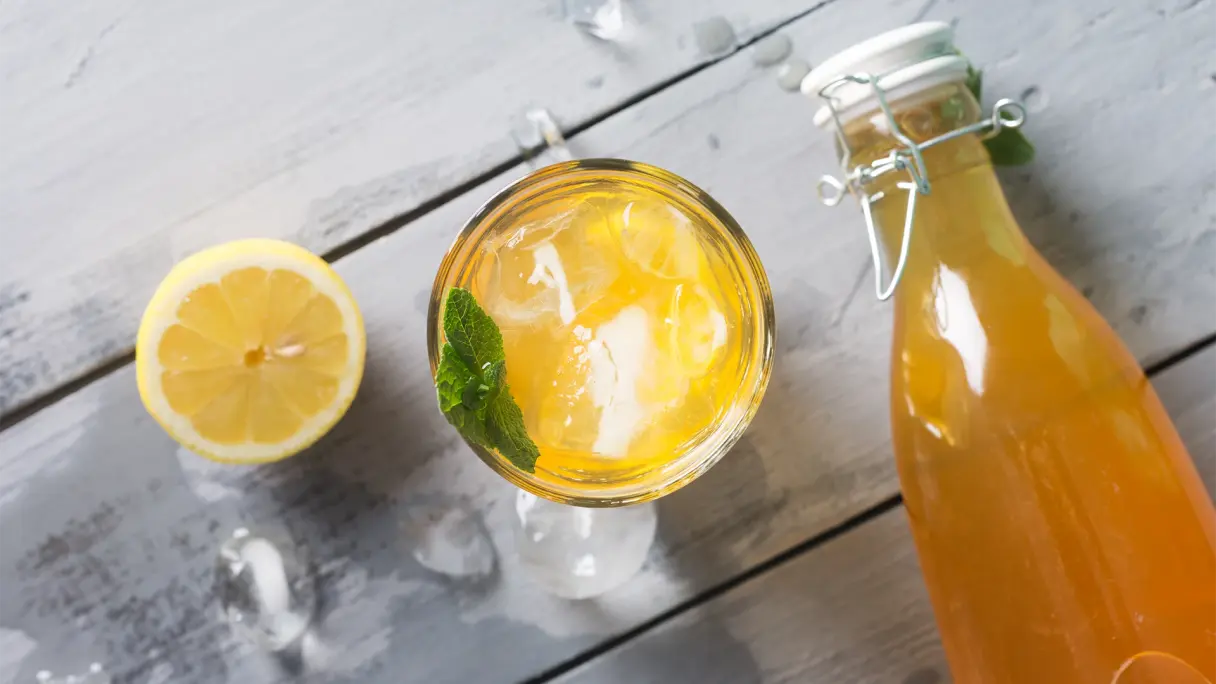
Kombucha mushrooms require food, oxygen, water and the right temperature, just like other living organisms. Kombucha is traditionally made with green or black tea but you can also use fruit juices or add other flavors such as ginger or turmeric, lavender or lemon zest to create more complex flavors.
Here is a simple step-by-step guide to making your own kombucha:
Step 1: Cleaning the containers and preparing the ingredients
Ingredients:
- 1 litre of black or green tea
- 100 g sugar
- Kombucha SCOBY
- Water
- Other flavorings (juices, flowers, spices)
Utensils:
- A large glass jug or glass container (at least 1 litre capacity)
- A cotton cloth
- A rubber band and a funnel
Clean the container and your handsthoroughly before preparation to avoid contamination with pathogenic germs or mould growth.
Step 2: Preparing the tea
Boil one litre of water and add 4–5 tea bags of black or green tea. Leave the tea to infuse for about 10–15 minutes and then remove the tea bags. Add 100 g of sugar while the tea is still warm and stir well until the sugar is completely dissolved. Leave the sweetened tea to cool completely until it has reached room temperature. Tea that is too hot can irrevocably damage the microorganisms.
Step 3: Adding SCOBY and sweetened tea to the container
Pour the cooled, sweetened tea into the glass container. If you are using a SCOBY, place it carefully in the jar. The SCOBY may float directly on the surface, sink to the bottom or lie on its side. All of this is normal. As fermentation progresses, the SCOBY will rise to the surface anyway due to the increasing carbonic acid content.
Step 4: Fermentation
Cover the glass jug with a cotton cloth and place a (rubber) band around the cloth and the opening. This protects the Kombucha from insects and dust while still allowing it to breathe. Because The microorganisms need oxygen for fermentation!
Place the glass jug in a warmplaceout of direct sunlight. The ideal temperature is between 20–25°C. The container should be protected against smoke and strong cooking vapours, as this can cause large temperature fluctuations.
Now let the SCOBY work its magic. The Kombucha ferments for around 7–14 days, depending on your personal taste. The longer the fermentation lasts, the more acidic the Kombucha becomes, as the SCOBY metabolizes the sugar and generates acetic acid and lactic acid.
Step 5: Flavor tasting and bottling
If the Kombucha is to your personal taste, you can bottle it and drink it straight away or send it for secondary fermentation. To fill, carefully remove the SCOBY with clean hands and either replace it with a SCOBY from the SCOBY hotel or prepare a new round of Kombucha. Pour the ready-made Kombucha into bottles using a funnel and seal them tightly. Keep a little Kombucha back so you can get the next batch ready sooner.
Step 6: Second fermentation (optional)
When making Kombucha yourself, you can also subject it to a second fermentation to give it additional flavors. Leave the filled bottles at room temperature for a further 1–3 days to achieve a sparkling carbonation. However, be careful not to fill the bottle too full and also open the bottle for the first time after approx. 24 hours to avoid a foam party. Because The pressure in the bottle can very quickly rise to a level that causes even glass containers to burst, especially at warmer outside temperatures.
After the (second) fermentation, you can store the Kombucha in the refrigerator and enjoy! Kombucha can have an alcohol content of 0.5–1.5%depending on the fermentation time. This means that the alcohol content is similar to that of everyday foods such as sauerkraut or an overripe banana.
This might also interest you
Freezing, preparing and growing your own mushrooms
Is it possible to freeze mushrooms? What nutritional values do they contain and how can you grow them yourself? Everything you need to know about mushrooms here.
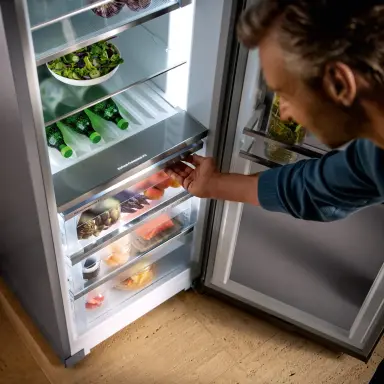
Organizing the refrigerator: clear, efficient and smart
From reusable containers to temperature zones: Organising the refrigerator, saving space and keeping food fresh for longer.

Storing tea optimally – in the refrigerator?
Tea is drunk all over the world. We’ll tell you the best way to store it and the best things you can do with freshly brewed tea. What do you need to watch out for and can you store hot tea in the refrigerator? Find out more!