


Freezing, preparing and growing your own button mushrooms
Whether fried, steamed, grilled or even raw, button mushrooms always cut a fine figure. And that’s true in every sense of the word. Because this popular mushroom also has a lot to offer in terms of health benefits. Find out everything you need to know about the many different ways to prepare button mushrooms, their ingredients, cultivation and long-standing myths about freezing mushrooms here.
The key points
- Fresh or cooked button mushrooms can be frozen without any problems
- Smaller button mushrooms can be frozen whole and larger ones can be sliced before freezing
- Your button mushrooms will keep for eight months if frozen
- For further use, the mushrooms should not be defrosted at room temperature, but used immediately
- Suitable ways to prepare mushrooms include frying, steaming, grilling or eating raw
- Button mushrooms contain lots of vitamins B and D, as well as potassium, iron and selenium
- You can grow button mushrooms yourself: either on your own or with the help of a button mushroom growing kit

Freezing button mushrooms – can you freeze fresh button mushrooms?
For a long time, there was a myth that button mushrooms should not be frozen. However, we can now give the all-clear, as both fresh and cooked button mushrooms can be frozen without any problems. However, to achieve the best results with raw button mushrooms after defrosting, you should follow these steps:
1. Clean the button mushrooms thoroughly before freezing. Simply rub them with a damp kitchen towel or a mushroom brush. Water should only be used in exceptional cases and when the button mushrooms are very dirty, as they will otherwise absorb the water and quickly lose their texture and flavor.
2. Now remove the ends of the stalks and cut the larger specimens into slices or cubes. Smaller button mushrooms can also be frozen whole.
3. Finally, the button mushrooms can be stored in freezer bags in portions. It is best to write the freezing date on the bags using a marker pen. If you want to remove individual mushrooms, pre-freezing is also a good option. To do this, spread the mushrooms out on a tray, leaving space between them, and place them in your freezer for one day. These button mushrooms can then also be stored in conventional freezer bags.
Thanks to freezing, you can still enjoy your button mushrooms even eight months later! Be careful not to freeze mushrooms that have been in a warm room for a long time, e.g. during a buffet. In general the following applies: the fresher the button mushrooms are when frozen, the longer they can be stored. Mushrooms that have already been fried or steamed should therefore be taken out of cold storage after just a few months. It is important to use the mushrooms immediately and not to allow them to defrost at room temperature first. This only slightly increases the cooking time, as the mushrooms defrost very quickly. In addition, they should be heated to at least 70 °C. Stir the button mushrooms regularly while cooking! As the mushrooms lose some of their firmness during the freezing process, we recommend using them in dishes such as mushroom risottos or mushroom soups.

Preparing button mushrooms – how do you prepare button mushrooms?
Button mushrooms can be prepared in many different ways. But always remember: it has to be hot! If button mushrooms are cooked too long and too slowly, they become soft and lose their flavor. It is therefore best to place the mushrooms directly into very hot fat to allow the full aroma of these forest dwellers to unfold. Whether you then fry, steam or grill these popular mushrooms is entirely up to you. The button mushrooms are ready to eat when they have shrunk slightly, are darker and give off a pleasant aroma in the kitchen. Another tip: always salt the button mushrooms at the very end to prevent them from becoming tough.
The method of preparation is also crucial for preserving nutrients. Most of the nutrients are naturally retained when you simply eat the button mushrooms raw. This means that they are not only very healthy, but also incredibly time-saving. Why not try making a delicious button mushroom salad, for example? But watch out: don't overdo it with the raw mushrooms. Because not everyone tolerates raw button mushrooms equally well, with the result that they can sometimes cause flatulence.
Searing the mushrooms causes the greatest loss of nutrients. However, this brings out the strong aroma of the button mushrooms particularly well. Steaming is therefore a good alternative. Steaming also brings out the nutty aroma of the mushrooms and the low temperatures ensure that many nutrients are retained.
No matter which preparation method you choose: button mushrooms taste just as good with meat dishes and vegetarian recipes. Even on their own, for example on the barbecue, mushrooms can become the highlight of any barbecue party when seasoned with the right spices and a little herb butter.
Brief overview: how healthy are button mushrooms?
- With only 22 calories per 100 grams, button mushrooms are very low in calories and, when prepared appropriately, are ideal for light cuisine.
- Button mushrooms contain lots of B vitamins and are considered a plant-based source of vitamin D.
- Minerals such as potassium, iron and selenium can also be found in sufficient quantities in these popular mushrooms.
How healthy are button mushrooms – calories and nutritional values

Button mushrooms are not only incredibly delicious, but also offer a wide range of health benefits. Mushrooms contain just 22 calories per 100 grams, making them ideal for a calorie-conscious diet. But watch out: frying in plenty of fat or adding cream adds a few calories, so you should definitely take the method of preparation into account here.
Surprisingly, button mushrooms are not only low in calories, but also contain a wide range of vitamins and minerals such as vitamin B, potassium, iron and selenium. These nutrients help maintain a healthy immune system, red blood cell formation and regulate blood pressure. Button mushrooms are also considered a plant source of vitamin D. However, as the content is relatively low, button mushrooms alone cannot remedy a vitamin D deficiency. Here’s a little tip: vitamin D is fat-soluble. So be sure to fry your mushrooms in high-quality fat.
Growing your own button mushrooms – it’s easy!
Are you now just as enthusiastic about the taste and ingredients of this delicious mushroom variety and also prefer to grow most of your own food? Then it’s worth taking a look at your own button mushroom cultivation! This opens up several possibilities for putting the project into practice.
The easiest option is to purchase a ready-made button mushroom growing kit, which contains a substrate made from straw or sawdust and the spores you need for cultivation. However, you can also make your own substrate from straw, sawdust, coffee grounds and wood.
Next, you should find a suitable place. Button mushrooms prefer a dark, damp place with a temperature between 15 and 25 °C. Your cellar or garage would be ideal. Once you have decided on the finished kit, you must now fill the supplied container with the finished substrate. If you have made your own substrate, fill your chosen container with a layer of substrate approximately 10 cm thick.
You can then sprinkle the enclosed spores directly onto the substrate. Spores purchased from specialist retailers usually need to be dissolved in water before they can be spread on the substrate. The container is then covered with plastic wrap to prevent other fungal spores from entering. Now it is important to keep the substrate moist by spraying it regularly with water. After just a few days or weeks, the first results should be visible and small button mushrooms will sprout from the ground. Now you can harvest fresh mushrooms again and again for over a month! Have fun experimenting!
This might also interest you

Freezing mushrooms – what you need to know
These small forest dwellers are entwined with an abundance of myths. But is it true that mushrooms should not be frozen? Read on to find out what you need to bear in mind.
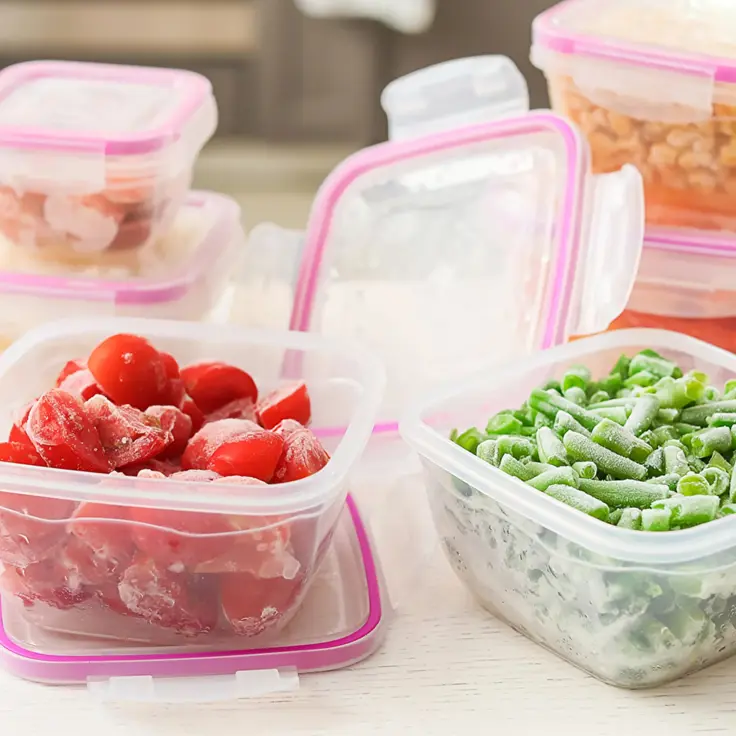
Freezing: it’s all about the packaging
Find out what you should look out for when choosing the packaging to freeze food in. Discover the most important criteria such as food safety, cold resistance and leakproofness to avoid freezer burn and preserve the freshness of your food.

Freezing cream cheese to keep it really fresh
Can you freeze cream cheese? And how long does it keep? Read on to find out this as well as some other tricks.