
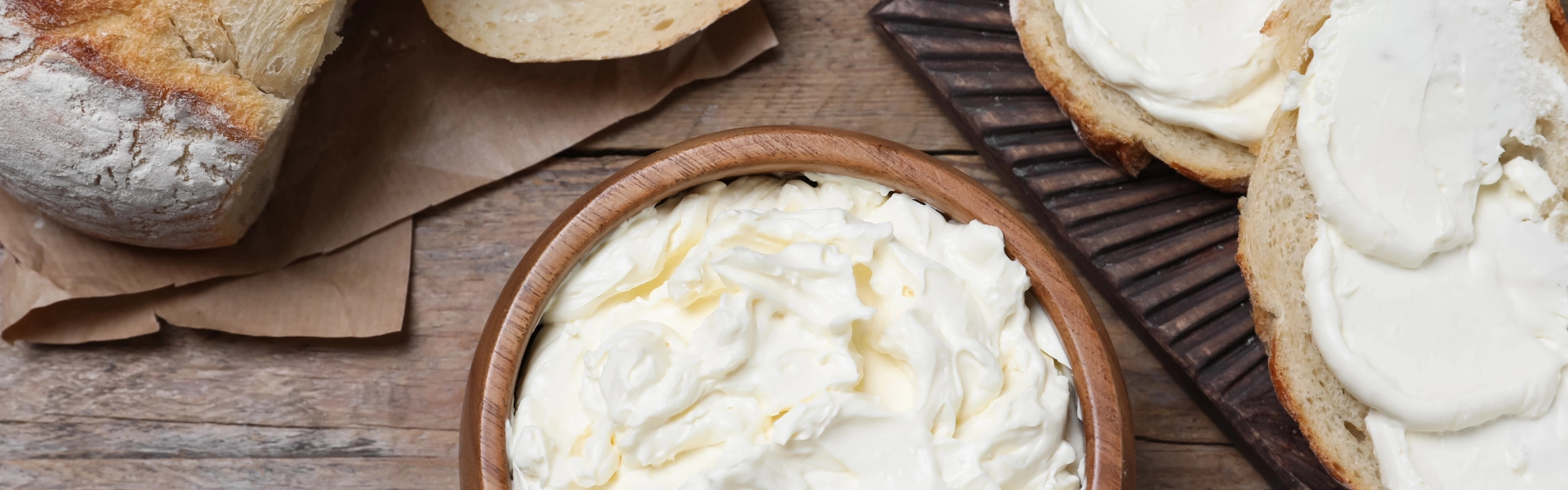
Freezing cream cheese to keep it really fresh
Cream cheese is a kitchen all-rounder. As a spread on bread or in sandwiches, an ingredient in dips, in pasta sauce or cheesecake – this mild cheese adds a creamy texture to any dish. But what do you do when your open package is reaching its use by date? Which begs the question, can you freeze cream cheese? Let us explain its shelf life and how best to use frozen cream cheese.
The key points
- Frozen cream cheese keeps its taste and consistency well.
- Low-fat cream cheese can have a slightly grainy texture after thawing, unlike full-fat cream cheese.
- A higher fat content means that cream cheese loses less moisture when frozen and reduces the chance of freezer burn.
- When you freeze cream cheese, you can keep it for up to 10 months.
- Before freezing, divide the cream cheese into small portions and seal it so that it is airtight.
Freezing cream cheese – does it live up to its promise?
Frozen cream cheese keeps its taste as well as most of its consistency. Freezing significantly extends its shelf life.
As we all know too well: the tub of cream cheese gets pushed into a corner at the back of the refrigerator and is forgotten about. It’s not too long before a musty smell arises or the first hint of mould appears.
Freezing cream cheese might sound a bit odd at first, but this quick trick helps to prevent food being thrown away.
How well the cream cheese keeps its taste and consistency after thawing depends, among other things, on its fat content. Cream cheese comes in different fat contents: From light cream cheese with a low fat content to full-fat cream cheese. These differences in the fat level can affect the texture of the cream cheese after freezing.
Full-fat cream cheese (40 % fat content) usually has a creamier texture and a richer taste. When frozen, full-fat cream cheese retains its texture and taste better than cream cheese with a lower fat content. The reason for this is the fat. Otherwise, fat acts as an insulator when frozen. It reduces moisture loss in the cream cheese and minimizes freezer burn.
Low-fat cream cheese, on the other hand, can lose some of its texture when frozen. After thawing, it may have a slightly grainy or separated texture.
When cream cheese is frozen, it spoils more slowly and also maintains the quality of the mild cheese. The low temperatures prevent mould and bacteria spreading, which can be why cream cheese goes off.

Freezing cream cheese the right way
To successfully freeze cream cheese, divide it into smaller portions. This means that you don't have to thaw all of the cream cheese again. You can use small portions as needed. Use an ice cube tray to equally portion the cream cheese.
In general, you should freeze the cream cheese in airtight containers so that no moisture accumulates during freezing. Otherwise, this can cause ice crystals to form, which in turn can lead to a loss of quality. At the same time, you prevent the cheese absorbing any odours. Air-tight freezer bags, food storage boxes and jars all make good containers.
If you use the ice cube method, let the cream cheese freeze sufficiently and then put the cubes in your freezer packaging.
It’s also a good idea to write the freezing date on the packaging, so you can always keep track of how long the cream cheese has been in the freezer.
How long does cream cheese keep?
When frozen, you can keep cream cheese for a long time. The following information shows how the shelf life of cream cheese changes for each storage location:
- In the refrigerator compartment of your appliance or in Liebherr's EasyFresh safe, cream cheese will stay fresh for seven days.
- In the BioFresh Meat & Dairy safe from Liebherr at just over 0 °C and low humidity, you can store cream cheese for 20 days and it will stay fresh.
- When you freeze cream cheese, you can keep it for up to 10 months.
If you have already opened the cream cheese packaging, keep the package airtight. Cream cheese absorbs odours from other food from the refrigerator.
What is the best way to use frozen cream cheese?
You can add frozen cream cheese directly to any hot food you’re cooking, such as a sauce, and use the heat to slowly thaw it.
If you want to use cream cheese as a spread then put it in an airtight jar and let it thaw overnight. If you want a quicker way: put the frozen container with the cream cheese in a lukewarm water bath. If the cream cheese’s texture is grainier than it was before freezing, mix in some milk or cream.
More tips to preserve cream cheese
For more variety and fun preserving food, we have another tip for you: Put cream cheese in oil. This version livens up any evening snack or antipasti selection!
To do this, form small cream cheese balls and pop these into a sealable jar filled with oil. To make portioning easier, take a desert spoon and cut through the cream cheese.
Form small balls and roll these in black or white sesame seeds or crushed seeds and nuts. You can also add chili flakes or garlic here for an extra kick.
Place the cream cheese balls in a jar sterilized using hot water and fill it with olive oil. Close the lid tightly and store the cream cheese in the Meat & Dairy safe in your Liebherr refrigerator. Preserved in this way, cream cheese keeps for up to two months. You should always use clean cutlery when eating the treats.
The oil forms an extremely effective protective layer around the cream cheese and acts as a physical barrier against air and water. This significantly reduces unwanted bacteria getting in that could spoil the cream cheese. Adding it to oil also allows you to add extra flavors, which add a new depth of taste to the cream cheese.
This might also interest you
Freezing fish: fresh, cooked, defrosted a second time?
Fresh fish is easy to freeze. Cooked fish too? Can defrosted fish be refrozen? Read on to find out how.
Freezing: it’s all about the packaging
Find out what you should look out for when choosing the packaging to freeze food in. Discover the most important criteria such as food safety, cold resistance and leakproofness to avoid freezer burn and preserve the freshness of your food.
Freezer burn: what is it and how can you avoid it?
Read this article to find out what freezer burn is, whether it’s harmful and what tips you can follow to avoid it.