
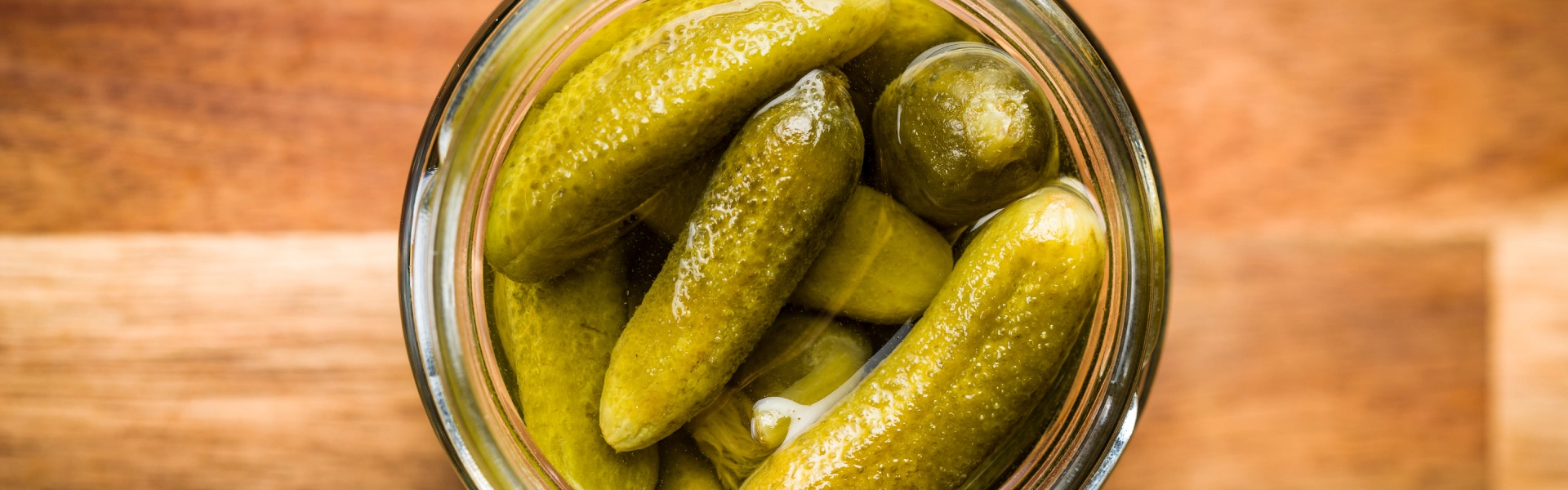
Gherkins – pickling and preserving cucumbers
Cucumbers can be preserved in many different ways. But how do the methods differ? And what actually are gherkins? We show you what pickling and preserving cucumbers means. We also give you three different methods for preserving cucumbers – from gherkins to brined cucumbers and pickles.
The key points
- When preserving or pickling, cucumbers are heated in an airtight container in a water bath or oven.
- When soaking, the food is preserved with vinegar, brine or oil.
- Gherkins can be kept in the refrigerator for at least a week due to the vinegar they contain.
- Brined cucumbers are preserved using brine, which leads to fermentation.
- Pickles are mixed with vinegar and then pasteurized to preserve their shelf life.
- Brined cucumbers and pickles have a shelf life of several months.
What are gherkins?
Gherkins are a type of cucumber salad that is also a method of preserving cucumbers. Their name has nothing to do with the type of cucumber, but is instead related to the way they are produced. Once all the ingredients have been placed in a container, it is sealed and shaken regularly.
Gherkins are a quick side dish for a barbecue or dinner as they can be prepared quickly. For this reason, they are often referred to as ‘quick pickles’ or ‘flash pickles’.
Pickling the gherkins with vinegar without heat, preserves them. This means that vitamins, minerals and secondary plant substances are better preserved.
However, the shelf life of gherkins is significantly shorter than that of fermented or pasteurized cucumbers. You can find out more about this in the next section. In any case, the gherkins should be kept in the refrigerator.
Preserving cucumbers – different methods
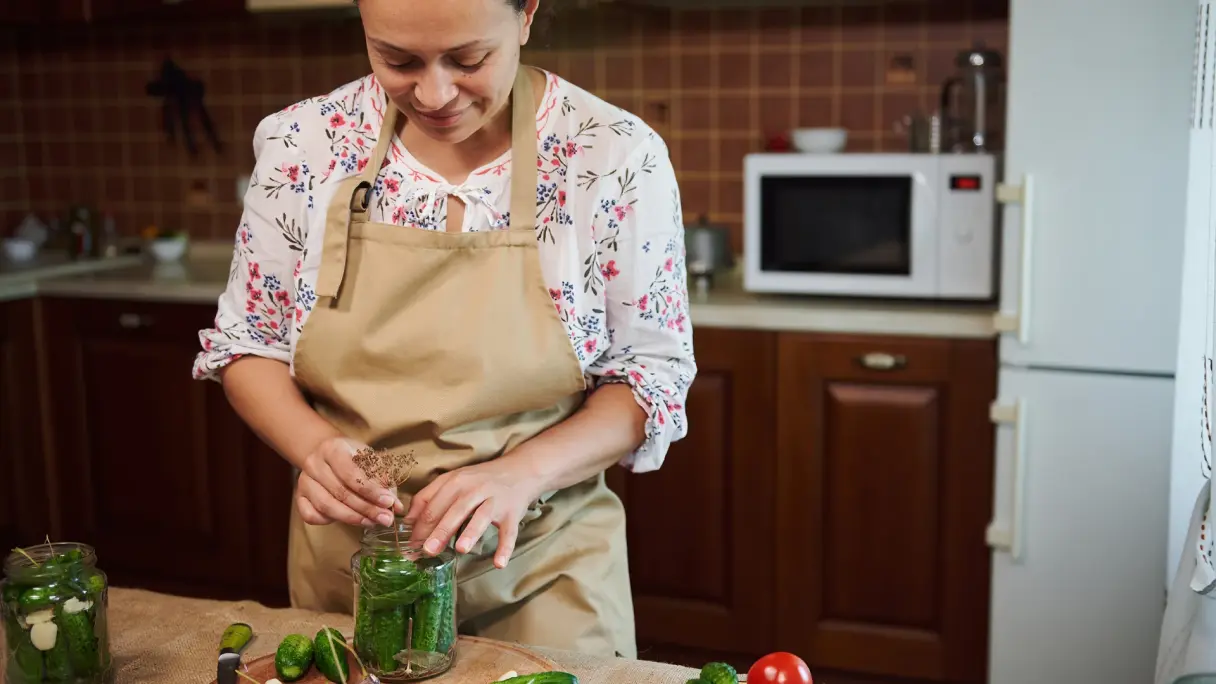
Do you have your own vegetable garden that has produced a particularly large number of cucumbers this year? Or would you simply like to try something new in the kitchen?In any case, it is worth familiarizing yourself with different methods of preserving cucumbers.
In the following sections, we explain the terms ‘preserving cucumbers’, ‘pickling cucumbers’ and ‘soaking cucumbers’ and the difference between the various types of preservation: ‘gherkins’, ‘sour cucumbers’ and ‘pickles’.
The difference: preserving cucumbers – pickling cucumbers – soaking cucumbers
The biggest difference between preserving and soaking cucumbers is the temperature.
When preserving, the gherkins are poured into sterile containers and sealed airtight. The containers are then heated in a water bath or in the oven. This kills harmful microorganisms. The term pickling cucumbers can be used synonymously with the term preserving cucumbers.
Soaking cucumbers, on the other hand, doesn’t involve heat. This means that the shelf life is usually shorter than when preserving – with the exception of fermentation – but nutrients that are beneficial to health are better preserved. When soaking, the cucumbers are preserved by the liquid that completely covers them. Vinegar, brine or oil are often used for this purpose. Airtight and sterile containers should also be used when soaking cucumbers to further extend their shelf life.
The difference: gherkins, brined cucumbers and pickles
More information about gherkins, brined cucumbers and pickles:
Gherkins
The aforementioned gherkins take the least amount of time to prepare. The cucumbers are soaked in the process. They will keep for at least a week in the refrigerator. If you sterilize the container before filling it, seal it airtight and only touch the gherkins with clean cutlery, you can further extend their shelf life.
Shaking during preparation ensures that the flavors are evenly distributed. You should also shake the container regularly during storage. This is because the gherkins absorb liquid over time, which means that some of the vegetables come into contact with oxygen. Shaking mixes up the position of all the ingredients and prevents the same piece of gherkin from always being on top.
Brined cucumbers
Another way of preserving cucumbers is by soaking them in brine – a variant of sour gherkin. The name already tells you what is used here for preservation: salt.
The gherkins are placed in an airtight container with onions, herbs and spices and then brined. To make the brine, add 25–50 g of salt to one litre of water. Once the salt has completely dissolved in the water, the brine is ready. Although the water can be cold, hot water is better as the salt dissolves more quickly and the flavor of the other ingredients is released better. Finally, close the containers tightly.
What happens now is called fermentation. The lactic acid bacteria that are already on the food can survive well without oxygen. They feed on the carbohydrates in the gherkins and release acid in return. This makes it increasingly acidic in the container and therefore increasingly unfavorable for other microorganisms such as moulds. However, this process takes some time. The gherkins only taste sour after about seven days. They have a shelf life of at least six months. Brined cucumbers are therefore a good way to make cucumbers last for a long period of time – without having to preserve them. The longer they remain in the broth, the more intense they taste.
This method of preservation is not new. This process was used thousands of years ago. Stone pots were often used, which can still be bought today. In this traditional method, all the ingredients are gradually layered in the stone pot. Then hot brine is poured over everything. The gherkins are then weighted down with a stone in the traditional way (nowadays you can also use a plate) so that they do not come into contact with oxygen. The pot is then stored in a cool dark place.
Pickles
In addition to brined cucumbers, sour gherkins also include pickles. The big difference: with pickles, the acid is added to the gherkins right at the beginning in the form of vinegar and is not created through fermentation.
Pickles are preserved by pasteurisation. The gherkins are mixed with vinegar, spices and herbs and poured into airtight containers. These are then pasteurized, i.e. briefly heated. This kills or at least inhibits the growth of microorganisms that contribute to food spoilage. The flavor is hardly affected by the short duration (max. 30 seconds) and the lower temperature (below 100 °C). This method also ensures that the gherkins have a shelf life of several months.
Silesian-style pickles are a special variety of gherkins. They are also known as Silesian gherkin rounds. The speciality here lies in the spices and herbs used. The exact composition may vary, but vinegar, sugar, salt, onions, mustard seeds and, above all, fresh dill are always used. Once all the ingredients are well mixed, they are poured into airtight containers and then boiled in hot water at 90 °C for around 30 minutes.
This might also interest you
Preserving – rediscovering a trend
Back in the day, preserving food to make it keep for longer was essential; today it’s a hallmark of a more sustainable lifestyle. Learn how to preserve food.
How to preserve and store red cabbage
Find out how to preserve and store red cabbage now! As well as some interesting facts about this versatile vegetable and its uses in the kitchen.
Can you freeze jam?
We’ll show you some tips on the correct storage method and the shelf life when you freeze jam. You’ll find out all the benefits this brings here.