
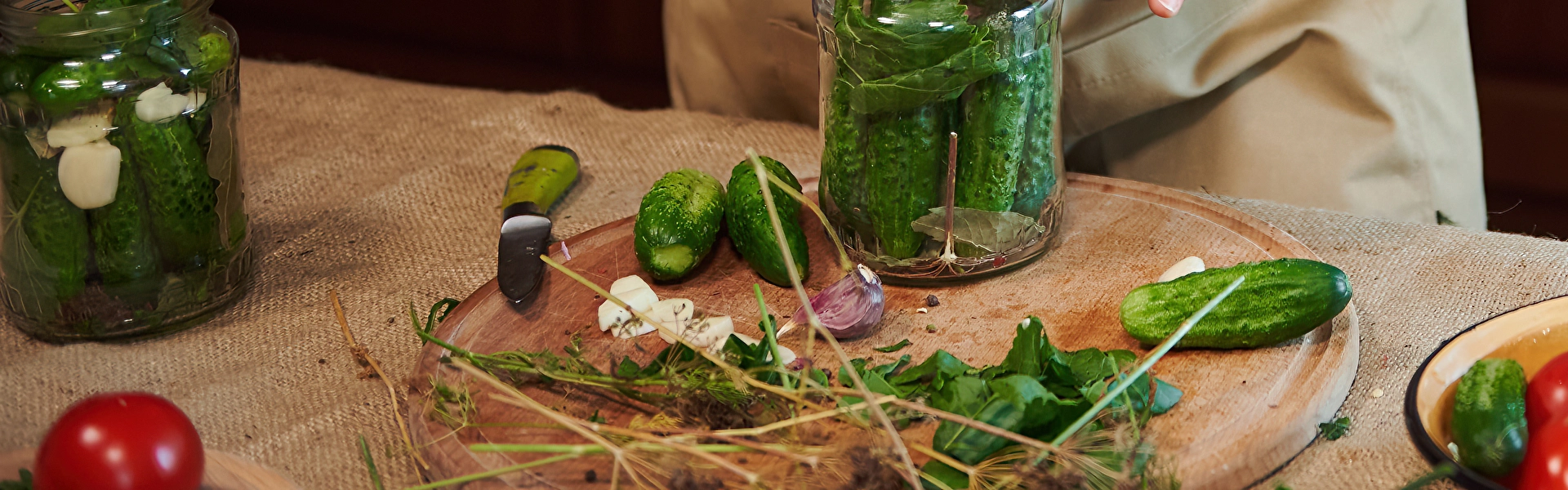
Fermentation – preserving food in a resource-saving way
With the help of fermentation, various food groups can be preserved in a resource-saving way. Try something new with your favorite fruit and vegetables. Not only does fermentation open up a whole new world of complex flavors but these foodstuffs are also extremely beneficial for your intestinal flora. Read on to find out how to ferment vegetables like a professional, which food groups are suitable for this form of preservation, and how you can integrate the finished fermented vegetables into your daily diet.
Health benefits of fermentation:
- During fermentation, the content of heavy metals such as cadmium decreases.
- Lactic acid bacteria are probiotics and enrich the diversity of microbes in the intestine.
- Dietary fibres from vegetables are prebiotics and thus support the proliferation of intestinal bacteria.
- Fermented vegetables are easier for the body to to digest and the nutrients in the food can be better absorbed.
- Fermenting carrots and peppers increases the content of vitamin A.
What is fermentation? An insight into the world of micro-organisms
Fermentation is a natural, biological preservation method that can be used for a wide variety of foods. Through fermentation, food is gently preserved and also develops a new consistency and diverse flavors. The main roles in the fermentation process are played by micro-organisms such as bacteria, yeasts and specific moulds. With the help of their enzymes, the macronutrients – carbohydrates, fats and proteins – in the food are broken down and converted into smaller components. During this substance transformation, acids, gases and alcohol are produced in different types and quantities depending on the type of fermentation and the selected food group.
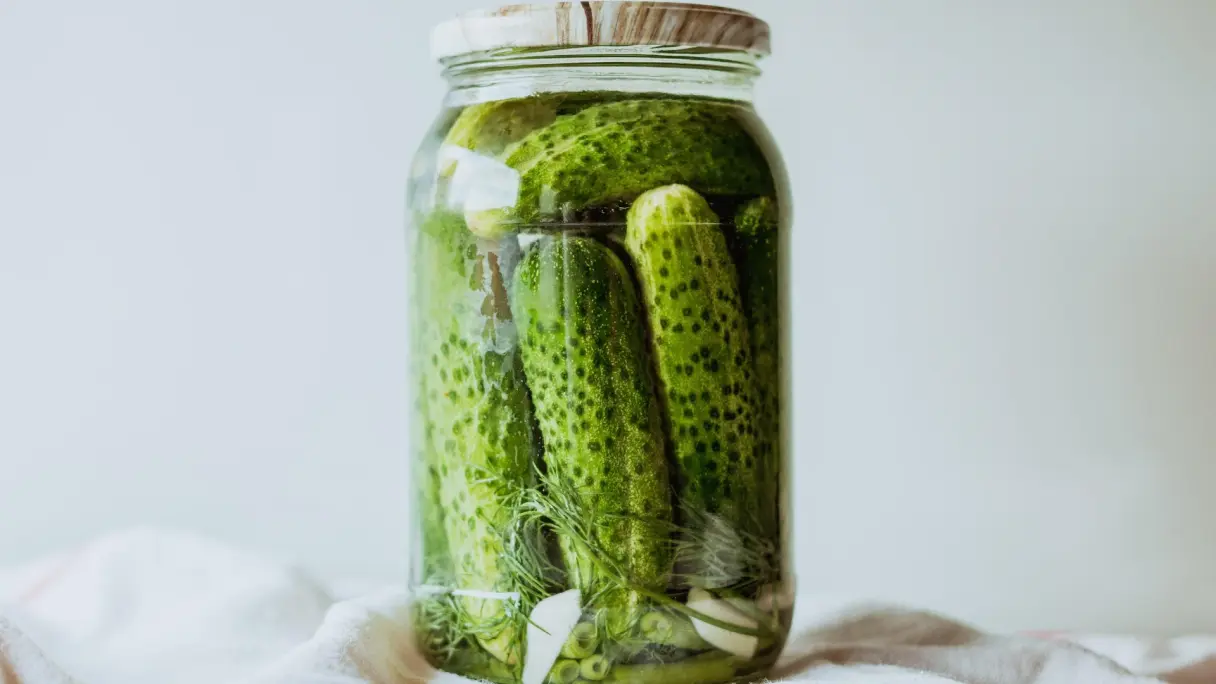
Fermentation – microbes open up a world of enjoyment and diversity
Fermentation has been used to produce different food and beverages for thousands of years. One of the first discoveries was alcoholic fermentation – the birth of wine! From then on, this gentle form of preservation continued to develop. And with good reason. The world of fermented foods is extremely diverse. For example, the process of fermentation creates products like yoghurt and cheese which were once only milk. In fact, some foods such as coffee only become enjoyable through this process. Without fermentation, stimulants such as coffee, tea or alcohol would simply not exist. In the production of blue cheese, the milk is supplemented with special moulds that direct the process in the desired direction. The fermentation of alcoholic beverages is based on the activity of yeasts and requires a lot of sugar from cereals or fruits. So to sum up, there are very different types of fermentation for different food groups.
You will also certainly have seen sauerkraut, fermented green beans or vinegar on the shelf. But the industrially produced products are partly pasteurized to meet the hygiene regulations of the trade. This intense heat exposure diminishes the beneficial probiotic properties and other heat-sensitive nutrients contained in fermented foods.
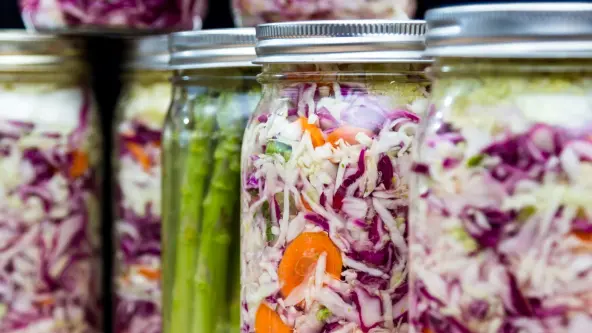
Fermentation of vegetables – lactic acid fermentation
The fermentation of vegetables is a preservation process in which mainly lactic acid bacteria preserve the food and modify the taste of the food. For this reason this type of fermentation is also called lactic acid fermentation. But what exactly happens in this process?
Vegetables of various types are placed in a suitable vessel, for example a glass jar, and then covered with a brine. The lactic acid bacteria then quickly get to work feeding predominantly on carbohydrates from the pickled food and converting them into lactic acid and carbon dioxide. Lactic acid bacteria multiply best without oxygen. Alcohol is also produced to a very small extent during this preservation process but don't worry, the food still suitable for children. Even sauerkraut that you find in the supermarkets contains a small amount of alcohol, which is harmless.
Home fermentation with vegetables can also be called wild fermentation. Wild fermentation is characterized by the fact that no starter cultures – such as specific lactic acid bacteria or moulds – are added. The entire process relies solely on naturally occurring micro-organisms that are already on the peel of the vegetables and in the air in the room – and there are more of them than you would expect! Starting to sound a bit less appealing? Don't worry, as long as you work hygienically, the health-giving lactic acid bacteria will kick in almost at once. This enormously fast multiplication of lactic acid bacteria lowers the pH value in the fermented food and prevents harmful germs from settling on it.

Wild fermentation – for healthy intestines
Lactic acid bacteria are superheroes in a jar! Lactic acid bacteria have probiotic properties. When we eat them, the living lactic acid bacteria enrich the intestinal flora. Furthermore, the vegetables used naturally contain probiotics. These are dietary fibres, that are readily consumed by bacteria in the human intestine and thus contribute significantly to the proliferation of health-promoting gut bacteria. Complex, long-chain carbohydrates are also easier for the human body to digest thanks to the substance transformations that occur during fermentation. In addition, the nutrients contained in the vegetables can be more quickly absorbed by the body. But wild fermentation can do even more than that: during the fermentation of carrots and red peppers, the vitamin A content in these vegetables increases and the content of unhealthy heavy metals, such as cadmium, decreases.
Fermented vegetables are also often credited with containing vitamin B12 (cobalamin), making them a vegan source of the vital vitamin. However, the amounts contained in fermented vegetables are so low that the daily requirement of B12 cannot be met. In addition, the cobalamin contained in fermented foods are absorbed by the body more poorly than B12 found in animal source food.
The wild fermentation of vegetables – quick and easy
So now it’s time to bring out the veggies and make the most of this nutrient-boosting process! For wild fermentation you only need a few utensils, most of which are already available in your kitchen. Wild fermentation is also easy on the wallet. Fermentation does not require energy in the form of heat, because the lactic acid bacteria feel most comfortable at room temperature. Plus, you can easily use up any vegetables that have gone a bit past their best or those you can't process directly into a dish. This helps you to avoid wasting food.
Are you still a little unsure about whether you want to give this a try? Then read on! In the following sections you will find answers to the most pressing questions.
Helpful tips and tricks for successful fermentation
What is needed and what should you pay attention to?
There are hardly any limits when fermenting vegetables. Theoretically, any vegetable is suitable. Only leafy vegetables such as spinach and lettuce should be avoided as their fine leaves become soft too quickly. In general, the vegetables become softer as they ferment due to the substance conversions. This means that the longer you ferment the vegetables, the more tender they become.
Cabbage and root vegetables, for example, are extremely well suited for fermentation. Be brave and mix different types of vegetables! If possible, use organically grown vegetables, as the variety of bacteria on the outside of the vegetable is more diverse than in conventional cultivation. Cut the vegetables into pieces or fine strips or even grate them. The smaller the vegetables are cut, the faster the lactic acid bacteria can do their work.
The lactic acid bacteria prefer low oxygen levels. Therefore, Fido jars are wonderfully suited for fermentation purposes. This is because this process causes carbon dioxide to accumulate, which in turn leads to pressure in the jar. With Fido jars, the gas can easily escape through the rubber seal. Perhaps you don't have a Fido jar at home? Never fear – larger jars with screw caps are also suitable for fermentation. Make sure to rinse out the jars with hot water beforehand.
Remember to keep an eye on your fermenting vegetables. With both types of jars, you should briefly open the lid every three to four days so that gases can escape. And another little tip: carbohydrate-rich vegetables such as beetroot and carrots produce a lot of carbon dioxide, so these can quickly bubble over when fermenting. A small plate beneath the jar can remedy this!
Salt is an essential ingredient in the fermentation of vegetables. The addition of salt prevents the spread of unwanted germs. But what is the correct ratio? As a rule of thumb, you should add two percent of the vegetable weight in salt. For example, for 500 g of cabbage, you would need to add 10 g of salt. It is best to use salt without anti-caking agents such as calcium or magnesium carbonate, in order to eliminate any disruptive factors for the lactic acid bacteria.
During fermentation, new flavor compositions are created and even a small amount of seasoning can be enough to create quite a breathtaking aroma when you open the jar! Ginger, garlic, and onions are also ideal to flavor your fermented vegetables. Seasoning is best added at the bottom of the jar so that it is pressed down under the vegetables.
The watery environment and the gases produced during fermentation cause the vegetables to rise to the top over time. If the vegetables come into contact with oxygen at the surface, there is a chance that mould will form. To prevent this, you should use fermenting weights to push the vegetables down. Although there are many fermenting weights available for purchase, you can also make one yourself. Try filling a food storage bag with clean rocks or marbles. And do you know what people used to use in times gone by? A large cabbage leaf, which was pressed from above on the fermented vegetables.
While some fermented foodstuffs already have a sufficient acidity after one week, it usually takes three to four weeks for types of cabbage. In general, however, it depends solely on your taste! And what better way to enjoy the magic of the process than to have a taste of it every few days? Test your fermented vegetables regularly so you can really pinpoint which acidity suits your taste. However, be sure to always use clean cutlery and don't leave the lid open for too long.
When white deposits are found on the surface of fermenting vegetables, there are only two culprits: mould, or the harmless kahm yeast. Kahm yeast is a thin and rather smooth “carpet”, which covers the entire surface. This is completely harmless but can alter the taste of the fermented vegetables. Kahm yeast develops if you do not fill the jar full enough or open it too much – as the yeast prefers oxygen for growth.
You can easily distinguish mould from kahm yeast just by looking at it. With mould, fluffy little circles are distributed unevenly over the surface of the liquid and can sometimes also take on different colors – and also a pernicious odour. If you identify the deposits as mould, it is unfortunately better to get rid of the fermented food and just give it another go.
Lactic acid bacteria are particularly active at a temperature of 18–22 °C, so you can easily store the vegetables at room temperature as they ferment. After you have reached the desired taste and consistency, you can place them in your Liebherr refrigerator. At low refrigerator temperatures, the bacteria go into hibernation and the fermented vegetables will last up to six months. If space is getting a bit tight in your refrigerator, then you can also keep them in the cellar or, in winter, even on the terrace or balcony.
Ingredients and utensils
- 1 kg white cabbage
- Kitchen grater
- Salt (2 % = 20 g)
- Water
- A large, sealable jar
- To season: caraway, juniper, bay leaf
Home-made sauerkraut – sour and healthy fermented vegetables in four steps
Have you ever tried home-made sauerkraut? It's really worth a go! You have to be quite patient seeing as the cabbage needs three to four weeks to ferment but the preparation is incredibly quick and simple.
1. step
Remove the outer leaves of the white cabbage. Save one large leaf and wash it. Cut the white cabbage into eight large pieces and then grate using the grater.
2. step
Put the cabbage in a large bowl. Add 20 g of salt and massage it vigorously into the shredded cabbage with your hands. Leave the bowl for about 15 minutes.
3. step
Now some of the cabbage juice has escaped – this forms the brine for the fermented vegetables. First put two caraway seeds, a bay leaf, and a juniper berry in the bottom of the jar. Now add the cabbage. Press everything down firmly – this will ensure there are no air bubbles between the pieces of cabbage. Preferably, the cabbage juice will be enough to cover the shredded cabbage pieces. If this is not the case, pour some more water into the jar until it is about ¾ full. Cover the shredded cabbage with the cabbage leaf that you put to one side in the beginning and then firmly press everything down again until the cabbage is beneath the level of the brine.
4. step
Now it's time to close the lid and watch excitedly as it starts to bubble! Make sure to open the jar briefly once every three to four days. Do a taste test once a week. As soon as the cabbage is to your taste, it is ready.
This might also interest you

Fermented beverages – rediscover established ideas
Are you looking for a refreshing alternative to tea and water? We’ll tell you everything you need to know about fermented beverages and the health benefits.

Here’s how to store Kombucha mushrooms
Read on to find out how to store and preserve Kombucha mushrooms and how to make the tea yourself.
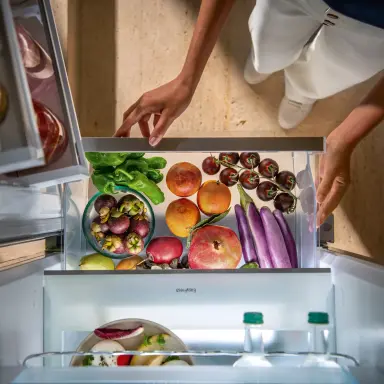
Preserving food in the refrigerator for longer
Most foods can be preserved for longer if they’re stored in the refrigerator. This is why cool temperatures have an impact on the shelf life of food.