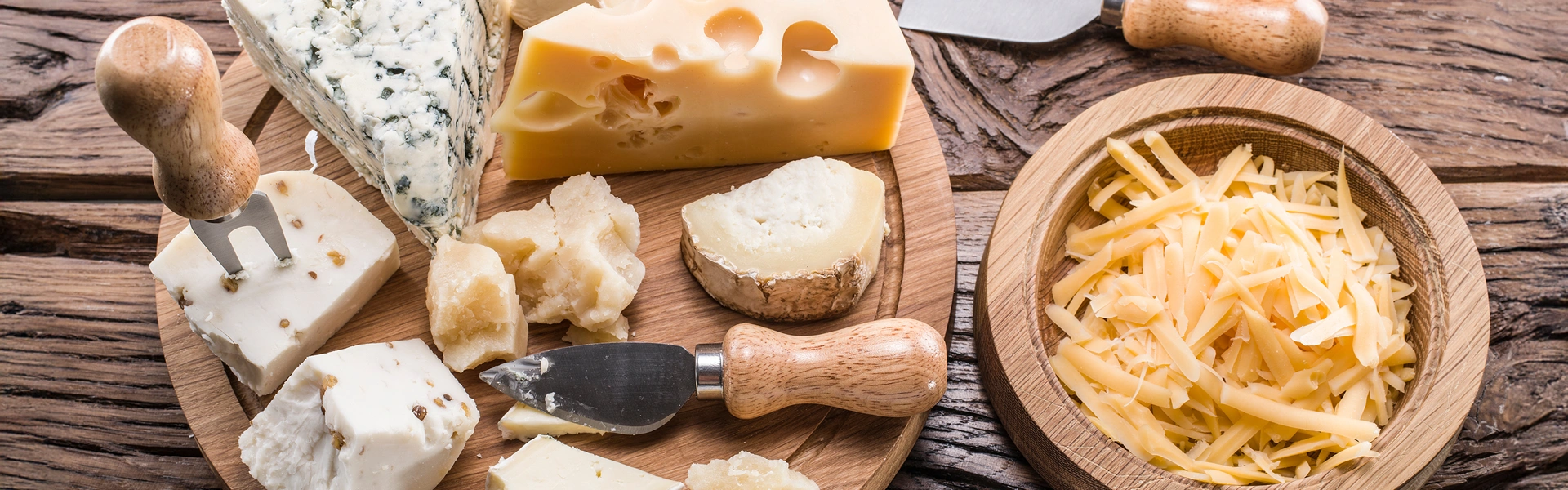
Freezing cheese – what you need to keep in mind
After brunch with your family or friends, several varieties of hard and soft cheese are left over? Your calculations for the raclette were somewhat ambitious? Or the pack of cheese is just too big for your one-person household? We’ll explain when it’s a good idea to freeze cheese and when not.
The key points
- It’s generally advisable to only freeze hard cheese as the difference in consistency which results from the freezing process can have a big impact on the quality of soft cheese.
- Hard cheese can generally be frozen three to six months.
- A goat cheese or a mild grated cheese can last a good three months in the freezer compartment.
- Appenzeller, hard mountain cheese or cheddar, on the other hand, can stay frozen up to six months.
- You can freeze mozzarella in its original packaging.
- We recommend only using cheese you’ve thawed out for baking or cooking.
Freezing cheese – a bad idea?
Cheese matures from the moment it’s produced to the second it lands on your bread or graces your lasagne. When stored at less than two degrees Celsius, this process of maturation is interrupted as the lactic acid bacteria die, causing the cheese to lose it’s aroma. But does that mean you can never freeze your cheese?
Besides just losing aroma, the consistency of the cheese changes while it’s frozen or when it’s thawed out. Therefore, some cheese varieties are more suited to freezing and others not. But more on that later. As a general rule, hard cheeses fare better in the freezer. There are, however, a few caveats.
When you’re portioning out the cheese for freezing, make sure your knife and cutting board are clean. Also only handle the cheese by its rind, taking care not to touch its cut surfaces. Doing so allows you to avoid getting bacteria on the surface of the cheese.
There are certain criteria you should take into account when trying to decide whether you’d like to freeze your cheese in one piece, grated or in slices. A point in favor of freezing cheese in one block is that it remains fresher. But when you thaw it out, the entire block must be used at once. We recommend you don’t freeze it a second time as the quality will continue to deteriorate. Due to its relatively large surface area compared to its volume, grated or sliced cheese is more exposed to the conditions in your freezer. The cheese won’t remain as aromatic as long, and ice crystals will begin to form more quickly between the cheese slices. Grated cheese quickly gathers into clumps, which are difficult to separate later. If you want to avoid this with cheese slices, we recommend separating the slices with waxed paper. Regardless of how you freeze your cheese, you should pack it air-tight in freezer bags or in sealed plastic containers.
Another tip: Before you use it, let your cheese thaw out overnight in your refrigerator. With this gentler thawing process, the consistency and aroma are preserved as well as is possible. Thawing it in the microwave runs the risk of warming it up too much, which can significantly impact the quality.
How long can you freeze cheese?
Hard cheese can generally be frozen three to six months. The higher the degree of maturity, the longer you can subject it to ice-cold temperatures. A goat cheese or a mild grated cheese can last a good three months in your freezer compartment. Appenzeller, hard mountain cheese or cheddar, on the other hand, can stay frozen up to six months.
It’s also possible to freeze quark and cream cheese – even up to ten months – however, they can become a bit clumpy when they’re thawed out and aren’t therefore as wonderfully creamy. So it’s best to only use frozen softer cheeses for baking or for a delicious cheesecake. If you can avoid it, you’re probably better off not freezing cream cheese, quark and other dairy products.
Soft like mozzarella or hard like Parmesan – which types of cheeses are best for freezing?
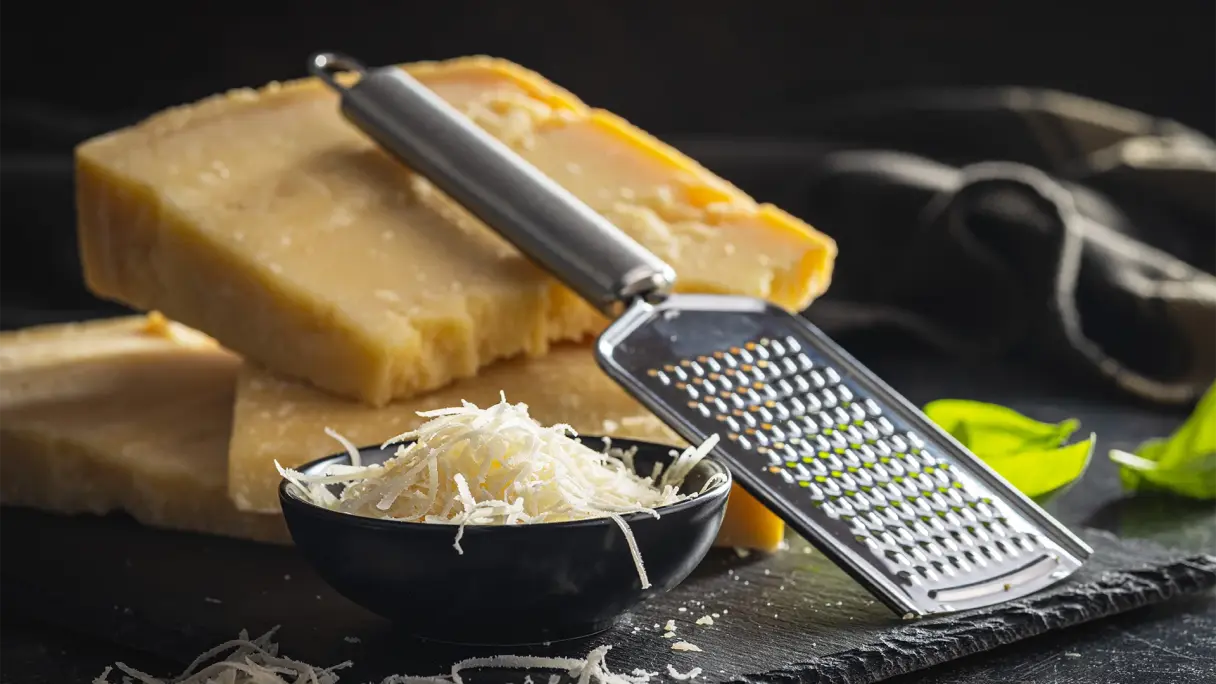
As outlined before, hard cheeses are better for freezing. Regarding the question of whether Parmesan should be grated or frozen in one piece, there are differing schools of thought. Some say that grated Parmesan presents a larger surface area and thus dries and oxidizes more quickly, while those who advocate grating Parmesan before freezing argue that the Parmesan block crumbles after thawing and is therefore much more difficult to grate. You’ll have to decide for yourself which variation is more practical for you.
For mozzarella as well, there’s a trick: Freeze it in its original packaging. The brine surrounding the cheese keeps it fresh longer, and you won’t need any further storage containers or packaging. The disadvantage to this method is that you’ll need longer to thaw out your soft cheese. Another method is to cut the mozzarella into slices, freeze it on a sheet and then pack it in an airtight container. This allows the cheese to be portioned out and used immediately.
Summary:
Because of the changes in consistency that result, you should try to avoid freezing soft cheeses whenever possible. A general rule for all cheese varieties: after freezing and thawing them out again, they are best used cooked or baked in another dish. Thawed out cheeses won’t taste as fresh on a piece of bread any more.
Beyond the freezer compartment – how to keep cheeses longer
The best temperature for storing cheeses is between four and eight degrees Celsius – a typical refrigerator temperature in private households. You shouldn’t necessarily keep your cheese in air-tight packaging when it’s in the the refrigerator. This is because cheese exudes moisture, which should be allowed to escape as mould may otherwise form. The best solution is to store the cheese in paper designed for it or in reusable beeswax wraps. Pungent cheeses should however still be kept in a storage box, as other foods in the refrigerator may absorb the smell.
If you’d like to use a cheese dome, we recommend one made of terracotta, as they breathe better. And consider not storing soft and hard cheeses together under the same dome as the mold cultures of the soft cheese can be transferred to the other varieties. Cheese should also not be stored on a surface where bread has been sliced. The yeast residues can result in mould.
Cheeses like mozzarella or feta should always be stored in an appropriate brine. If you’ve already removed it with the packaging, you can easily make your own. Add one tablespoon of salt to 500 ml of water. Another method: place the feta and mozzarella in high-quality oil. This also increases the shelf life as long as the cheese is fully covered. You can even provide additional flavors with herbs and spices.