Kaki: nutritional values and vitamins of the sweet fruit
Kakis are the berries of a deciduous tree. These trees are native to central China, but have been cultivated for just as long in Korea and Japan. These days, the trees can be found in many subtropical and warmer countries. The sun-seeking kakis only ripen after the leaves have fallen and are therefore much later than many other fruits. Read on to find out all about the nutritional values of kakis and how to store them correctly.
Storage time*
| BioFresh Fruit & Vegetable safe just above 0 °C with high humidity | 29 days |
| EasyFresh safe 7 °C with air regulation plate | 20 days |
| Refrigerator compartment 7 °C | 16 days |
| Freezer compartment -18 °C | 12 months |
The key points
- Kakis are sweet, orange fruits containing lots of vitamin C, beta-carotene and important minerals such as calcium, iron and potassium.
- There are two varieties: tannic varieties, which only taste sweet when fully ripe, and tannin-free varieties, which are also edible when unripe.
- Ripe fruit can be recognized by its glassy flesh and strong color.
- It does not develop its characteristic, full flavor until overripe.
Kakis: packed full of flavor and nutritional value
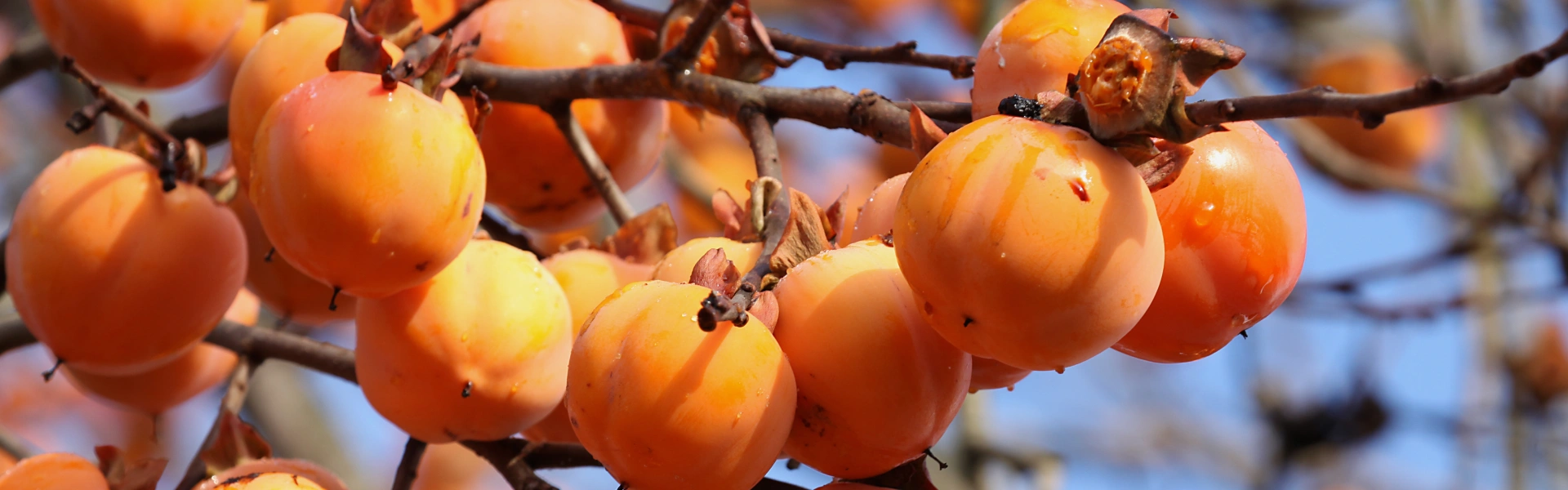
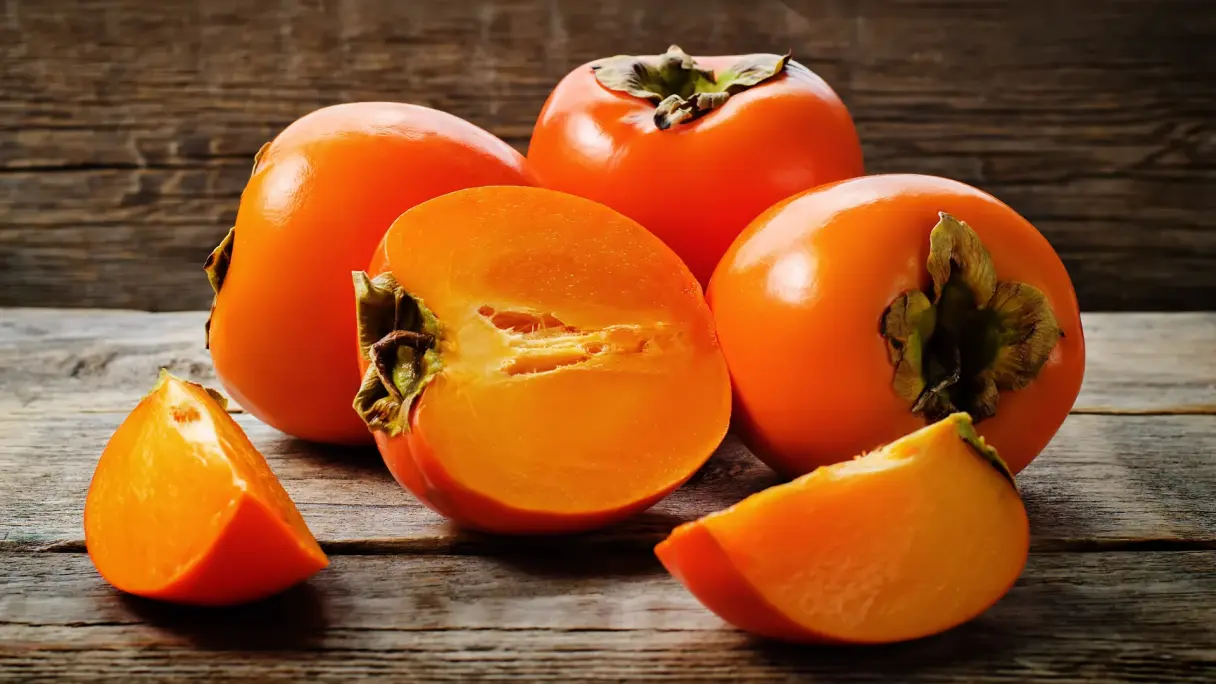
The distinguishing characteristics of the fruit are its yellowy-orange color and its tomato-like shape with the four large leaves on the stalk. The skin is thin, smooth, slightly translucent and usually inedible. Many varieties of kaki are seedless. In taste, it comes close to apricot, pear and a little bit of tomato. However, some fruits also have a bitter aftertaste. This is due to their high tannin content.
Basically, there are two different varieties. Astringent, tannin-containing varieties have a tart and “furry” taste when unripe. When fully ripe, however, they arrive at a pleasant sweetness, although lack a distinct aroma. In contrast, there are also the non-astringent, tannin-free varieties. These can be consumed when unripe and still firm. Unfortunately, however, these differences are not visible from the outside.
Because of its sweet and sugary taste, it is best to eat the kaki raw by cutting it up and peeling off the thin skin. The new varieties of persimmon and Sharon fruit are as firm and crunchy as an apple, which is why you can happily eat them with the skin on. Of course, the sweet fruits also go well in a compote, jam, dessert or in sauces.
Besides having a lot of sugar and approx. 70 calories per 100 grams, kakis are particularly rich in vitamin C and beta-carotene. But the orange fruits also contain calcium, iron, potassium, manganese and phosphorus.
How to store kakis correctly
Kakis are harvested unripe and have to ripen during their transportation and storage. You can tell a ripe kaki by the fact that the flesh of the fruit shimmers through the skin with a glassy sheen. When shopping, it is best to select the brightly colored fruits that look like they are about to burst. The leaves should be intact. A special feature of the orange fruit is that it does not develop its characteristic, full flavor until overripe. At this stage of ripeness, other fruits are rejected by most consumers.
If you have actually bought very ripe, aromatic fruit, this of course brings us to the tricky issue of storage. The best place to store them is in the refrigerator, where kakis will stay fresh for seven days at 7 °C. In the special freshness compartment of a Liebherr refrigerator, fruits and other sensitive foods can be stored in the BioFresh Fruit and Vegetable safefor up to 29 days. The high humidity and the temperature just above 0 °C keep the kakis and their nutritional values fresh for longer. You should still consume the fruit quickly. Whole fruits can also be frozen easily. If you’ve bought unripe kakis, you can ripen the fruit at home in a paper bag at room temperature, as it’s a climacteric fruit variety.
*All specifications given are to be considered as guideline values, and depend in each case on the type of food and on the proper storage without interruption of the cold chain from harvest/production through to the Liebherr appliance. Should food products have information about minimum shelf life, the date on the packaging always applies.