Hazelnuts: healthy energy with good nutritional values
Simply irresistible! Creamy nut spread on your bread at breakfast time or your favorite chocolate with whole hazelnuts, which provide this sweet treat with valuable nutrients. Sometimes, amid all our chocolate fantasies, we forget that the nuts contained in chocolate come from a bush: the hazelnut bush! Find out everything you need to know about this popular nut and its nutrients here.
Storage time*
| Refrigerator compartment 7 °C | 180 days |
| Room temperature 20 °C | 90 days |
| Freezer compartment -18 °C | 24 months |
The key points
- Hazelnuts are very high in energy and contain unsaturated fatty acids.
- They are rich in vitamin E, B vitamins, magnesium, calcium and iron.
- They are versatile and can be used as a snack, in baked goods, as nut butter or oil, and are particularly aromatic after roasting.
- “May contain traces of nuts” is a voluntary indication of possible cross-contamination during production.
Hazelnut: what nutritional values does it contain?
Hazelnuts consist approximately of 14 % protein and 60 % fat. Hazelnuts are also high in vitamins B and E and contain many minerals. It is clear that hazelnuts are very high in energy, containing 630 calories, which is why they should only be consumed in moderation despite their nutritionally valuable ingredients. But it isn't just the amount of fat, but also the composition of the fatty acids which needs to be taken into account. This really is quite impressive in the case of hazelnuts. They contain predominantly mono- and polyunsaturated fatty acids. Walnuts, peanuts and almonds also boast positive nutritional values. It is best to combine a range of different types of nuts as part of a balanced diet.
What types of hazelnuts are there?
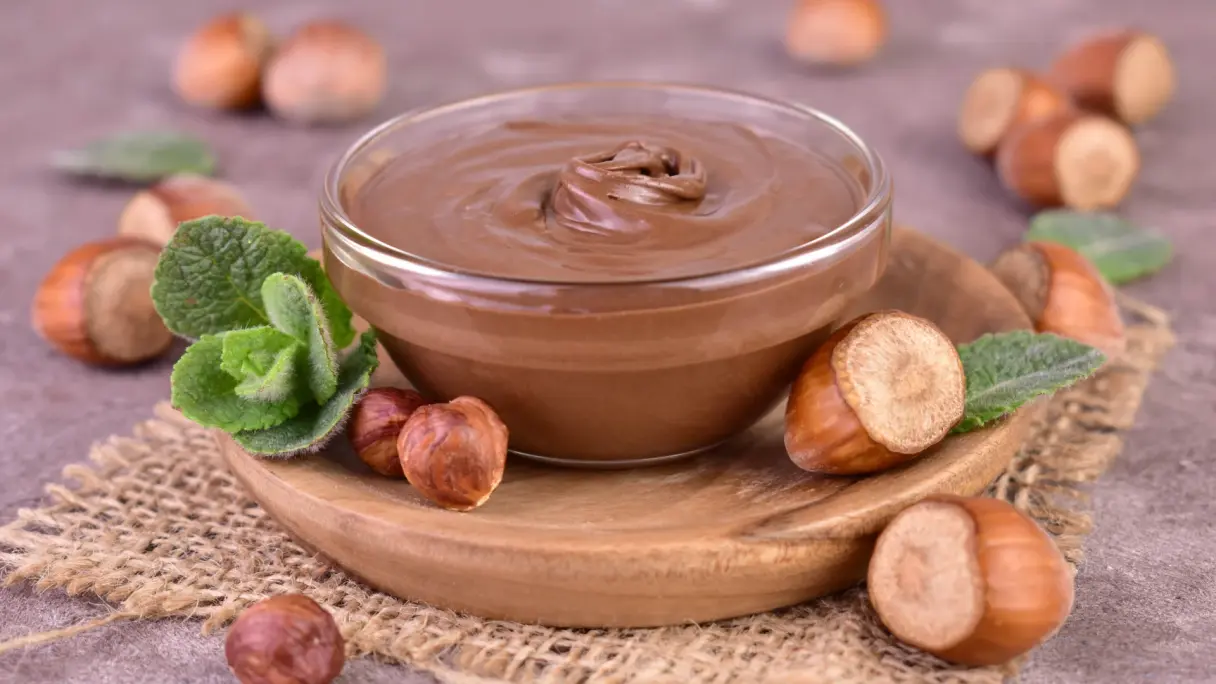
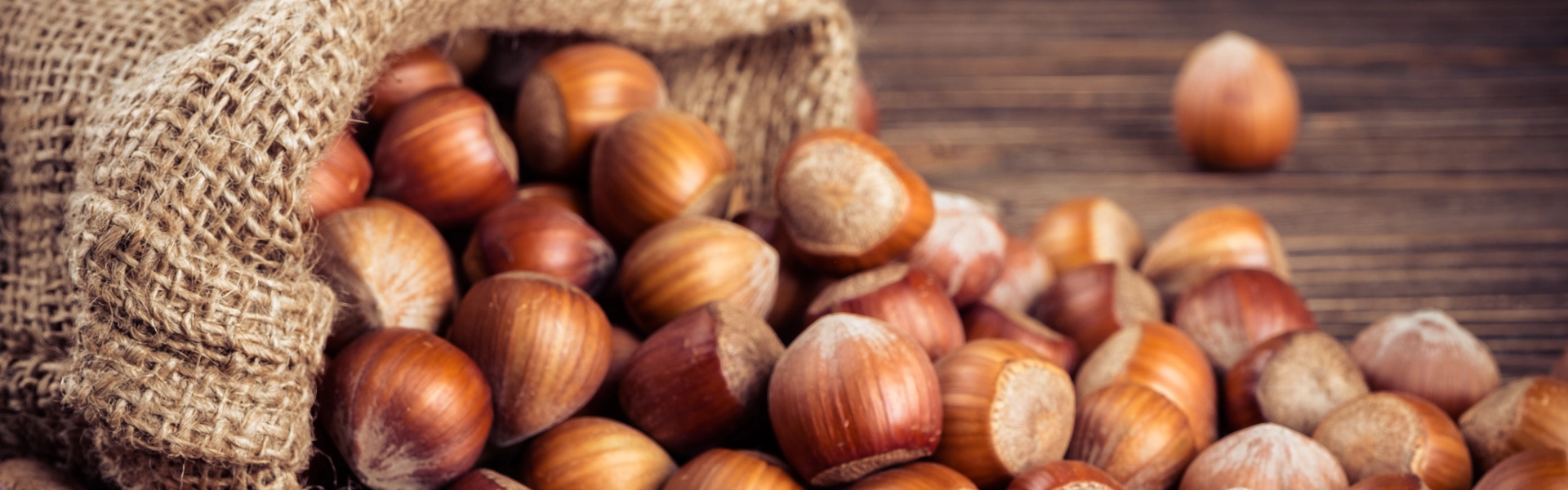
Hazelnuts can be divided into three groups according to their shape. Round hazelnuts are also called cobnuts. They are medium sized, easy to crack and very high quality. By contrast, the pointed hazelnuts have a slightly elongated shape and the flower end is pointed or rounded. When cracking this type, the kernel is easily damaged which is why they are generally only sold with the shells. The long almond-shaped hazelnuts have the least impact on the hazelnut market. While they are certainly large, they are lower in quality and not suitable for cracking.
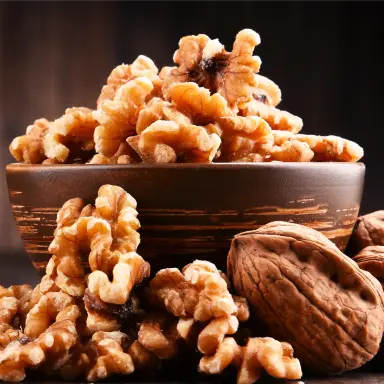
Hazelnuts are in fact one of the “true” nuts. What is quite surprising is that most foods described as nuts are actually not nuts at all, but fruits. The peanut, for example, is a legume. Also worth noting is that, in botanical terms, the strawberry is also a nut!
Hazelnuts: excellent nutritional values, hard shell and soft kernel
When cracking the hazelnut shells, it's best to use a nutcracker otherwise you might damage the kernel. If you want to turn the kernels into nut flour, a food chopper or food processor is best. Carry on mixing the nut flour and after a few minutes you get nut purée which is ideal for perfecting sauces or enhancing desserts.
Beneath the firm woody shells, the hazelnut still has a brown skin surrounding the precious nut. The skin is also completely edible. However, if you do wish to remove the skin for aesthetic reasons, then roast the nuts in the oven at 200 °C for 20 minutes. This not only intensifies the flavor, but the skin can also be simply rubbed off using a kitchen towel.
What does “may contain traces of nuts” mean on processed foods?
The labelling referred to is a voluntary declaration on the part of the manufacturer. In most cases this is due to the fact that multiple ingredients, and not just one single food item, are processed in large production facilities. Therefore, once nuts are being processed in a production facility, the manufacturers cover themselves with this information because (in the worst case scenario) unwanted cross-contamination may occur. These “traces” however are not defined in terms of quantity which means that the product may contain no traces at all or maybe an entire nut. Therefore, if you do actually suffer from an allergy, it's best to ask the manufacturer directly what type of nuts are involved and whether this does in fact pose an acute risk to health.
*All specifications given are to be considered as guideline values, and depend in each case on the type of food and on the proper storage without interruption of the cold chain from harvest/production through to the Liebherr appliance. Should food products have information about minimum shelf life, the date on the packaging always applies.