Strawberry – low-calorie source of vitamin C
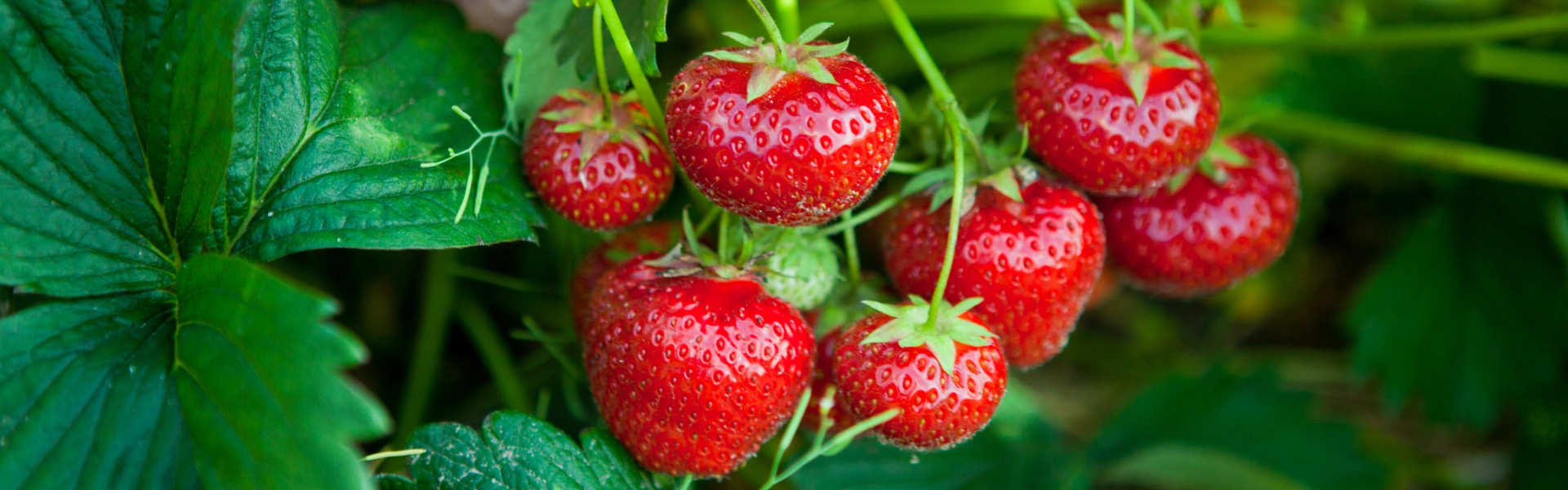
Strawberries are a favorite summer fruit for young and old alike. From May to July, it’s strawberry season again in Central Europe. Alas, the red fruits are among the most sensitive of all fruit varieties. Our tips not only help you to store them properly, but also to grow them yourself in the garden or on the balcony.
Storage time*
| BioFresh Fruit & Vegetable safe just above 0 °C with high humidity | 7 days |
| EasyFresh safe 7 °C with air regulation plate | 3 days |
| Refrigerator compartment 7 °C | 2 days |
| Freezer compartment -18 °C | 24 months |
The key points
- The vitamin C content of strawberries is even higher than that of lemons or oranges
- Strawberries contain many minerals such as calcium, iron and zinc.
- They are considered a very low-calorie fruit with around 32 kilocalories per 100 grams
- The strawberry consists of 90 percent water.
- Strawberries taste best immediately after picking
The history of the strawberry
As far back as the Stone Age, our ancestors enjoyed eating the small-fruited version of the strawberry we know today. In ancient times, the Roman poets Ovid, Pliny and Virgil wrote about the strawberry and described it as the ‘little sweet fruit of the gods’. The small-fruited garden strawberry was cultivated in France and England in the 14th and 15th centuries and arrived in Europe from Canada as the large-fruited strawberry in the 17th century. The strawberry arrived in Germany at the end of the 17th century and gained popularity in the middle of the 18th century.
Tasty and healthy
Strawberries are in peak season in Central Europe from May to July. Even now, in many places, people are drawn back to the strawberry fields to pick the small berries themselves. Strawberries not only taste delicious, but are also a real ‘vitamin bomb’ with their high vitamin C content. Their vitamin C content is even higher than that of lemons or oranges. And with just around 32 kilocalories per 100 grams, it is considered a very low-calorie fruit, so you can enjoy it without any qualms. Strawberries also contain many minerals such as calcium, iron and zinc.
Particularly noteworthy is the fact that the strawberry is 90 percent water, yet still has a lot to offer in terms of flavor. The remaining 10 percent, after all, are big hitters: the more sun the strawberry gets during the ripening process, the higher its share of the fruit acid, fructose and flavor content that make it so popular with young and old alike. It comes as no surprise, then, that strawberries are widely regarded as a very popular fruit.
How to keep strawberries fresh for longer
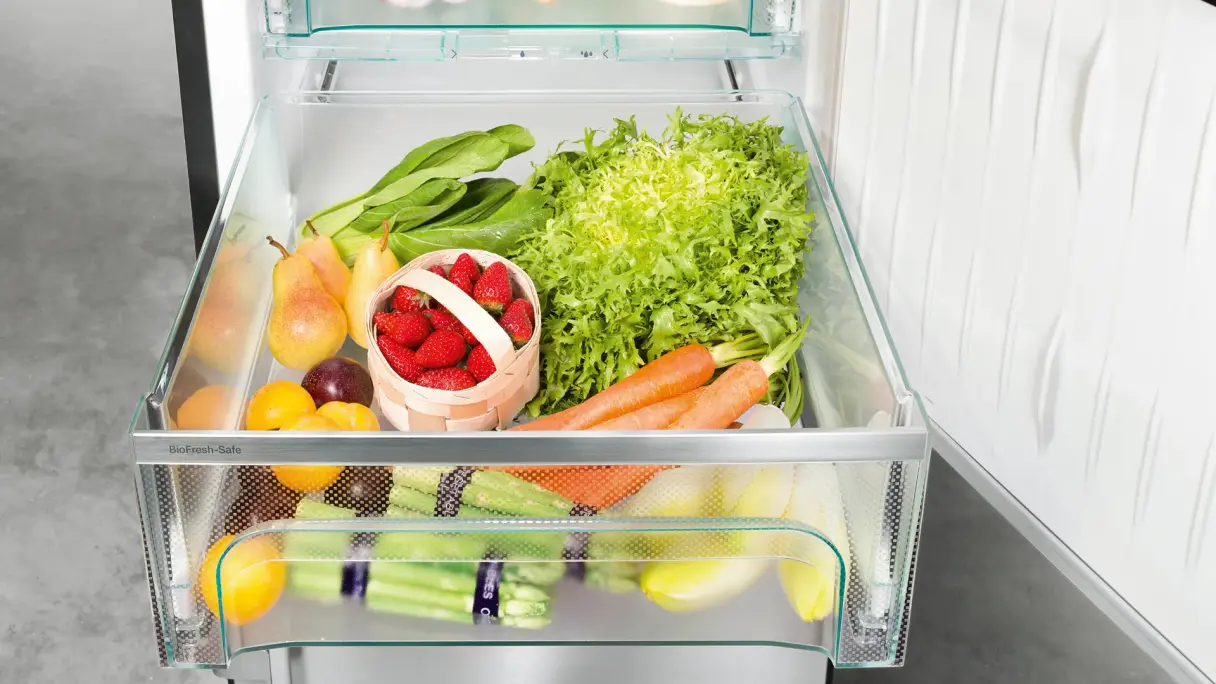
Strawberries taste best just after picking, as they begin to lose their flavor after a few hours. So you should put strawberries in the refrigerator right away. There, the sweet fruit will keep for two days. To enjoy your strawberries a little longer, put them in the Liebherr BioFresh safe. There, your strawberries will keep for up to 7 days. It is best to spread them out on a tray lined with kitchen paper immediately after washing. Ripe strawberries react to pressure and moisture by losing flavor, nutrients and their shape. It is therefore advisable to store strawberries for longer periods only in exceptional cases.
What you should bear in mind when freezing
Our tip:
wash the strawberries before freezing them. However, please note that strawberries do not like cold showers or direct jets of water. It is best to clean strawberries in a bowl of water. After washing, you should place the strawberries on a tray to drain and only then is it advisable to remove the stems and leaves, otherwise the flavor will be watered down.
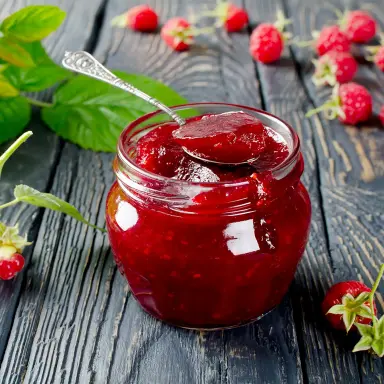
Only use fresh, whole and undamaged strawberries for freezing. Strawberries can be frozen for up to two years. However, when thawed later, the shape of the strawberries is affected due to the high water content. This is why strawberries that have been revived from the freezer are not particularly suitable for cakes and pies. On the other hand, they are ideal for creams, quark dishes and ice cream, compotes or jams.
The NoFrost compartment offers optimum storage conditions
With NoFrost technology, Liebherr gives you the option of freezing strawberries perfectly in many appliances. The compartment has the advantage that the berries can be spread over a large area, so they don’t stick together and can also be easily portioned. Distribute the strawberries and leave to pre-freeze for approx. 10 to 12 hours. You can then transfer the strawberries to freezer bags or containers. Commercially available freezer bags or resealable plastic containers are ideal for optimum storage. Important: these should be tightly sealable so that no water exchange takes place.
*All specifications given are to be considered as guideline values, and depend in each case on the type of food and on the proper storage without interruption of the cold chain from harvest/production through to the Liebherr appliance. Should food products have information about minimum shelf life, the date on the packaging always applies.