Sloe – here’s why this fruit’s so healthy!
Even in the colder seasons, nature serves up a wide variety of wild fruits. Because of their deep blue color, you might fail to spot sloe on the bushes, but their nutritional content and taste make them a healthy and delectable treat. The next time you’re on a winter walk, keep an eye out for these blueberry-like fruits in the shrubbery. To learn more about their nutritional benefits, their effects as well as some enticing recipes, read on.
The key points
- When raw, sloes are bitter and slightly sour.
- Sloe contains tannins which, due to their slightly bitter quality, have diuretic and slightly laxative effects and can positively affect your blood sugar level.
- Vitamin C is the main agent in the black berries.
- Sloe can be eaten raw or heated first.
- The sloe kernel shouldn’t be eaten as it contains hydrogen cyanide.
- Sloe can be made into an excellent fruity jam, tea, juice or liqueur.
Sloe – taste, nutrients and effects
A substance called anthocyane is responsible for the dark color of sloe, which have antioxidant properties. The bitter taste of the berries is caused by the tannins, which have an astringent quality and act as a vasoconstrictor. This gives your tongue a slightly rough and furry feeling when you eat them. It’s a characteristic that also gives the fruit slightly laxative and diuretic properties. These berries have been used for many years in herbal medicine for exactly this purpose. There is scientific evidence for the positive effects of tannins on one’s blood sugar level. What’s more, 100 g of sloe contain 24 mg of vitamin C – that would satisfy 21% of your daily requirement. However, as vitamin C is heat-sensitive, if you heat the berries, the vitamin C content is decreased. If you’ve missed your window for harvesting the berries, you can still use the blossoms, which make for an excellent and aromatic tea. Both sloe blossoms and the berries have anti-inflammatory effects.
Beside their unmistakable taste, sloe also provides nutritional benefits and can be found in abundance in nature, so keep your eyes open on your next winter walk!
Location and origin of fruity sloe
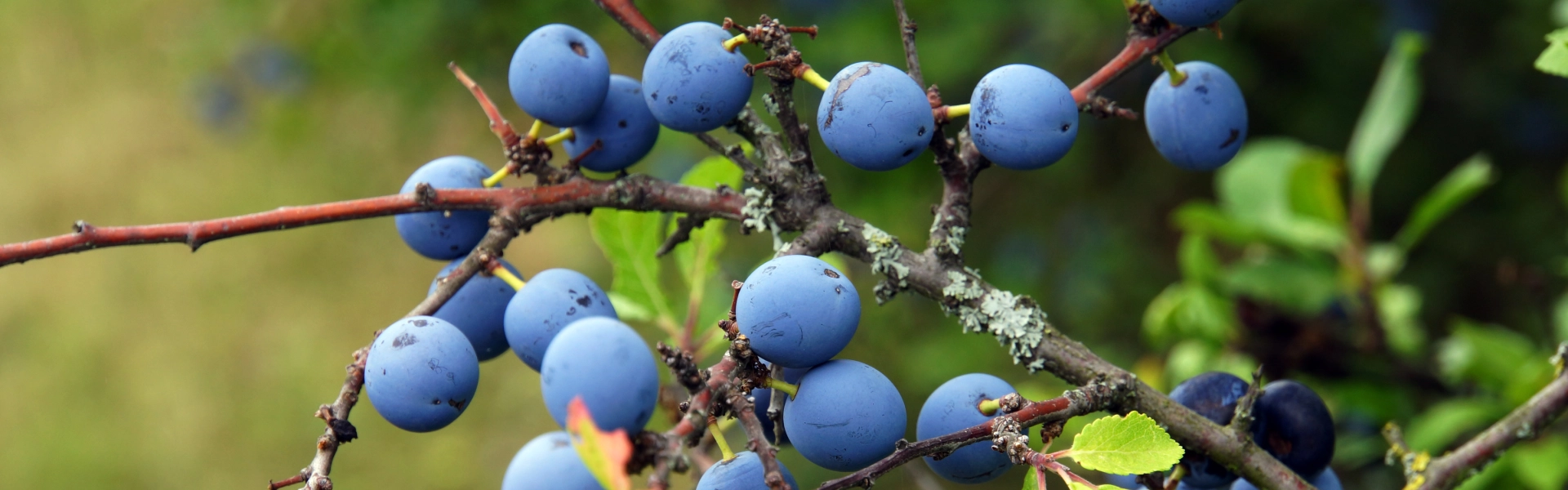
Botanically speaking, the sloe is a type of plum. The fruit is small and spherical and is dark blue to light purple in color, which is why it’s also referred to as blackthorn. Sloe grows on thorny shrubs and can be found in Europe as well as in the Mediterranean area. The older the shrub, the more thorns it has.
Sloe can often be found along paths in deciduous forests or in hedges and can be found from October to March. Sloe prefers drier soil in sunny areas. They tend to congregate with hazelnut trees as well as with both wild rose and juniper berries. If you’d like to pick sloe, remember to bring gloves as the shrubs are thorny.
There are different types of sloe, whose sugar content varies. For a sweeter tasting berry, wait until the first frost. The negative temperatures cause the tannins to be broken down by enzymes present in the fruit, yielding a sweeter berry.
Processing and storing sloes

Sloe can be made into an excellent fruity jam and can be sipped as a juice or tea, but they also make an exquisite liqueur. Here you’ll learn all you need to keep in mind when processing sloes:
As soon as you’ve harvested these little wild fruits, you should think about how you want to preserve them so as to avoid nutrient loss. If, however, you have other plans, you can also freeze your sloe in your Liebherr chest freezer. A quick freeze has other advantages. You don’t necessarily need to wait until the first frost to pick your berries – you can imitate a freeze. Raw sloe berries are only edible to a certain extent as the pits of these purple-blue fruits contains amygdalin. This substance is converted into hydrogen cyanide in the body, which impedes the transport of oxygen out of red blood cells. Children in particular shouldn’t eat sloe kernels raw as their bodies remove the hydrogen cyanide less efficiently. As long as the kernel is removed, you can eat the berries raw, but to do so, you have to be a true lover of all things bitter. Eaten raw, sloe is sharp and slightly sour due to the bitter constituents contained in their flesh. The bitterness decreases during heating. But harvesting them at the right time can also make the berries sweeter. It’s possible to store sloe in your Liebherr freezer compartment up to 12 months, but they come out mushy after thawing and are better processed further than used as decoration or eaten raw.
Ingredients for one litre of sloe juice:
- 750 g sloe
- 1 litre water
- 750 g (brown) sugar
- 1 tbsp lemon juice
- Cinnamon or anise as desired
- Sterile jars for storage
Sloe recipe that are both tasty and effective
You can use sloe to create a juice that you won’t find in any supermarket! You’ll only need a few utensils to make your own sloe juice, but you will need quite a bit of patience. Making the juice requires you to boil the berries several times in order to achieve the unmistakable and intense aroma of this fruit – so plan about three to four days to prepare your sloe juice.
Making sloe juice in three steps
1. Wash the sloe berries and dry them briefly. Place the fruit in a pot and pour boiling water over them. Place a lid on the pot and let the mixture sit for 24 hours without applying any further heat.
2. Pour the aromatic sloe water into a fresh pot, using a sieve to catch the sloe. Boil the juice first without the berries, then add the fruit as soon as the juice is boiling. Let the fruit juice mixture sit covered for an additional 24 hours. Repeat this step approximately four times.
3. On the last day, you can boil the juice with sugar and lemon juice. Add spices like a pinch of cinnamon or anise as desired. Place the boiled juice in the previously cleaned jars.