

Yuzu – taste and health benefits that go well beyond Japan’s borders
At winter solstice, there’s a tradition in Japan to take a hot bath with halved yuzu fruits. This is meant to keep you healthy for the rest of the winter and to hold all cold viruses at bay. Here, we could never afford such baths. A kilogramme of the fruit costs about 50 euros. But what makes this fruit so special? To find out everything about the yuzu fruit, its taste and its effects, read on.
The key points
- Yuzu is a cross between a mandarin and an ichang lemon.
- Yuzu looks like a small orange.
- The pleasant acidity and tart notes of yuzu are accompanied by a subtle sweet aftertaste.
- A yuzu contains around three times as much vitamin C as a lemon.
- In general, yuzu can be added as a paste, sauce, juice, purée or simply fresh as a fruit to a wide variety of sweet and savory recipes.
The origin of the fruit
The high price is due mainly to the great distances it must travel to get to us and the complicated transport. As yuzu only keeps for about three weeks and doesn’t ripen further after it’s harvested, the transport needs to go quickly. Having this shipping infrastructure at the press of a button, however, is very costly as the main growing areas lie in faraway lands such as Japan, China and Korea. Thus the fruit is rarely easy to get a hold of fresh. If – despite all of this – you’d like to treat yourself to a fresh yuzu, your Liebherr refrigerator will keep it aromatic and full of vitamins quite a bit longer. Thanks to BioFresh fresh technology, your Liebherr provides a perfect climate for fruit and veg. In gourmet shops or online, you can also find such things as yuzu juice or yuzu purée as well as yuzu tea that keep longer.
Yuzu – is the fruit really a stress killer?
Because of the thick peel and the abundance of seeds, the actual fruit content of the yuzu is reduced quite a bit. For 100 ml of yuzu juice about a kilogramme of fruit is needed. So the peel is often used to flavor certain dishes. It’s also used in the cosmetics industry to aromatize care products.
Scientific studies indicate that just inhaling the yuzu aroma can significantly decrease feelings of stress and negative emotions. The fruit also exhibits positive effects in the treatment of premenstrual symptoms.
The yuzu taste is very versatile
Yuzu is a cross between a mandarin and an ichang lemon. It’s the lemon side of the family that allows the fruit to survive even in frostier climes. This cross breeding yields a fruit that looks like a small orange. But the taste of a yuzu is much more complex and intense. The fullness of its aroma is much greater than its tennis ball size might lead you to believe. The delightfully tart and slightly bitter notes, similar to a grapefruit, are complemented by a pleasantly sweet after taste. Because the flavor is so intense, a little yuzu goes a long way. Generally, just a few drops are sufficient to aromatize an entire meal.
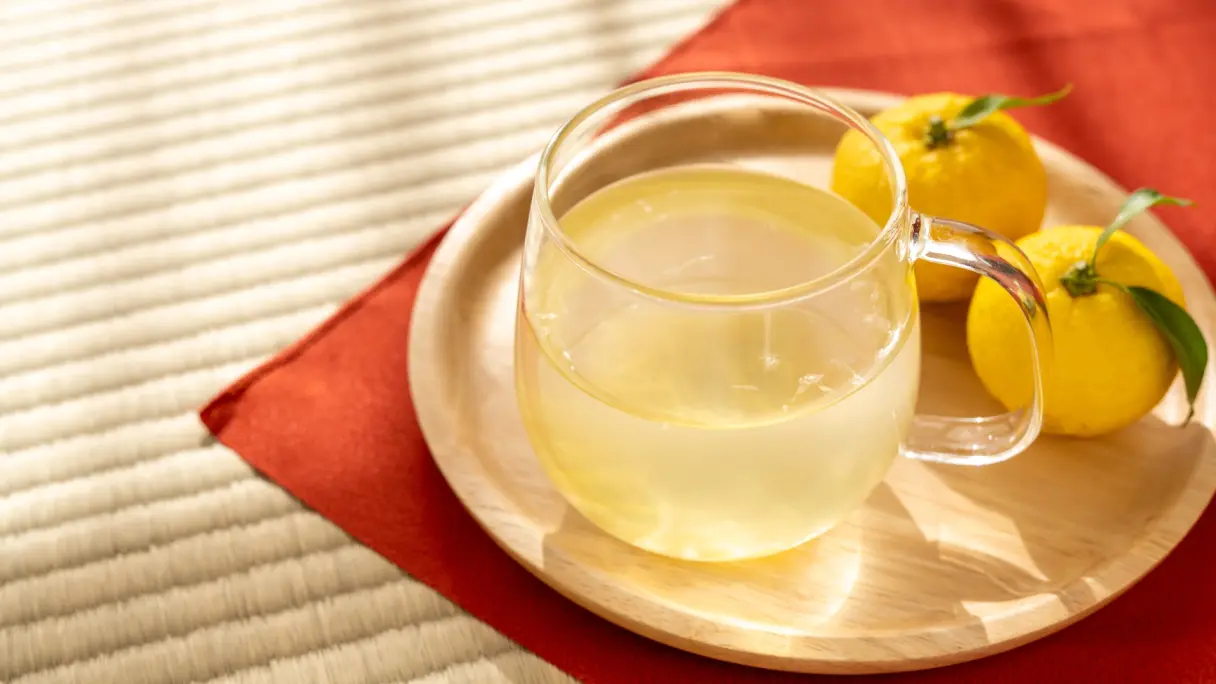
Yuzu tea
Beside the traditional yuzu bath, yuzu tea is gaining popularity in Japan. However, it’s not the dried yuzu peel that forms the basis of this tea, but rather a gel-like mass, mixed with sugar syrup or honey. To prepare yuzu tea, hot water is poured over one to two teaspoons of this jelly. The vitamin C contained in the fruit – roughly three times as much as in a lemon – is thought to ward off even the most virulent cold virus.
Further recipe ideas with yuzu
Something which is also quite popular in Japan is yuzukosho, a spice paste containing yuzu to which salt and chilli pepper have been added. Green chillies produce a green spice paste and red chillies an orange paste. There’s also yuzu ponzu, which is a soy sauce aromatized with yuzu, adding further complexity to the richness of Asian cuisine.
In general, yuzu can be added as a paste, sauce, juice, purée or simply fresh as a fruit to a wide variety of recipes. The fruit is perfect for both sweet and savory dishes. Whether it’s a curry, wok dish or stir fry you’re after – just a few drops of the fruit can bring a whole new aroma spectrum to your dishes. But even mild cream dishes or tarts can be flavored with yuzu. If you fancy something cooler, consider a yuzu cocktail with, for example, 30 ml of yuzu purée and 40 ml of gin mixed with 120 ml of tonic water. For the teetotallers among you, add a little yuzu juice to ginger beer and elderberry syrup. Cheers!
*All specifications given are to be considered as guideline values, and depend in each case on the type of food and on the proper storage without interruption of the cold chain from harvest/production through to the Liebherr appliance. Should food products have information about minimum shelf life, the date on the packaging always applies.
This might also interest you

Eat healthily: could food replace medicine?
Find out how eating healthily can boost your well-being. Valuable tips, nutrients and inspiration for a health-conscious lifestyle!

Kiwi: calories, vitamins and how healthy they are
Discover the nutrient-rich kiwi: health, nutrients, optimal storage and tips for planting.
Mochi ice cream – healthy ice cream balls from Japan
The new ice cream trend from Japan is literally on everyone’s lips. To find out what goes into these frozen little rice flour cakes, read on.