Basil: effects, nutritional values and vitamins of this herb
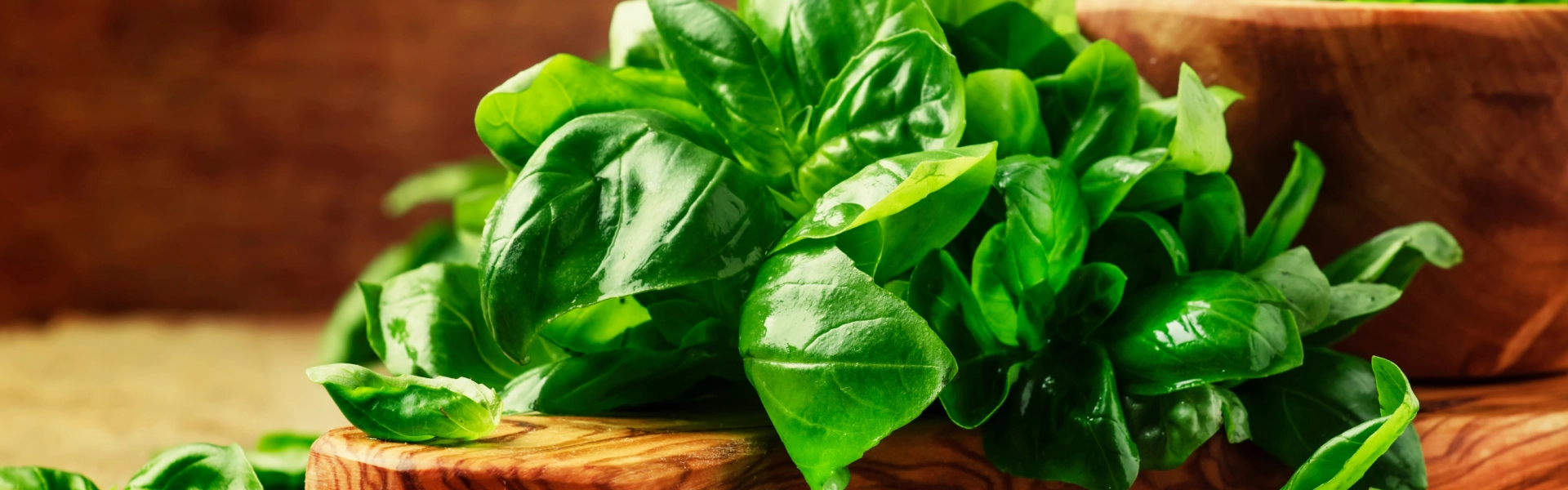
This member of the mint family has taken our windowsills and cooking pots by storm and is now an indispensable part of our kitchens. We are talking about basil. Its flavor, with its Mediterranean aroma, is appetizing and will transport you back to your last holiday in Italy. We reveal the health benefits of basil and the vitamins contained in this popular culinary herb.
Storage time*
| Larder compartment 12 °C | 8 days |
| EasyFresh safe 7 °C with air regulation plate | 6 days |
| Refrigerator compartment 7 °C | 3 days |
| Freezer compartment -18 °C | 12 months |
The key points
- Rich in vital nutrients: basil contains vitamins K, A and C, as well as calcium, iron and magnesium – ideal for a balanced diet.
- Healthy: the essential oils have anti-inflammatory, calming, appetite-stimulating and pain-relieving properties.
- Versatile: whether fresh, preserved in oil, frozen or as pesto, basil remains aromatic and has a long shelf life.
- Superfood seeds: basil seeds are rich in fiber, gel-forming and popular as a natural thickening agent.
Basil – list of contents
- What nutritional values does basil contain?
- How do you use basil correctly in cooking?
- Where does basil come from – and what varieties are there?
- How healthy is basil?
- Why are basil seeds considered a superfood?
- How can basil be kept fresh for longer – and what can be done with any surplus?
- This might also interest you
What nutritional values does basil contain?
Basil contains valuable vitamins such as vitamins K, A and C, as well as minerals such as calcium, iron and magnesium. Particularly noteworthy is the high content of antioxidants such as flavonoids and essential oils. Basil is low in calories (approx. 23 kcal per 100 g) and provides small amounts of protein and fiber. It is therefore ideal as a supplement to a balanced diet.
How do you use basil correctly in cooking?
But take care: always add basil at the end of the cooking time. The valuable ethereal and aromatic oils evaporate under the influence of heat. In addition, for the best results, basil should not be chopped – it is better to simply tear the leaves or roll them up and cut them into fine strips with a sharp knife.
Where does basil come from – and what varieties are there?
There is still no consensus on the origin of basil. India, Afghanistan and Africa are all mentioned in literature as the home of basil. In any case, the basil plant likes it hot. In Europe, basil is therefore also cultivated in Mediterranean countries.
There are more than 60 different types of basil – from varieties with a lemony fragrance (lemon basil), cinnamon and liquorice basil, to Thai basil and varieties with red leaves. They differ discreetly in their respective aromas and are also visually spectacular.
How healthy is basil?
The health-promoting substances in the basil plant are primarily the ethereal oils and bitter substances it contains. The plant is said to have numerous healing effects: calming, pain-relieving, appetizing, lowering the blood sugar and antispasmodic are just a few examples.
Why are basil seeds considered a superfood?
Such positive effects have also long been attributed to basil seeds. Recently, the seeds have been “rediscovered” again, with the result that there is a great deal of hype about basil seeds as a superfood. This is mainly due to the essential oils and their anti-inflammatory effect. Basil seeds also have a high fiber content. Much like the long-popular chia seeds, basil seeds have a gel-forming effect: they swell in water and thicken drinks, for example.
How can basil be kept fresh for longer – and what can be done with any leftovers?
Harvested basil shoots keep best when stored correctly. They remain particularly aromatic when preserved in oil – the oil absorbs the flavor and can be used in many different ways. Basil only keeps for about three daysin the refrigerator. In the Easy Fresh safe of your Liebherr appliance, however, it will keep for six days. Basil stays fresh for up to eight days in the larder compartment at 12 °C. If you want to enjoy basil and its benefits for longer, you should turn it into pesto, which will make it last longer.
*All specifications given are to be considered as guideline values, and depend in each case on the type of food and on the proper storage without interruption of the cold chain from harvest/production through to the Liebherr appliance. Should food products have information about minimum shelf life, the date on the packaging always applies.