


Aubergine: nutritional values, vitamins and calories of the vegetable
We know aubergines as a dark purple fruit with a shiny skin. However, the solanum plant can take on many shapes and colours. In addition to the wide variety of types, aubergines also have interesting nutritional values. We reveal what lies beneath the purple skin and which vitamins and nutrients aubergines contain.
Storage time*
| Larder compartment 12 °C | 14 days |
| Room temperature 20 °C | 7 days |
| Refrigerator compartment 7 °C | 4 days |
| Freezer compartment -18 °C | 9 months |
The key points
- Few calories, lots of taste: aubergines contain only about 25 calories per 100 g.
- Rich in healthy ingredients: potassium, magnesium and anthocyanins support the heart, cells and immune system.
- Salting saves fat: salting aubergines before frying significantly reduces fat absorption.
- Use the aromatic skin: the skin contains important aromatic substances and secondary plant compounds. It should therefore also be eaten if possible.
Aubergines contain the following nutrients and vitamins

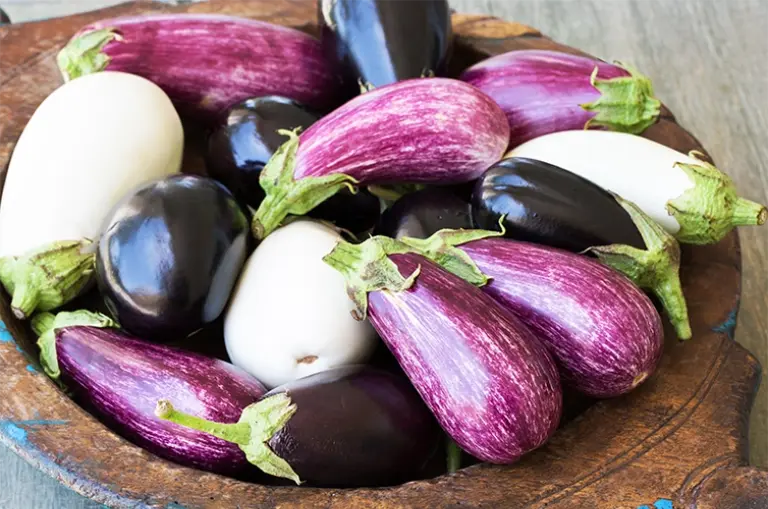
We are mostly familiar with the elongated or oval, black to dark purple aubergine, which has a leathery, shiny skin. The rosa bianca variety has a completely different colouring. The skin has white-violet stripes – a real feast for the eyes. The Thai eggplant looks quite different: small and egg-shaped with a beautiful green grain. There is also a white version of the aubergine. Along with potatoes and tomatoes, aubergines are members of the nightshade family. The relationship may not be immediately obvious, but all three species belong to the solanum genus.
Aubergines are low in calories – provided they are prepared with little fat. With only 25 calories per 100 g, they are ideal for a calorie-conscious diet. However, their flesh quickly absorbs a lot of oil when fried, which can significantly increase the calorie content. A simple trick is to salt the aubergine before frying. This draws water out of the aubergine and ensures that it absorbs significantly less fat during cooking. The practice of salting to remove bitter substances, which was common in the past, is now mostly unnecessary, as modern varieties contain hardly any bitter substances. Aubergines also have a lot to offer in terms of nutrients: they are particularly rich in potassium, magnesium and secondary plant substances such as anthocyanins. Even though the vitamin C content is low, aubergines are a great addition to any diet because of their nutritional value.
Aubergines are so healthy thanks to their nutritional values

Aubergines are recommended for a balanced diet due to their nutritional value. Their valuable secondary plant compounds in particular can have a positive effect on health. Anthocyanins, which are mainly found in the dark skin, are particularly important. These plant pigments have an antioxidant effect, which means they can help the body neutralize free radicals, which in turn can protect cells and have an anti-inflammatory effect. The potassium contained in aubergines promotes healthy heart function and helps regulate blood pressure. The fiber contained in the product stimulates digestion and ensures a long-lasting feeling of fullness. At the same time, aubergines are virtually fat-free and contain hardly any sugar. With a water content of over 90 percent, they also help to keep you hydrated. So if you want to do something good for your body, aubergines and their nutritional values are just the thing for you.
When buying aubergines, make sure that the fruit is firm, the skin is shiny and the stalk base is not limp. Aubergines are also extremely sensitive to cold, which is why they only keep for around four days in the refrigerator compartment of the refrigerator at 7 °C. Aubergines prefer slightly warmer temperatures and will therefore stay fresh for up to 14 days in the larder compartment of your Liebherr refrigerator. This compartment maintains a temperature of 12°C, just like in a larder. They will keep for up to seven days at room temperature. However, make sure not to store them near fruit that releases a lot of ripening gases, such as apples or stone fruit. Aubergines are particularly sensitive to ethylene and do not keep as long when stored alongside these fruits. If you want to enjoy aubergines and their nutritional benefits for longer, follow these simple storage tips.
*All specifications given are to be considered as guideline values, and depend in each case on the type of food and on the proper storage without interruption of the cold chain from harvest/production through to the Liebherr appliance. Should food products have information about minimum shelf life, the date on the packaging always applies.


