
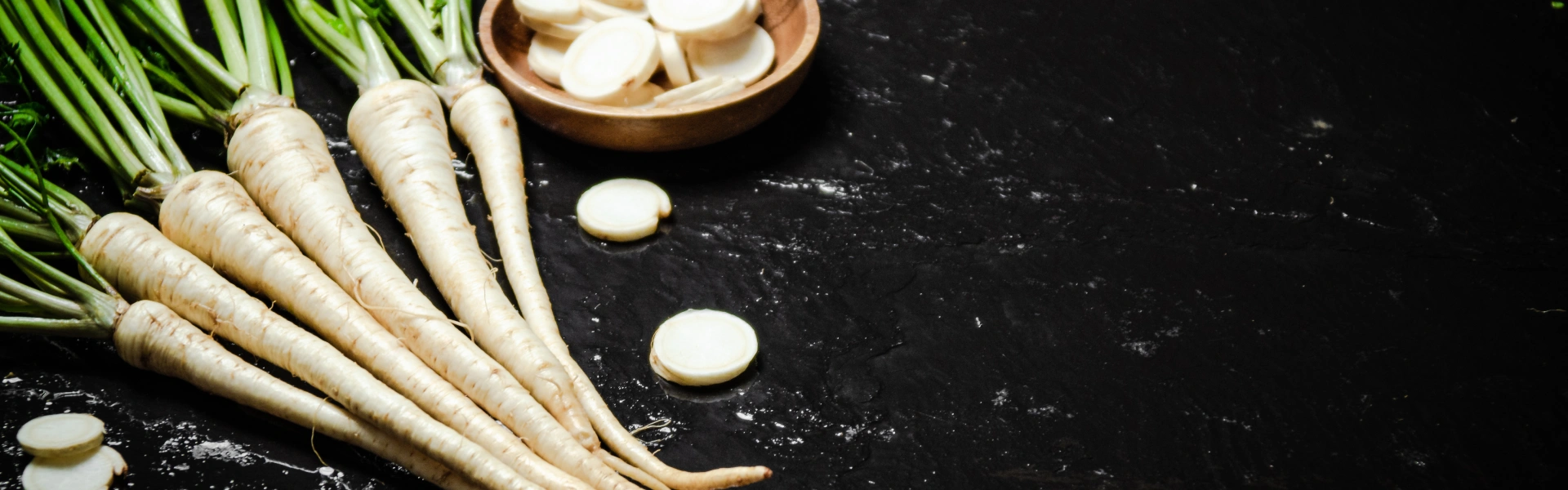
Parsley root: differences compared to parsnip and nutritional values
Parsley root is a root vegetable that is often underappreciated and offers great potential. Anyone who has tried it once will appreciate its spicy aroma and the variety of ways it can be used in the kitchen. Whether it’s consumed raw in a salad, as a fine puree or as an aromatic garnish on a bowl of soup, the potential uses are wide-ranging. But many people have questions: Does parsley root need peeling? Is it the same as parsnip? And what might the side effects of eating it be? Read on to find out everything you need to know about the harvest time, use, compatibility and health benefits of parsley root, including tips on delicious and wholesome ways to prepare it.
Storage time*
| BioFresh Fruit & Vegetable safe just above 0 °C with high humidity | 110 Days |
| EasyFresh safe 7 °C with air regulation plate | 70 Days |
| Fridge compartment 7 °C | 56 Days |
| Freezer compartment -18 °C | 10 Months |
The key points
- Parsley root is spicier and richer in nutrients than parsnip
- It’s rich in vitamin C, potassium and antioxidant plant substances
- Recommended amount: 100–150 g per portion
- Can cause symptoms if eaten raw in people with an irritable bowel or histamine intolerance
- Do not combine with dairy products or similarly aromatic root vegetables
What’s the difference between parsley root and parsnip?
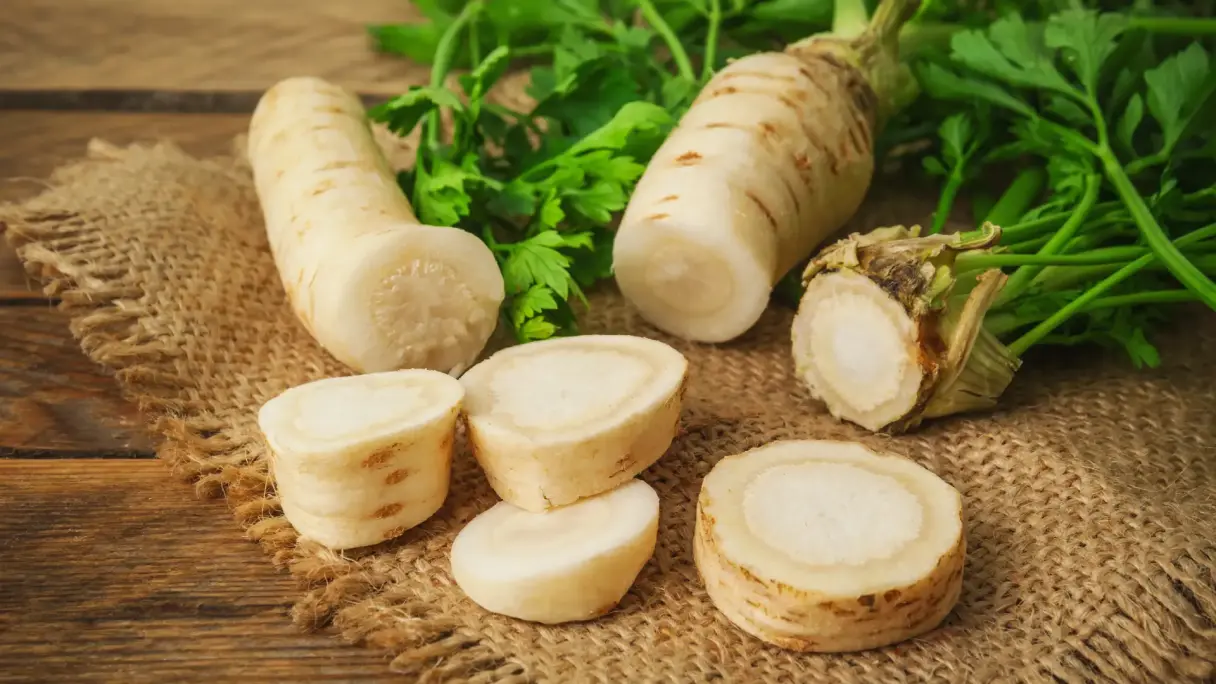
Parsley root and parsnip are not identical, they differ significantly in their taste,nutrient content and botanical origin.
Both root vegetables belong to the umbellifer family, but while the parsnip (Pastinaca sativa) is an ancient cultivated vegetable in its own right, the parsley root (Petroselinum crispum ssp. tuberosum) is a specially bred form of root parsley.
If you’d prefer to use parsley root instead of parsnips, you should be careful with the seasoning as the aroma is much more intense.
Differences at a glance:
- Aroma: Parsley root is stronger and very reminiscent of parsley. The parsnip has a sweet-nutty taste, similar to a carrot.
- Texture: Parsnips are more floury and a better choice for purees. Parsley roots retain a firmer bite when they are cooked.
- Nutrients: The parsnip provides more carbohydrates, tastes sweeter and has a higher calorie content, while parsley root benefits from having significantly more vitamin C (30 mg/100 g).
- Use: Parsnips blend in well in sweet and savoury dishes (e.g. with apple); parsley root is a great addition to strong broths and game dishes.
How healthy is parsley root really?
Parsley root is rich in secondary plant substances, has an antioxidant effect and provides valuable vitamins – it’s an underrated power food.
In addition to vitamin C, it also contains iron, potassium, magnesium and folic acid. Its high content of essential oils (for example, myristicin and apiol) makes it not only aromatic, but also of therapeutic interest: studies reveal anti-inflammatory, antimicrobial and antioxidant properties.
Overview of possible health benefits:
- Detoxifying and diuretic: supports kidney function according to the Federal Centre for Nutrition
- Immune system: 100 g cover around 30 percent of the daily requirement for vitamin C
- Stimulates digestion: fibre and bitter substances stimulate intestinal activity
What are the side effects of parsley root?
Parsley root is well tolerated, but in sensitive people it can cause digestive issues, especially if it’s eaten raw or in large quantities.
As is the case with many highly aromatic root vegetables, the risk is less the toxicity and more the sensitivity to essential oils that can cause flatulence or bloating. According to the German Nutrition Society, people with an irritable bowel or histamine intolerance will occasionally react sensitively to parsley root, especially when it’s consumed raw.
Pregnant women should avoid large quantities as the apiol it contains may bring on contractions in very high doses.
Potential side effects:
- Flatulence, bloating in people with a sensitive digestive system
- Excessive consumption may cause: gastrointestinal irritation
- Interactions with diuretic medication due to the diuretic effect
Incompatible combinations: What doesn’t go with parsley root?
- Dairy products (e.g. creamy sauces). The casein it contains can bind essential oils and overpower the aromas.
- Similar root vegetables such as celery or fennel will quickly produce a flavour overload. It’s therefore better for you to combine root vegetables in a deliberate way.
- Around 100–150 g of parsley root per portion are considered harmless and healthy, provided it is well tolerated.
*All specifications given are to be considered as guideline values, and depend in each case on the type of food and on the proper storage without interruption of the cold chain from harvest/production through to the Liebherr appliance. Should food products have information about minimum shelf life, the date on the packaging always applies.

This text has been machine translated from English.