
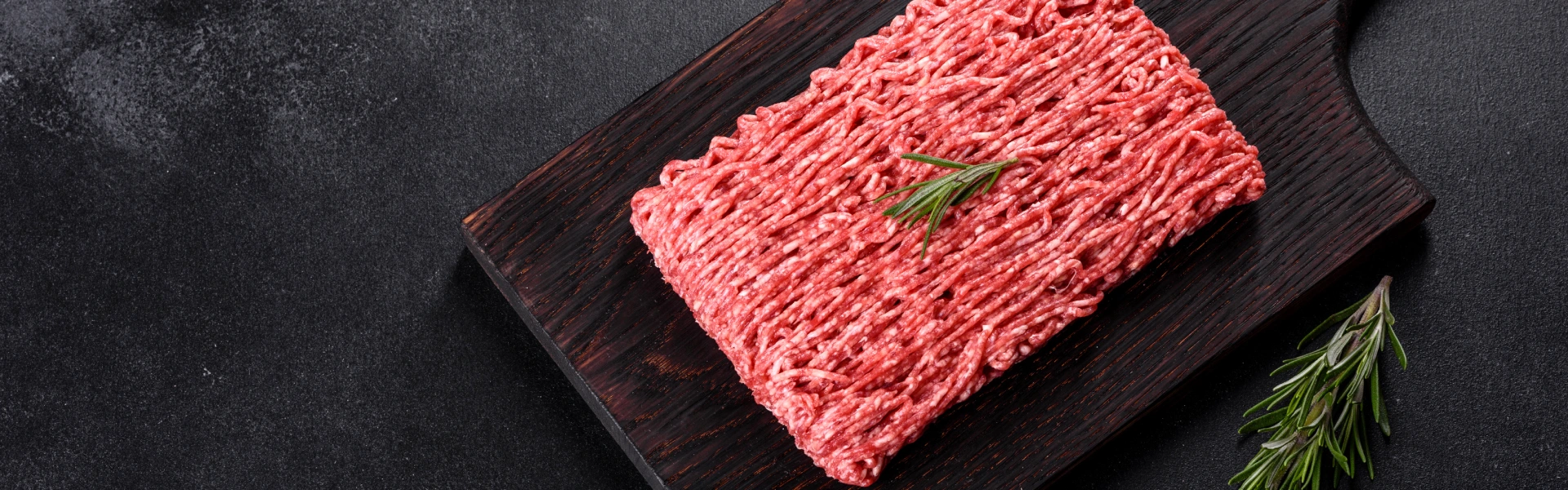
Freezing minced meat and hygienic storage
Like most types of meat, minced meat is highly perishable and should be processed whilst as fresh as possible. To ensure that you can continue enjoying the wide variety that minced meat has to offer in future, the answers to some key questions are provided below. How to freeze minced meat correctly? What do I need to bear in mind when storing it in the refrigerator? And what about the shelf life of the meat?
The key points
- Don’t waste any time and freeze minced meat immediately after purchase.
- Seal minced meat airtight in freezer bags, ideally in portions of 250 g.
- You can also freeze cooked minced meat and then store it for even longer.
- Meat that has been defrosted should be used as quickly as possible and should not be refrozen.
- Store fresh minced meat in the refrigerator at a low temperature for a maximum of two days. Check the use-by date on packaged minced meat.
- Fresh minced meat should not lose any meat juice. Spoiled meat has a pungent sour smell and may exhibit dark discoloration.
Freezing minced meat
Buying larger quantities of minced meat in the supermarket or at the fresh food counter and then conveniently freezing it at home Is a great idea for storing extra food for longer. This is how to do it: make sure that you have not exceeded the use-by date and that the cold chain has been maintained throughout. Freeze the mince when it is as fresh as possible, preferably immediately after purchase. First, remove the plastic wrapping, as this can become porous and brittle when exposed to cold temperatures. Preferably, minced meat should be packed into freezer bags and sealed as airtight as possible. Use a rolling pin to remove the air from the freezer bag with ease. The flattened minced meat is then ready to be frozen. Label the freezer bag with the date of freezing to help you keep track of your stored food.
It’s a good idea to split the mince into portions and then freeze these so that they can be conveniently defrosted for your favorite recipe. Small portions will allow you to save valuable time later when defrosting. Portion sizes of about 250 g are ideal, because small quantities freeze and defrost faster and more evenly. In addition, prepared burger patties freeze well and can go straight onto the barbecue or into the frying pan. You should also bear in mind that defrosted minced meat should not be refrozen.
Freezing cooked minced meat
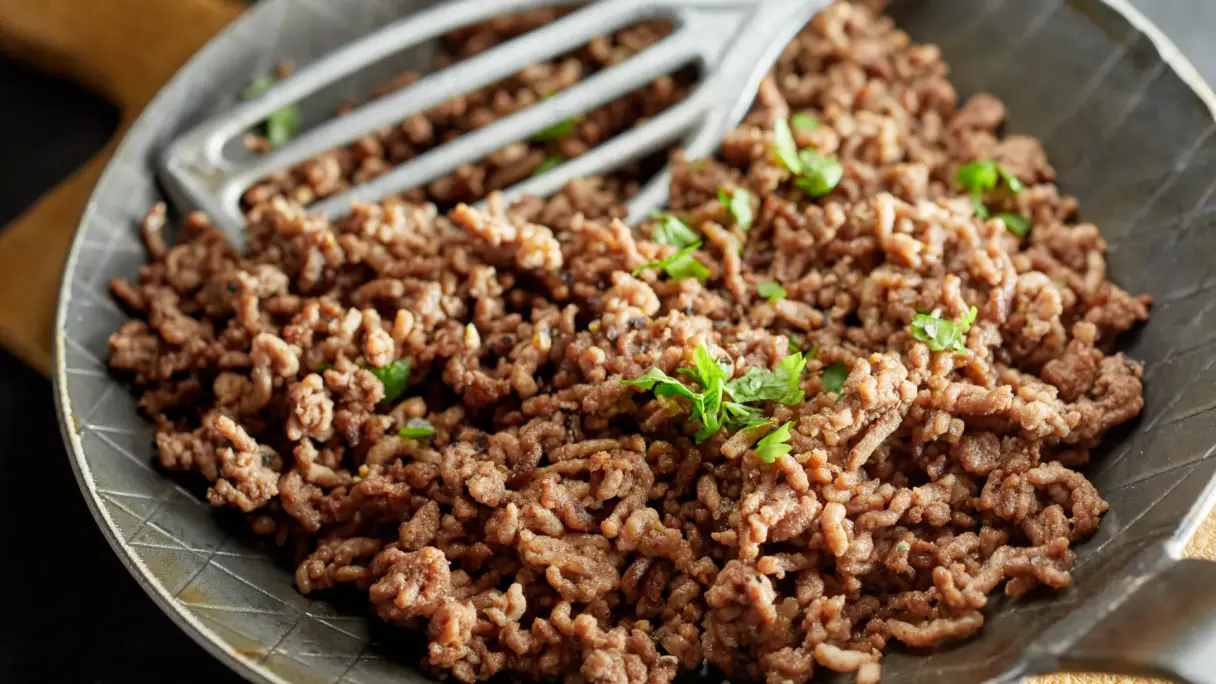
When preparing minced meat, it is important to ensure that it is thoroughly cooked. The meat should have a core temperature of at least 75 °C for two minutes while cooking. Cooking meat at this temperature is important to kill all harmful germs and pathogens. If you have leftovers, you can freeze cooked minced meat and then store it for even longer. The only important thing is that the dish must have cooled down completely.
Apart from this, cooked minced meat can be frozen just as easily as raw minced meat. It is also a good idea to divide the cooked meat into portions and then seal these airtight in freezer bags.
The next section describes how best to store minced meat before it is cooked and/or frozen.
Storing minced meat in the refrigerator
The large surface area of the shredded meat fibers of minced meat is ideal for the proliferation of many microorganisms. In addition, the high protein content and the water contained in minced meat provide an excellent breeding ground for the multiplication of pathogens such as salmonella and listeria. This is what makes minced meat so highly perishable.
Risks to health can be avoided by organized shopping, correct storage and observing the rules of proper hygiene during preparation. When you get home with your shopping, it is important to remove the minced meat from the cool bag and put it in the refrigerator as soon as possible. Because at low temperatures, microorganisms multiply more slowly. This is why you should store minced meat in the part of the refrigerator where the temperature is lowest.
The BioFresh Meat & Dairy safe from Liebherr is ideal for storing minced meat. It combines a temperature of just above 0 °C with low humidity to keep meat and dairy products fresh for as long as possible. You should only store your freshly bought minced meat in the Meat & Dairy safe for a maximum of two days to avoid any risk. If the temperature in the refrigerator is at around seven degrees, this already poses a risk when storing minced meat. This is because microorganisms multiply much faster at 7 °C than at just above 0 °C in the Meat & Dairy safe.
Generally, packaged minced meat in the Meat & Dairy safe will keep a day longer than minced meat from the fresh food counter, which should be consumed within 24 hours. In the case of minced meat packaged in a protective atmosphere, the use-by date should also always be taken into account. Leftover minced meat that has been fully cooked can be stored in the Meat & Dairy safe for up to two days.
Minced meat that has been frozen should be defrosted in the refrigerator. This is the safest method and, with a little planning, one can easily avoid any time-related stress. We do not recommend defrosting the frozen food at room temperature or by immersing in water, as the risk of spoilage is too high for hygienically high-risk foods such as minced meat. The frozen minced meat can simply be placed in a bowl in the refrigerator. This allows you to collect the defrost water that forms and then pour it down the drain later. Before consumption, the defrosted meat should be cooked thoroughly to kill any possible pathogens.
Shelf life of minced meat
Fresh minced meat has a mild, neutral odor. Minced beef is characteristically dark red in color, while minced pork is typically light pink. Mixed beef and pork mince has a medium, rich red hue. You can easily tell when minced meat has gone off by the way it smells and looks. It must then definitely be disposed of in the organic waste. A clear sign that minced meat has spoiled is a pungent, sour smell and dark discoloration. On the other hand, grey patches are not a clear sign. This discoloration can arise quickly due to too little oxygen, even though the meat is still edible. Packaged meat is usually especially pink because of the oxygen in the protective atmosphere. Fresh meat should also not lose any water.
Usually, microorganisms are responsible for minced meat going bad. The rapid multiplication of pathogens is often due to an interruption in the cold chain, insufficient cooking, poor hygiene during preparation or incorrect storage. This is why it is important to bear these aspects in mind and not risk exposure to any foodborne diseases.
Minced meat can be stored for the longest time in a Liebherr freezer at -18 °C for up to three months. In this regard, there is no difference between the raw product and cooked minced meat.
The meat should be particularly fresh if you intend consuming the minced meat raw rather than after it has been fully cooked. This form of preparation is known as mett or steak tartare, depending on whether it is made of minced pork or minced beef. Serving it in this way means that proper hygiene during preparation is even more essential. Nevertheless, certain segments of the population should refrain from eating these dishes if possible, to avoid taking any risk. This applies to infants, small children and older people. Pregnant or immunocompromised persons should also not expose themselves to this risk of infection. When properly prepared, however, raw minced meat poses no danger to healthy people.
This might also interest you
Can you freeze barbecue meat and barbecue it again?
Want to have a barbecue but the meat is still frozen? Read on to find out why defrosting is better and about the ideal way to freeze barbecue meat in advance.

Types of steak – you should enjoy these cuts of meat
Do you enjoy a juicy steak from the barbecue? Read on to find out which types of steak come from where and which breeds of cattle are suitable for steaks.

Freezing fish: fresh, cooked, defrosted a second time?
Fresh fish is easy to freeze. Cooked fish too? Can defrosted fish be refrozen? Read on to find out how.