Freezer: what is the right temperature?
An indispensable household helper when it comes to keeping food fresh for a long time: the freezer. But what is the optimum temperature for ensuring the best possible storage conditions? In this article, you will learn which settings are recommended, how you can save energy and what you should generally pay attention to.
The key points
- The ideal temperature for the freezer is -18 °C.
- A lower temperature will extend the shelf life, but increase energy consumption.
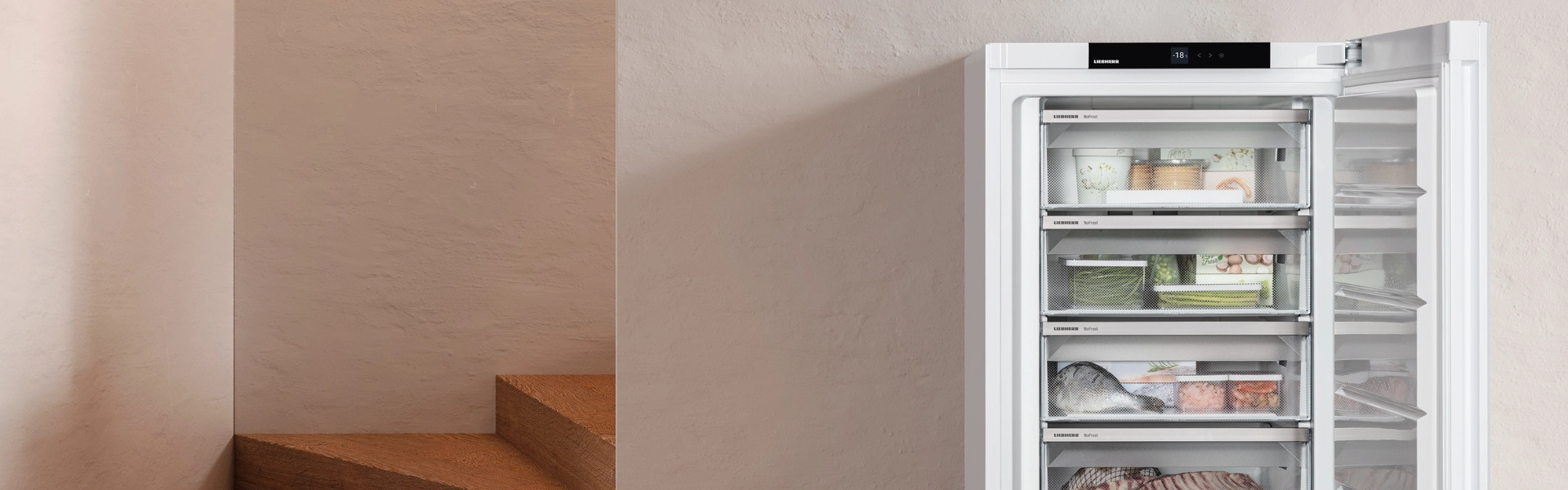
- Modern Liebherr freezers offer technologies such as NoFrost to ensure the optimum temperature.
- Regular defrosting and good organisation help to save energy.
What temperature should the freezer be set to – list of contents
This is the optimal temperature for freezers
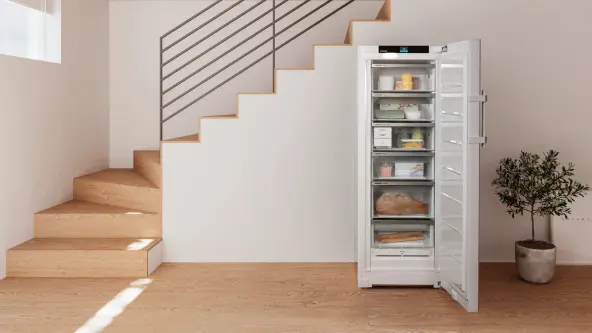
The recommended temperature of -18 °C ensures that frozen food can be stored for long periods without losing quality. When it comes to the question “What temperature should I set my freezer to?”, the general rule is that lower temperatures slow down the growth of microorganisms. However, the speed of chemical reactions does not decrease uniformly with falling temperatures. Experts have found that in the range between -30 °C and -18 °C, the reaction speed for fruit and vegetables slows down by two to three times as soon as the temperature drops by 10 °C. For sensitive ingredients in particular, this means that the vitamin content, for example, decreases significantly faster at higher temperatures. After storing for one year at a temperature of -12 °C, the vitamin C content in vegetables is only about 20 percent. To ensure that vitamins and other nutrients are preserved as well as possible, -18 °C is the optimal temperature for refrigerators and freezers. The colder the temperature, the better the quality of the frozen goods.
However: since lower temperatures also mean higher energy consumption, -18 °C is also an optimal compromise between food quality and energy consumption.

What freezer temperature saves energy?
A freezer runs around the clock, but you can reduce its energy consumption with a few simple measures:
- Open the door as little as possible: every time you open it, warm air gets in and has to be cooled down again.
- Regularly defrost: a thick layer of ice significantly increases power consumption. Liebherr freezers feature technologies such as NoFrost. These prevent ice formation and make cleaning easier.
- Position the appliance in the right place: a freezer should not be placed next to heat sources such as a stove or heater and should be protected from direct sunlight.
- Fill correctly: a well-filled appliance stores cold better than a half-empty freezer. If there is too little food in the freezer, empty containers can be filled with water.
Storing food correctly in the freezer
To maximize the shelf life and quality of your food, you should ensure that it is stored correctly. Labelling with the date helps you keep track of your supplies and use older products first. Where you place items in the freezer is also crucial: meat and fish should go in the coldest part, while bread and vegetables are less sensitive and can be stored in slightly warmer areas. It is also advisable to pack food in airtight containers to prevent freezer burn and preserve taste and consistency as much as possible.
Refrigerator and freezer – what temperatures are required? We have summarized it for you:
Refrigerator – what temperature? The ideal temperature is +4 °C. This keeps food fresh and slows down the formation of germs.
Freezer – what temperature? The recommended temperature is -18 °C. This ensures a long shelf life and preserves nutrients.