Nutritional values of Weisswurst: how healthy is this speciality?
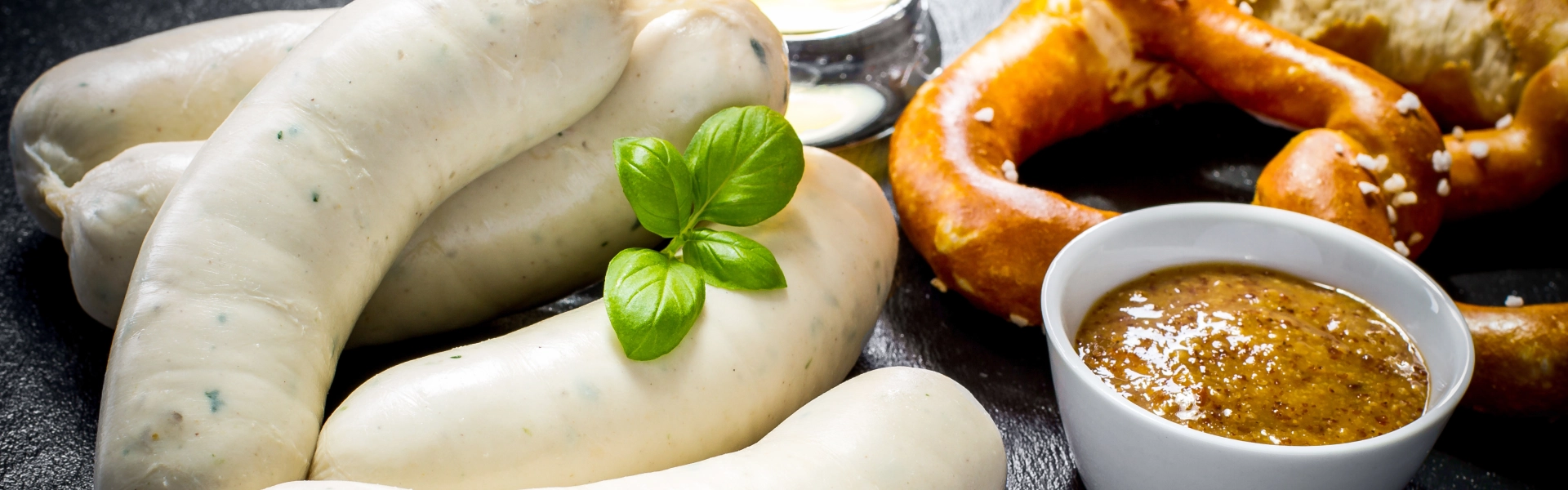
The nutritional value of Weisswurst is well known far beyond the borders of Bavaria. If you ask other people what they associate with Germany, you will often hear “Weißwurst” as an answer. Weisswurst belongs to the category of boiled sausages and consists of beef and pork. We present you with the most interesting facts about the nutritional values of Weisswurst.
Storage time*
| BioFresh Meat & Dairy safe just above 0 °C with low humidity | 8 days |
| Refrigerator compartment 7 °C | 1 day |
| Freezer compartment -18 °C | 3 months |
The key points
- Nutritional values: Weisswurst contains a lot of protein and fat.
- Taste: mildly spicy with a delicate sausage meat, refined with parsley, lemon and nutmeg.
- Storage: fresh only for a short time
- Tradition: classic before noon with pretzels, sweet mustard and wheat beer.
Weisswurst: nutritional values, ingredients and taste at a glance
Weisswurst is packed with nutritional value. Per 100 g, it contains an average of 290 to 320 calories, which is mainly due to its fat content of around 28 to 30 g. The protein content is around 12 to 14 g, making Weisswurst a good source of protein. With less than 1 g, carbohydrates play a negligible role, making Weisswurst suitable for low-carbohydrate diets.
In addition to fat and protein, Weisswurst also provides sodium, vitamin B12 and zinc, making it nutritionally valuable but also hearty. The taste is mild, spicy and pleasantly delicate – characterized by typical spices such as lemon zest, parsley, nutmeg and pepper. The delicate texture and fine sausage meat ensure that the Weisswurst feels pleasantly soft in the mouth. The ingredients for Weisswurst are young beef with little sinew and fat, coarsely trimmed veal and young beef, fatty pork and bacon.
Freshness is particularly important for Weisswurst: Weisswurst is highly perishable and should be consumed on the day of production or kept well chilled. Combined with sweet mustard and pretzels, this creates a balanced contrast between spice, sweetness and doughiness, which has become a real ritual of enjoyment in southern Germany. Weisswurst lovers like to drink wheat beer with it while enjoying the company of a large group.
And don’t forget: the sucking process! For many people, sucking the contents out of the casing is inseparable from the enjoyment of veal sausage. But of course, a knife and fork can also be used. Generally, the skin of veal sausages is edible – as long as it is a natural casing (usually pork intestines). You should exercise caution with artificial casings as these may be made from plastic and are therefore not edible.
If you would prefer to enjoy fresh veal sausage at home rather than at a beer garden, then take note of the following tips. The boiled sausages must not be placed in boiling water, instead they should ideally be put in salted water heated to 70 °C for cooking. Otherwise the pork casings can easily burst. After a good ten minutes the sausages will be hot and can be eaten.
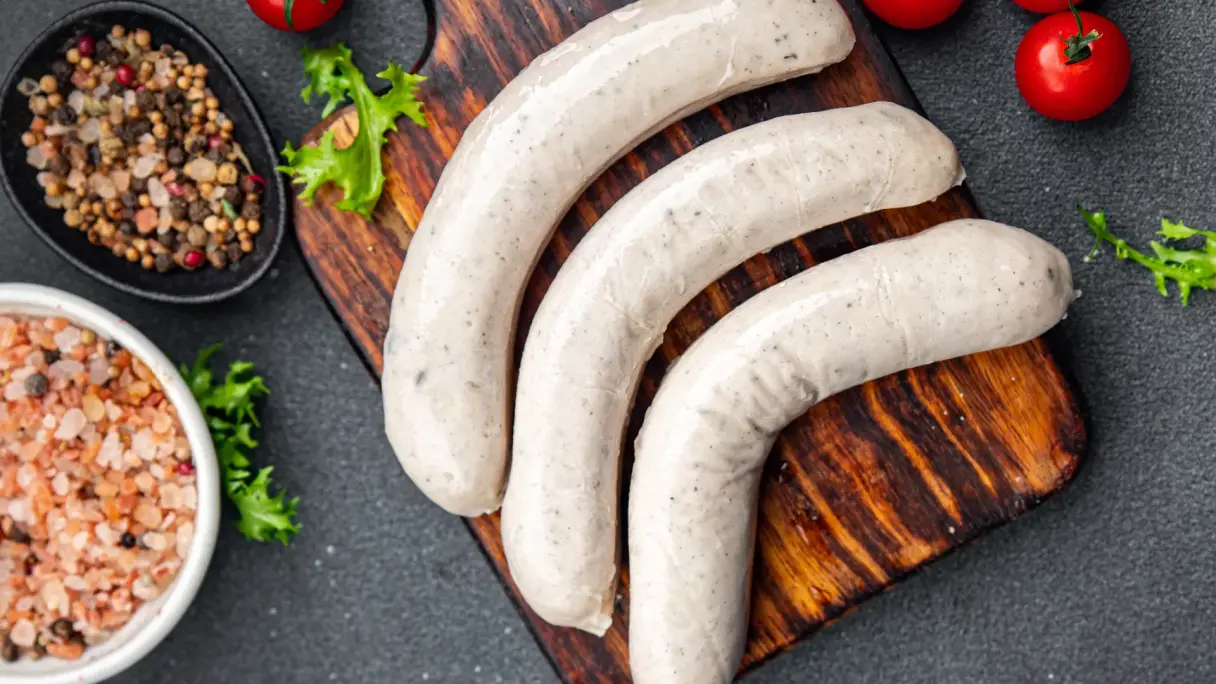
What is the best way to store Weisswurst and preserve all its nutritional value?
Unlike smoked sausage, Weisswurst is highly perishable, so you should take special care to store it correctly in the refrigerator. Sausages usually only keep for one day in the regular refrigerator compartment of the refrigerator at 7 °C. Thanks to low humidity and a temperature just above 0 °C in Liebherr’s BioFresh Meat & Dairy safe, Weisswurst can be stored for up to eight days. If the sausages are vacuum-packed, they will keep longer overall.
Incidentally, Weisswurst is traditionally eaten before the midday bell rings. This is because veal sausage can deteriorate very easily, especially if there is no access to a refrigerator, as was the case in many places about a century ago. That’s why, in those days, veal sausage was consumed directly after being produced that morning.
*All specifications given are to be considered as guideline values, and depend in each case on the type of food and on the proper storage without interruption of the cold chain from harvest/production through to the Liebherr appliance. Should food products have information about minimum shelf life, the date on the packaging always applies.