Pepper varieties – the hot something among spices
Whether ground, freshly crushed or whole peppercorns – this spice comes in all forms and pepper varieties. This popular spice goes well with almost every dish. It used to be a luxury item, but it can now be found in every kitchen. Read on to find out all about the origin of pepper and the different pepper varieties.
The key points
- Diversity of varieties: pepper comes in black, green, red and white – the taste, color and pungency differ significantly depending on the degree of maturity and processing.
- Origin of pepper: it originates from southern India, but is now cultivated in many tropical regions around the world.
- From luxury item to kitchen basic: pepper was once as valuable as gold and was used a form of currency – today it is a standard ingredient in every kitchen.
- Use and storage: black pepper is the all-rounder, green goes well with fish, white with light sauces and red on salads. Whole peppercorns can be stored for years, while ground pepper quickly loses its flavor.
Pepper varieties – list of contents
Where pepper grows and comes from
Pepper is obtained from the seeds of the up to ten-metre-tall piper nigrum, the bright green pepper bush. Similar to blackcurrants or grapes, the peppercorns are arranged on panicles and different pepper varieties are produced depending on when they are harvested and processed. Black pepper originally comes from southern India, but is now also grown in many other tropical countries, such as Madagascar, Indonesia and Malaysia.
It has been used as a spice in India for over 4,000 years. Only later did it reach Europe, via the Persian empire. For a long time, pepper was transported to Europe over a land route, which explains its historically extremely high price. Well into the 19th century, pepper was even considered a currency which could be used to pay rent, for example. Despite its high price, demand for the fine spice remained high among the population. To satisfy the huge demand for the different types of pepper, more and more cultivation areas were developed over time. As a result, the price of pepper fell dramatically, and the spice is now as much a part of the standard inventory of every kitchen as a refrigerator.
Whole peppercorns can be stored in a tightly sealed container in a dry, dark place for years, whereas ground pepper will only keep for six months. Incidentally, pickled peppercorns will only keep for about a week in your appliance, once opened.
Black, red, green or white – these pepper varieties are available
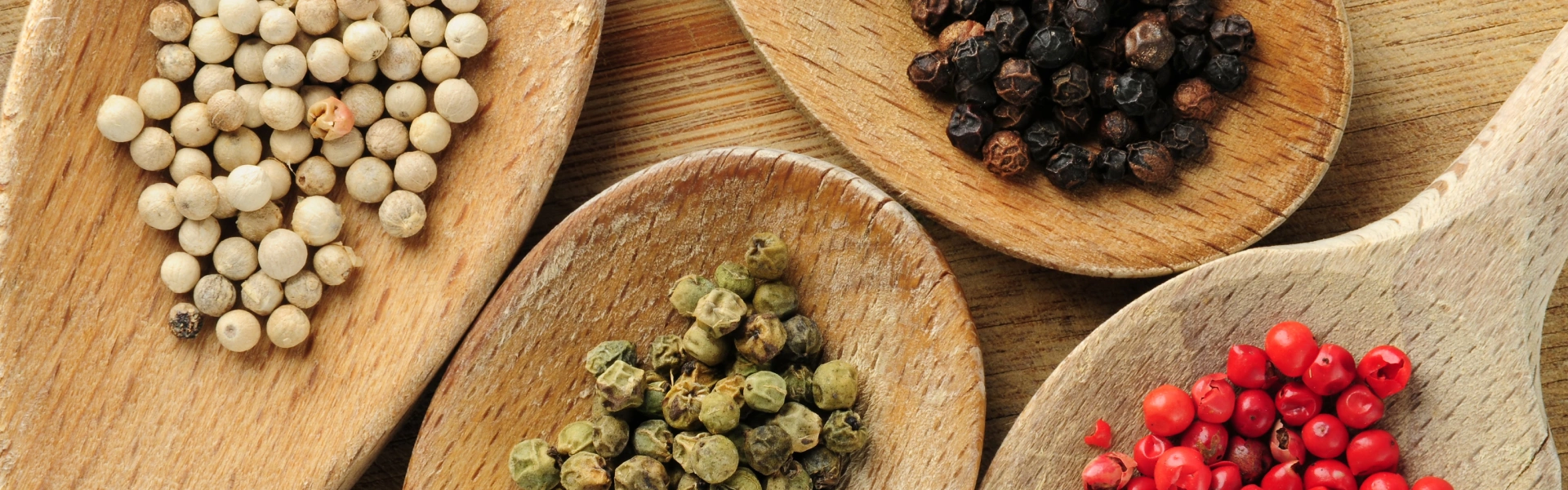
Alongside classic black pepper, the range of available variants includes green, white and red options. But the most well known and probably best loved is the classic black pepper. It is harvested when unripe (green) and gets its dark color from the subsequent fermentation and drying processes. This variety has the most intense flavor. As you may be able to guess, green pepper is also not ripe and gets its color by soaking in salt water or freeze drying. Then there is the vibrantly colored red pepper. This is picked when ripe and later soaked in brine or dried. It is the only variety that has a slightly fruity note and, compared to the other varieties, is rarer and more expensive. And last but not least, white pepper. This variety of pepper is also harvested when red and ripe. Soaking it in water removes the red fruit part from around the seed. The seed is then dried. Since most of the pungent substances are found directly under the skin, this pepper variety is relatively mild.
Pepper is the second most commonly used spice and goes well with almost any dish. Peppercorns can even be found in desserts such as gingerbread or as a decoration. Black pepper is an all-rounder for every dish, as opposed to white pepper which is used simply for its appearance in light-colored sauces and soups. Green pepper suits fish and seafood perfectly due to its herbal notes, and red pepper is great in spicy sauces, with vegetables and in salads.
This might also interest you
Wild garlic – the garlic alternative in spring
Are you curious about wild garlic as an alternative to garlic? Read on to find out all about its effects, vitamins and nutrients.
Ginger – effects and preparation
Ginger is widely used as a spice & is also known as a medicinal plant. Discover everything you need to know about its effects, how to prepare it and tasty recipes here!