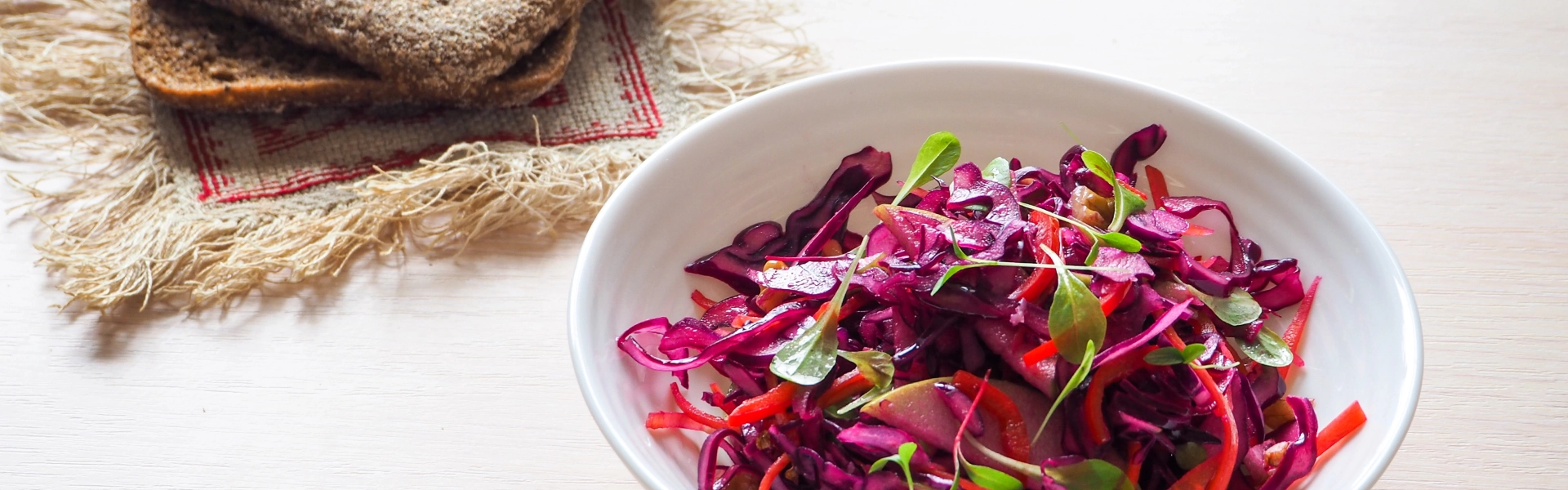
Varieties of red cabbage: are there any differences?
As a typical German vegetable, there are lots of different names for it in German: “Rotkohl”, “Blaukraut” or even “Rotkraut”. Whichever one of these names the colorful vegetable has, it makes an excellent side with any meal. But what exactly is the difference between these types of cabbage and what role does the color play in all this? We’ll tell you what all the different names and colors mean.
Storage time*
| BioFresh Fruit & Vegetable safe just above 0 °C with high humidity | 40 days |
| EasyFresh safe 7 °C with air regulation plate | 21 days |
| Refrigerator compartment 7 °C | 17 days |
| Freezer compartment -18 °C | 9 months |
The key points
- All the different types of red cabbage are the same vegetable, and their different names in German are dictated solely by the region they come from.
- The color depends on the pH of the way it’s prepared: vinegar makes the cabbage red, sugar or baking soda make it appear bluey-purple.
- Red cabbage is rich in vitamins and boosts the immune system: it’s an important source of nutrients, especially in winter.
Varieties of red cabbage – list of contents
Varieties of red cabbage – list of contents
Varieties of red cabbage – which one’s the right color?
The first question to ask is what exactly is the difference between varieties of cabbage? It's simple. It’s the same vegetable. It’s just that there’s no uniform name to describe the vegetable. So don’t be confused if you’re in Germany and the menu lists “Rotkohl” or “Blaukraut” for cabbage – they’re both the same popular vegetable.
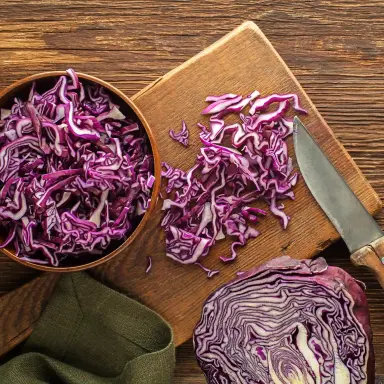
So the question is how the different shades of color come about. The difference in color is down to chemistry. The bluish version of red cabbage contains anthocyanins (plant pigments) that act as an acid-base indicator, also known as a pH value indicator. When pH values are low, i.e. in acidic environments, these indicators turn red, whereas they turn blue when pH values are high. In some regions, it’s common practice to prepare red cabbage with acidic ingredients like vinegar (the indicator in the cabbage turns red). But in other regions, people prefer the sweeter version of red cabbage, so it’s often prepared with fruit or sugar. This means the cabbage retains its purple color, which even turns slightly blue when baking soda is used.
If it’s grown without any artificial fertilizers, the acid content of the soil can even have an effect on the color of the head of the cabbage. But with the growing methods used today, the original natural composition of the soil in the region plays much less of a role than the way the cabbage is prepared.
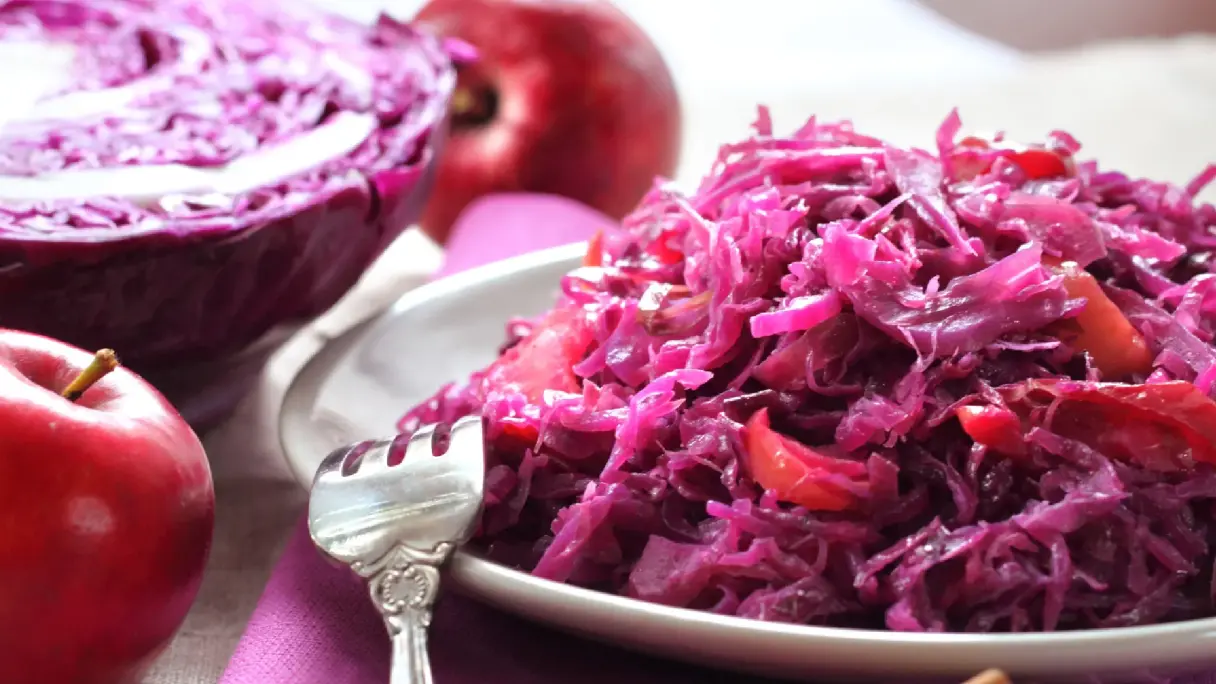
Different varieties of red cabbage provide a wealth of vitamins
Cabbage is very popular, especially during cold times of the year. And rightly so: if it’s stored in the refrigerator, it will keep for a very long time and so it’s played an important role in providing people with vitamins for centuries – especially in winter when not that many vegetables are in season. This is because red cabbage, with all its important vitamins and nutrients, really helps to boost the immune system. The white cabbage variety (also in the form of sauerkraut) is a real superfood: it can regulate blood pressure, blood sugar and cholesterol levels and promote good digestion. Whether you eat white cabbage or red cabbage, it will always be a vital source of nutrients.
Do you love eating red cabbage and regularly ask yourself what you should do with the leftover head of the cabbage? Simply store any leftover cabbage in your bottom-freezer refrigerator. In the refrigerator, you can keep it for up to 21 days – in a BioFresh safe, it will stay fresh for twice as long. Alternatively, simply divide your red cabbage that you’ve already sliced up into portions and store it in the freezer. You’ll then be able to prepare it quickly and easily whenever you want. Red cabbage can be frozen for up to nine months. This means you can make your cabbage last a little longer. Whatever name you give to your red cabbage, it will always be delicious and full of vitamins!
*All specifications given are to be considered as guideline values, and depend in each case on the type of foodstuffs and on the proper storage without interruption of the cold chain from harvest/production through to the Liebherr appliance. Should food products have information about minimum shelf life, the date on the packaging always applies.
This might also interest you
Chinese cabbage: nutritional values and vitamins of this cabbage
How to preserve and store red cabbage
Find out how to preserve and store red cabbage now! As well as some interesting facts about this versatile vegetable and its uses in the kitchen.