Quince as jelly or raw – the all-rounder fruit
The nutritional values of the quince speak for themselves: the quince is a versatile stone fruit with many health benefits. It is rich in fiber, vitamin C and secondary plant substances that strengthen the immune system and can help you lose weight. Often overlooked, the furry fruit deserves more attention, be it as quince juice, tea or compote. Find out when quinces are in season and discover how versatile they can be in your diet!
Storage time*
| BioFresh Fruit & Vegetable safe just above 0 °C with high humidity | 55 days |
| EasyFresh safe 7 °C with air regulation plate | 26 days |
| Refrigerator compartment 7 °C | 21 days |
| Freezer compartment -18 °C | 12 months |
The key points
- Quinces are low in calories (approximately 38 kcal per 100 g).
- They are rich in vitamin C, potassium and pectin.
- The fruit is good for the immune system and digestion.
- Quinces can be cooked, enjoyed as juice, tea or jelly; they can only be eaten raw when ripe and grated.
- You should remove the fuzz from quinces before eating them.
- Ideally, quinces should be stored cool and moist.
Quinces and quince juice – calories and nutritional values: when are quinces in season?
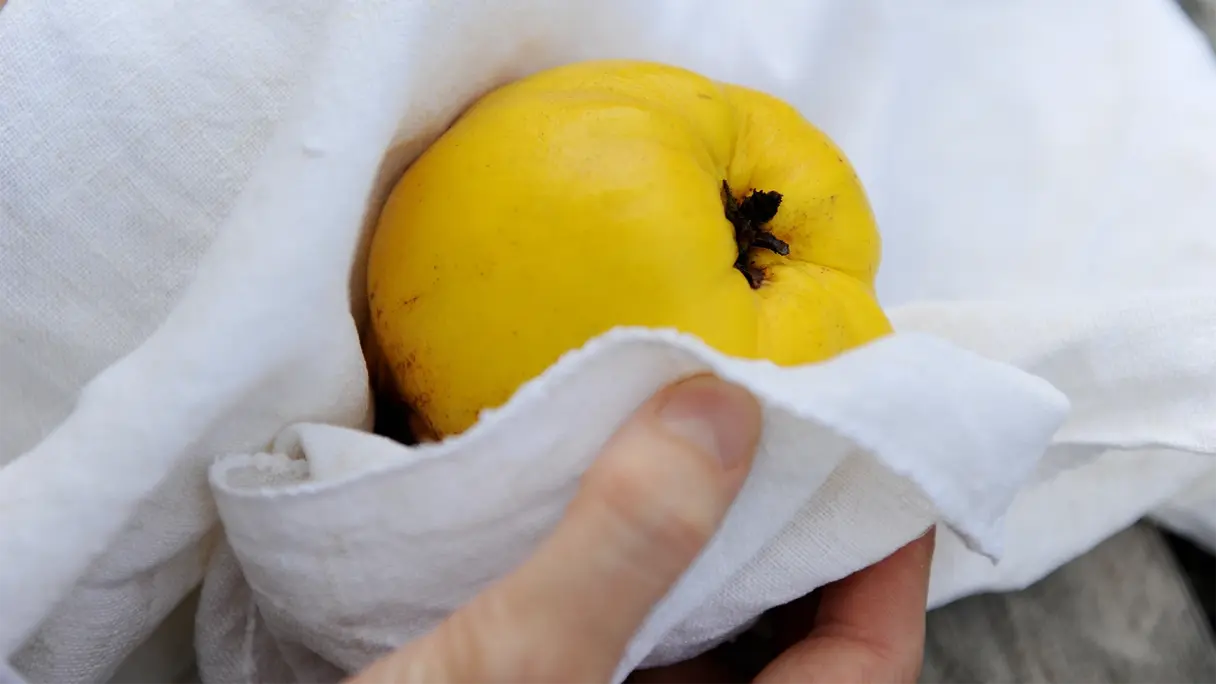
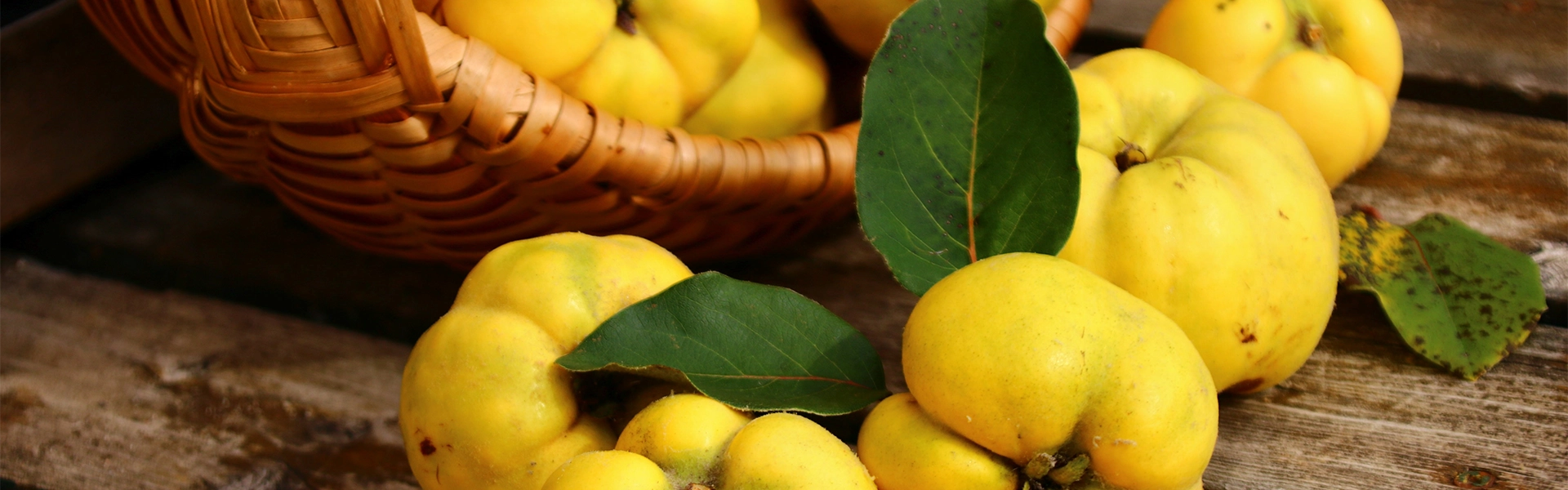
Remove any fuzz with a dry cloth before processing.
Quinces are the true lightweights among fruit. At only around 38 calories per 100 grams, this fruit is ideal for anyone who wants to enjoy a healthy treat. Quince juice also scores well with its moderate calorie content. Depending on how it is processed, it contains between 40 and 60 calories per 100 ml. Unlike many other fruit juices, quince juice is naturally slightly tart and therefore less sweet, making it a good alternative for anyone on a low-sugar diet.
The nutritional values of the quince are also impressive. It provides plenty of fiber, vitamin C, potassium and antioxidant polyphenols, which have anti-inflammatory properties and support the immune system. The high pectin content also has a positive effect on digestion. This is why quinces have traditionally also been used to treat gastrointestinal complaints.
But when are quinces actually in season? Harvest season begins at the end of September and continues into November. Quinces are best stored at around 2–5 °C and high humidity. This makes them ideal for storage in a refrigerator with a BioFresh Fruit & Vegetable safe.
Contrary to popular belief, quinces can also be eaten raw. To be consumed raw, they should be well ripened or finely grated and added to smoothies or muesli. Combined with quark or oatmeal, quince becomes your healthy breakfast booster!
Quinces and their health benefits: nature’s digestive helper
Quince juice is good for your health and surprisingly versatile! Quince has been valued as a medicinal plant since ancient times. Its combination of anti-inflammatory tannins, immune-boosting vitamin C and digestive fiber acts holistically. Especially quince tea can help with gastrointestinal complaints and flatulence, as the mucilage it contains soothes the intestinal wall.
Another advantage is that quinces can help you lose weight. With few calories, high water content and lots of pectin, they ensure a long-lasting feeling of satiety. The slightly bitter taste also stimulates digestion and helps curb pangs of hunger.
If you have a sensitive stomach, you should consume quinces cooked or as tea. This reduces the unpleasant bitter taste while retaining the healthy effects.
Make your own healthy quince jelly
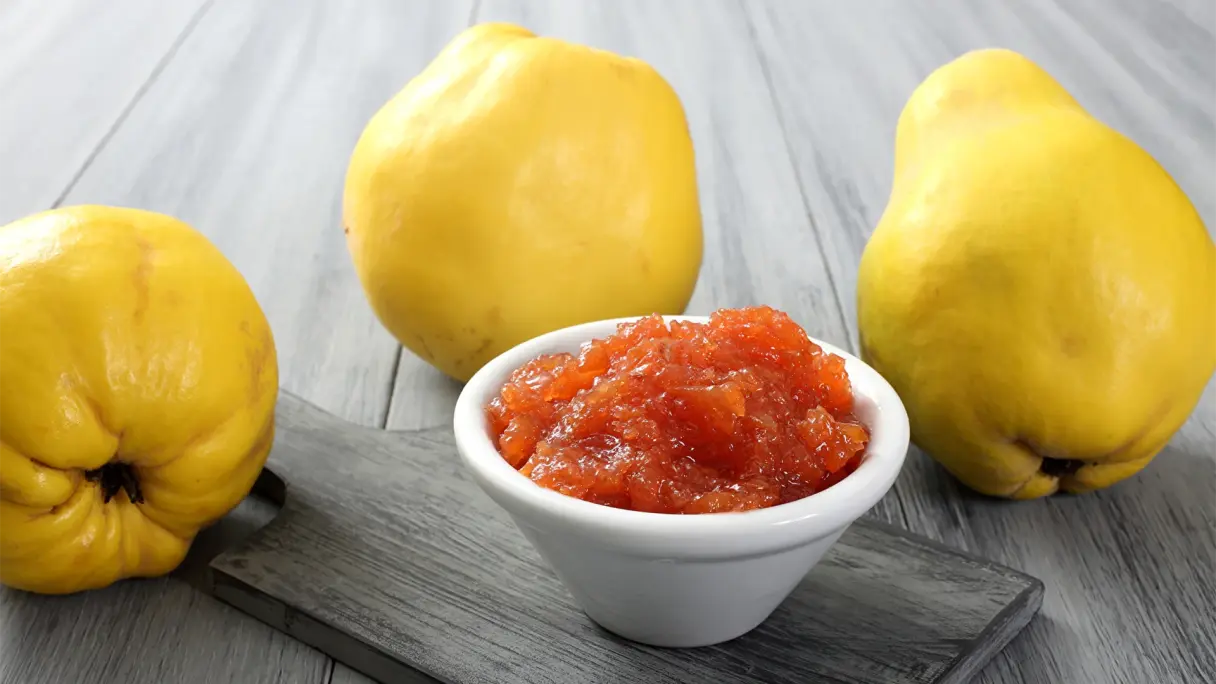
Quince jelly is not only a classic, but can also be prepared in a way that is healthy and low in sugar. The challenge? Traditional recipes rely on adding a lot of refined sugar, which immediately diminishes the positive properties of quince. However, with xylitol, apple pectin or agar-agar, you can conjure up an equally tasty but much healthier quince jelly.
For a particularly nutritious jelly, we recommend using freshly squeezed quince juice, preferably from organic cultivation. This preserves the natural vitamin content. If you want to avoid industrial sugar completely, you can experiment with date paste or erythritol. These sugar substitutes are better for your blood sugar levels.
You should wash quinces thoroughly before juicing them, and not peel them. Many valuable nutrients are located directly beneath the peel.
The combination of natural fruit sweetness, healthy ingredients and clever preparation makes this jelly a real elixir of vital nutrients, and as such perfect for breakfast or as a treat from your own kitchen!
FAQ – quinces
Quinces are usually not edible when raw, as their flesh is hard with a tart taste. That is why they are usually cooked, steamed or juiced. Quince is particularly popular as quince juice, quince compote, jelly or in quince cake. It is also used as an ingredient in chutneys or as a base for tea. When preparing quinces, it is important to wash them and remove the fuzz before cooking, as this can contain bitter substances. When well ripened, quince can also be eaten raw and mixed into muesli after being finely grated.
Quince has anti-inflammatory, digestive and immune-boosting properties. Thanks to its high vitamin C, potassium and pectin content, it supports the immune system and aids digestion. Quince is also used in naturopathy. It can help with gastrointestinal complaints such as flatulence or diarrhoea, for example. The fruit can also help with weight loss, as it is low in calories and keeps you feeling full for a long time. Quince juice and quince tea are particularly suitable for this.
In principle, you can eat quinces raw, but caution is advised. The flesh is very hard, dry and contains many bitter substances. It can cause stomach irritation when raw, especially in people with sensitive stomachs. That’s why it’s a good idea to cook or steam quinces before eating them. Some varieties, such as the apple quince, can be finely grated and used raw when very ripe, for example in smoothies. It is important that you always carefully remove the fuzz before eating.
*All specifications given are to be considered as guideline values, and depend in each case on the type of food and on the proper storage without interruption of the cold chain from harvest/production through to the Liebherr appliance. Should food products have information about minimum shelf life, the date on the packaging always applies.