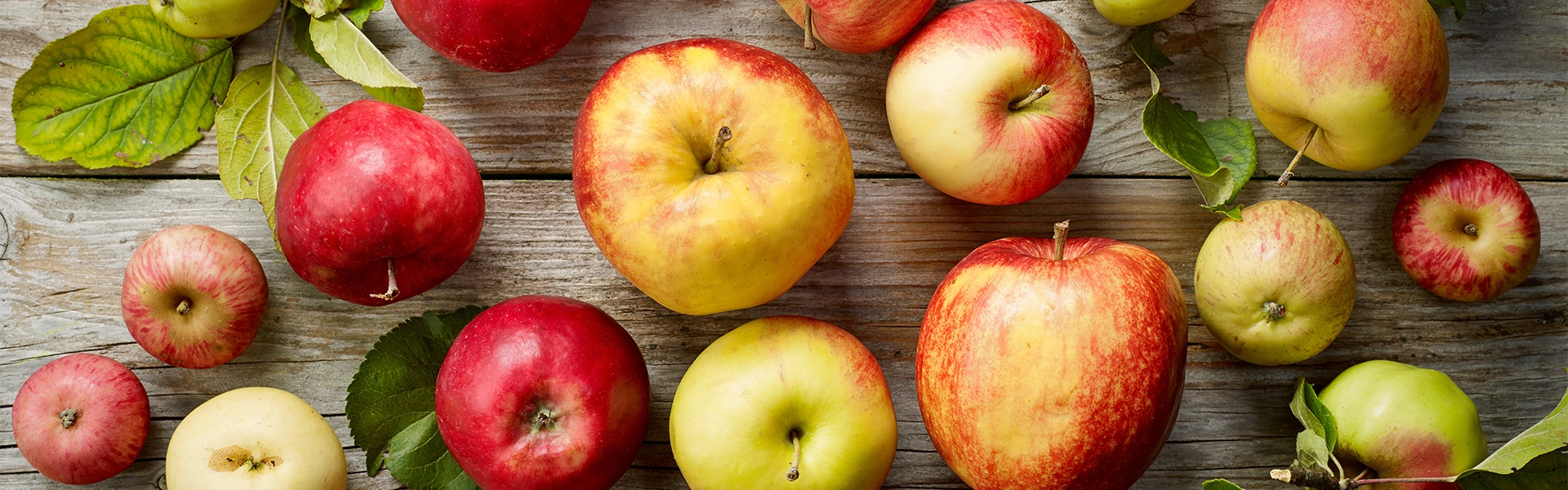
Apples – how many calories do they contain and how are they beneficial to health?
The apple is a real all-rounder when it comes to health and well-being. Whether sweet or sour, there are plenty of varieties to suit every taste. Behind its unassuming exterior lies a nutritional powerhouse that does more than just satisfy your hunger. Read on to find out why apples are so healthy and what positive effects they have on your digestion, immune system, liver and cardiovascular system.
Storage time*
| BioFresh Fruit & Vegetable safe just above 0 °C with high humidity | 80 days |
| EasyFresh safe 7 °C with air regulation plate | 50 days |
| Refrigerator compartment 7 °C | 40 days |
| Freezer compartment -18 °C | 8 months |
The key points
- Nutrient profile per 100 g: 54 kcal, 14.4 g carbohydrates, 0.1 g fat, 0.3 g protein, 2 g fiber
- Vitamins and minerals: contains vitamins C, E and B vitamins, as well as potassium and magnesium
- Rich in protein and fiber: promotes digestion, is filling, stabilizes blood sugar levels
- Eat apples with the skin: that is where most of the nutrients are
Healthy and versatile: nutritional values and content of apple
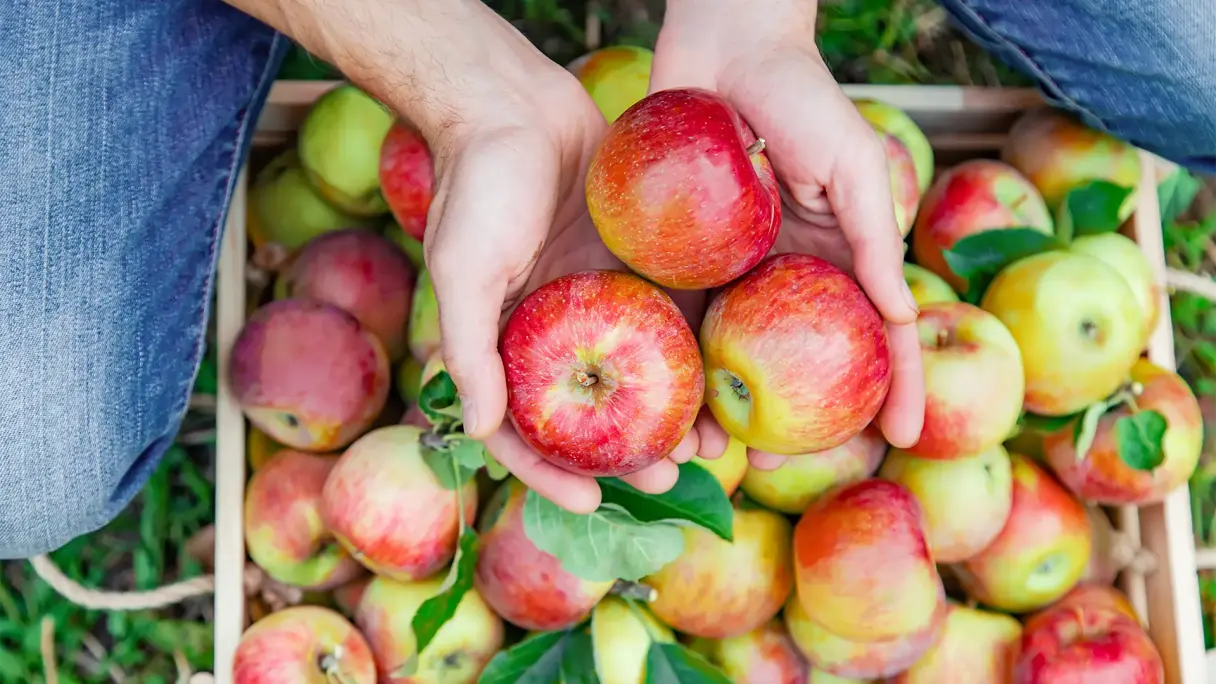
An apple is a low-calorie snack, containing only about 54 kcal per 100 g. It contains hardly any fat or protein and provides energy mainly through carbohydrates.
It is also rich in vitamin C and E and several B vitamins, as well as minerals such as potassium and, in smaller quantities, magnesium, phosphorus and calcium. The fiber it contains is also good for your health. Most of these nutrients are right under the skin.
The secondary plant substances, such as polyphenols, are particularly valuable. Old apple varieties such as ‘Boskoop’ or ‘Cox’s Orange Pippin’ contain significantly more of it than new cultivars.
Depending on the variety, the apple season begins in many regions in August and lasts until autumn. Apples are available all year round thanks to their good shelf life. For a long shelf life, apples should be stored somewhere cool with high humidity. Apples can be kept in a refrigerator for up to 40 days. A BioFresh Fruit & Vegetable safe is ideal for this, extending the shelf life to up to 80 days thanks to a temperature of just above 0 °C and high humidity. You can freeze apples for up to eight months.
Bear in mind that apples release the ripening gas ethylene and should therefore be stored separately from other fruit and vegetables.
| Vitamin | 100 g contains | Minerals | 100 g contains |
|---|---|---|---|
| Vitamin C | 5–30 mg | Potassium | 120 mg |
| Vitamin A (in retinol equivalent (RE)) | 6 μg | Calcium | 7 mg |
| Vitamin B1 | 35 μg | Magnesium | 6 mg |
| Vitamin B2 | 30 μg | Phosphorus | 12 mg |
| Niacin | 300 μg | ||
| Vitamin B6 | 100 μg | ||
| Biotin | 5 μg | ||
| Vitamin E | 0.5 mg |
Apples and their effect on digestion and intestinal health
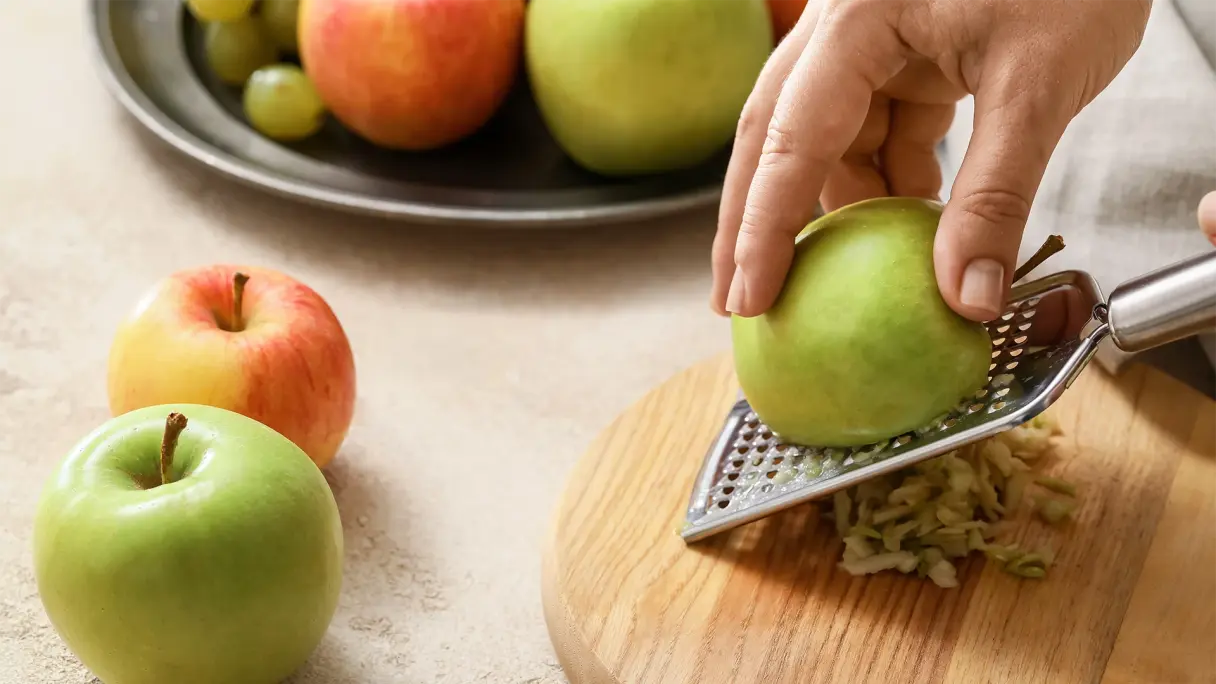
It is not without reason that apples are regarded as a household remedy for gastrointestinal complaints, especially for diarrhoea. This is mainly due to the soluble fiber pectin, which is found in high concentrations in apples. Pectin binds fluid in the intestine and forms a protective gel over the intestinal wall. This intercepts irritants, such as bacterial toxins, and excretes them. Grated apple is particularly effective, as the pectin is more easily absorbed.
But apples are more than just a remedy for complaints: they are generally good for a healthy digestion. The fiber they contain stimulates intestinal movement, provides long-lasting satiety and keeps blood sugar levels stable.
Apples also provide nourishment for the intestinal flora. Intestinal bacteria convert apple fiber into short-chain fatty acids, which nourish and protect the intestinal mucosa. In addition, polyphenols from apple peel help to strengthen the intestinal barrier and keep harmful substances out. In summary: apples are truly multi-talented in maintaining healthy intestines.
Apples to strengthen the immune system, liver and heart

Apples strengthen the immune system, support liver function and contain many vitamins, polyphenols and secondary plant substances. These have an anti-inflammatory effect and neutralize free radicals, which is why you should always eat the skin.
Apples are particularly valuable during the cold and flu season because they contain over 30 nutrients, including lots of vitamin C. Apple peel tea can help with exhaustion and hoarseness.
Apples also protect liver cells from harmful effects and stabilize the intestinal flora through fiber and pectin, which reduces the strain on the liver. A healthy digestion is important for detoxification.
Last but not least, eating an apple a day strengthens the cardiovascular system. Studies show that just one serving a day can reduce the risk of stroke and heart attack, thanks in part to soluble fiber, such as pectin, which lowers cholesterol levels.
FAQ – apples
Apples are among the healthiest types of fruit for losing weight. They contain few calories (approx. 54 kcal per 100 g) but are rich in nutrients, vitamins and fiber. They are filling, aid digestion and stabilize blood sugar levels, making them ideal for a calorie-conscious diet all year round.
Two apples a day provide your body with valuable vitamins, secondary plant substances and fiber. These aid digestion, strengthen the immune system and ease the strain on your liver. Studies show: eating apples regularly can reduce the risk of cardiovascular disease. As many nutrients are found directly under the skin, apples should be eaten unpeeled. For example, two apples a day provide more than half of your daily vitamin C requirement.
*All specifications given are to be considered as guideline values, and depend in each case on the type of food and on the proper storage without interruption of the cold chain from harvest/production through to the Liebherr appliance. Should food products have information about minimum shelf life, the date on the packaging always applies.