
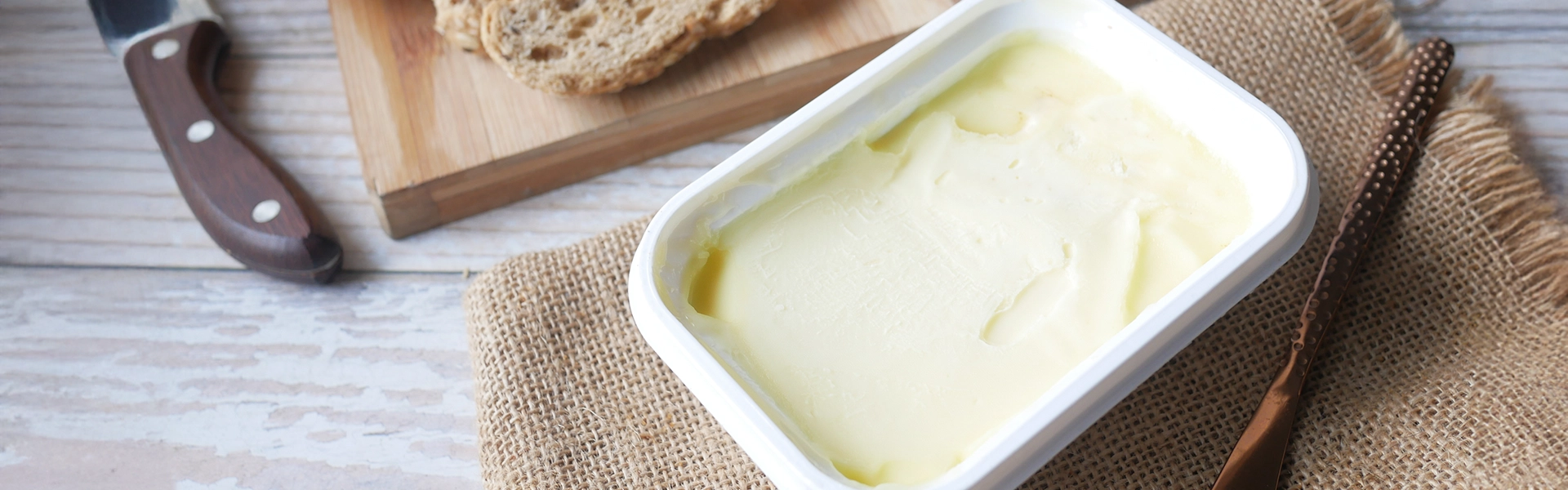
Margarine: the better alternative to butter?
Margarine has long been seen as just a substitute for butter – but just how healthy, sustainable, and versatile is it really? Learn how it’s made and how it’s different from butter. We also explain health-related and sustainable aspects, and give you some helpful tips about what to look for when purchasing. There are also simple instructions on how to make your own margarine.
Storage time*
| BioFresh Meat & Dairy safe just above 0 °C with low humidity | 90 Days |
| Refrigerator compartment 7 °C | 30 Days |
| Freezer compartment -18 °C | 12 Months |
The key points
- Margarine: industrially produced spreadable fat, predominantly made from plant-based fats, emulsifiers, and flavorings.
- Health-related aspects: healthier margarine is based on vegetable fats such as rapeseed or linseed oil, and does not contain any hydrogenated fats.
- Margarine vs butter: margarine generally has a better fatty acid composition.
- Sustainability: vegan margarine without palm oil has a better CO₂ footprint than butter.
- Make it yourself: a 1:3 ratio of cocoa butter and plant-based oil.
What is margarine?
Margarine is an industrially produced spreadable fat that was developed as a substitute for butter. It is made up of a mixture of water and fats and also contains emulsifiers, vitamins, and flavorings. Depending on the type of margarine, the fat content varies over a wide range of between 39 and 90 percent, with the minimum fat content for conventional margarine being 80 percent.
How is margarine made?
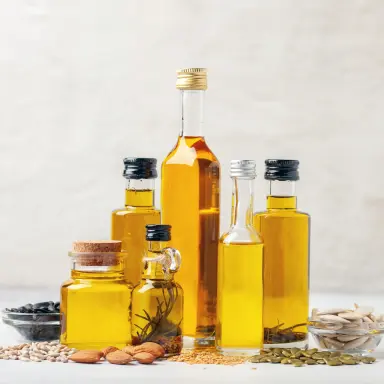
The manufacturing process sees the main ingredient of margarine, i.e. the fat, being extracted from predominantly plant-based oils such as rapeseed or sunflower oil. These oils are extracted from the seeds and then undergo several stages of refinement. To achieve margarine’s typical spreadable consistency, the fat-and-water mixture is pasteurized and cooled, while being emulsified through stirring and kneading in a blast chiller. Flavorings, acidity regulators such as citric acid, and sometimes skimmed milk are added during this process to improve taste and shelf life. The distinctive yellow color comes from the added beta-carotene. Fat-soluble vitamins such as A, D, and E are often added during production so that the margarine’s nutritional profile is similar to that of butter.
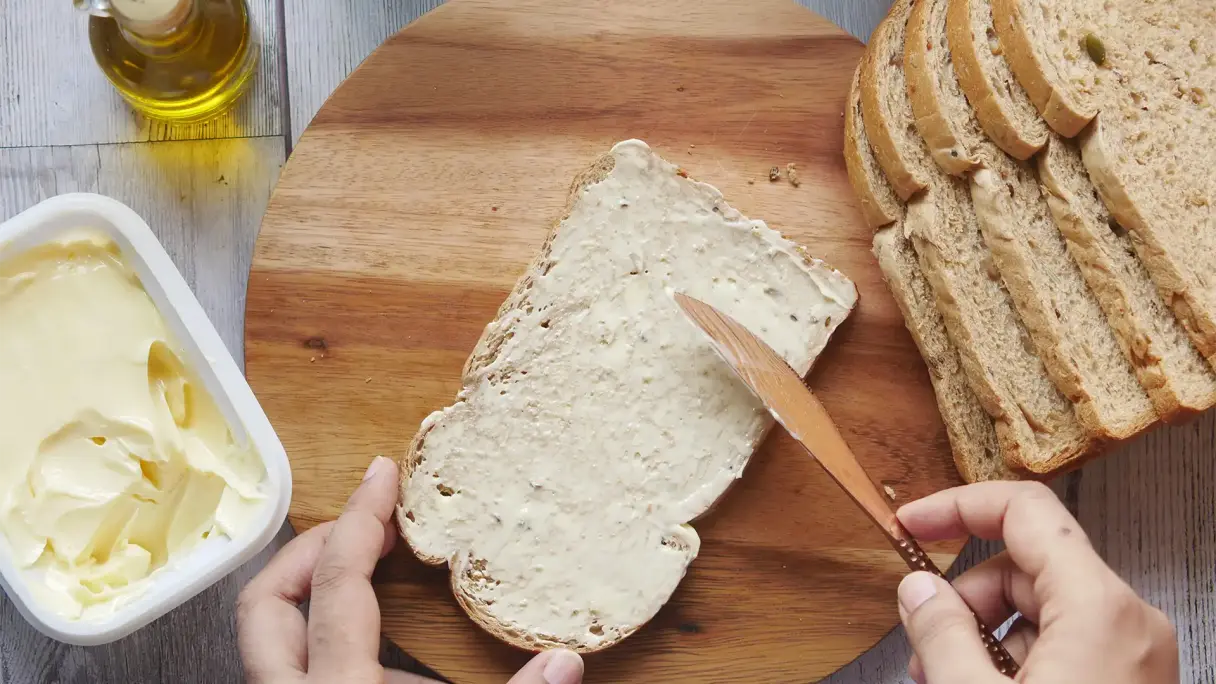
How (un)healthy is margarine really?
Margarine can be a healthy choice if it is made from plant-based oils such as rapeseed or linseed oil and does not contain any hydrogenated fats. However, there are also some types of margarine that may contain unhealthy trans fatty acids.
High-quality margarines that contain omega-3 fatty acids and are enriched with vitamins such as vitamin D can help regulate cholesterol levels and protect the cardiovascular system.
What should you look for when buying margarine?
When buying margarine, look for types that contain plant-based oils such as rapeseed or olive oil as these are rich in unsaturated fatty acids. Avoid products that contain hydrogenated fats or have a high palm oil content.
What is the difference between margarine and butter?
Margarine and butter differ mainly in terms of how they are made and the origin of the fat they contain: while butter is made from animal fat, margarine largely or completely uses plant-based oils. Margarine generally contains more unsaturated fatty acids, which are considered to be healthier, whereas butter has a higher proportion of saturated fatty acids.
Margarine is industrially manufactured and comprises plant-based fats that are rich in unsaturated fatty acids. By contrast, butter is obtained from milk fat and is rich in the fat-soluble vitamins A, D, and E, as well as minerals such as calcium. However, up to two-thirds of butter is made of saturated fatty acids, which if consumed excessively can increase LDL cholesterol levels and increase the risk of cardiovascular disease.
Another difference is the consistency: Butter is hard when chilled and is difficult to spread, whereas margarine, thanks to the added emulsifiers and its fatty acid composition, remains spreadable even when chilled. In terms of taste, butter’s creamy flavor wins people over, while margarine generally has a more neutral flavor in comparison.
In total, both spreadable fats contain around 720 calories per 100 grams and are rich in fat. As far as health is concerned, the difference is the type of fatty acids that the two contain. Margarines that contain high-quality plant-based oils and that are free of hydrogenated fats tend to be considered healthier.
Which spreadable fat is the most sustainable?
When compared directly, margarine is more sustainable than butter, as its manufacturing process results in fewer greenhouse gases and requires less land. A particularly environmentally friendly option is vegan margarine that does not contain palm oil, as it is completely free of animal products and does not have to reckon with the negative ecological effects of palm oil plantations.
Due to intensive livestock farming, the production of butter has a poor carbon footprint. Around 25 liters of milk are required to make one kilogram of butter, which involves the release of around 25 kilograms of CO₂. By comparison, manufacturing one kilogram of margarine only produces around 0.7 kilograms of CO₂. However, margarine often contains palm oil, which is subject to criticism due to the environmental damage involved such as rainforest destruction and loss of biodiversity. More sustainable alternatives are made from oils such as rapeseed or sunflower oil that have a better CO₂ footprint.
If you choose margarine, you should look for products that do not contain palm oil or that are certified as using sustainable palm oil. A completely plant-based margarine with a high proportion of unsaturated fatty acids—preferably one based on rapeseed oil—is the most environmentally friendly option.
How can you make you own margarine?
Margarine is very easy to make at home by combining plant-based oil, cocoa butter, and a pinch of salt. Different oils as well as seasonings and herbs can be added to individually enhance the margarine to your personal taste.
The base is created by mixing cocoa butter and a plant-based oil in a 1:3 ratio – e.g. 50 g of cocoa butter and 150 g of plant-based oil. Rapeseed, linseed, or olive oil are particularly suitable, as they have a balanced fatty acid composition.
Melt the cocoa butter in a double boiler over medium heat, then mix it with the plant-based oil and a pinch of salt. Pour the mixture into a sealable container and refrigerate until it solidifies. In addition, the homemade margarine can be creatively enhanced with, for example, herbs, dried tomatoes, garlic, or chilli. The finished margarine can be kept in the refrigerator for around three days and can also be frozen, if required.
*All specifications given are to be considered as guideline values, and depend in each case on the type of food and on the proper storage without interruption of the cold chain from harvest/production through to the Liebherr appliance. Should food products have information about minimum shelf life, the date on the packaging always applies.

This text has been machine translated from English.