
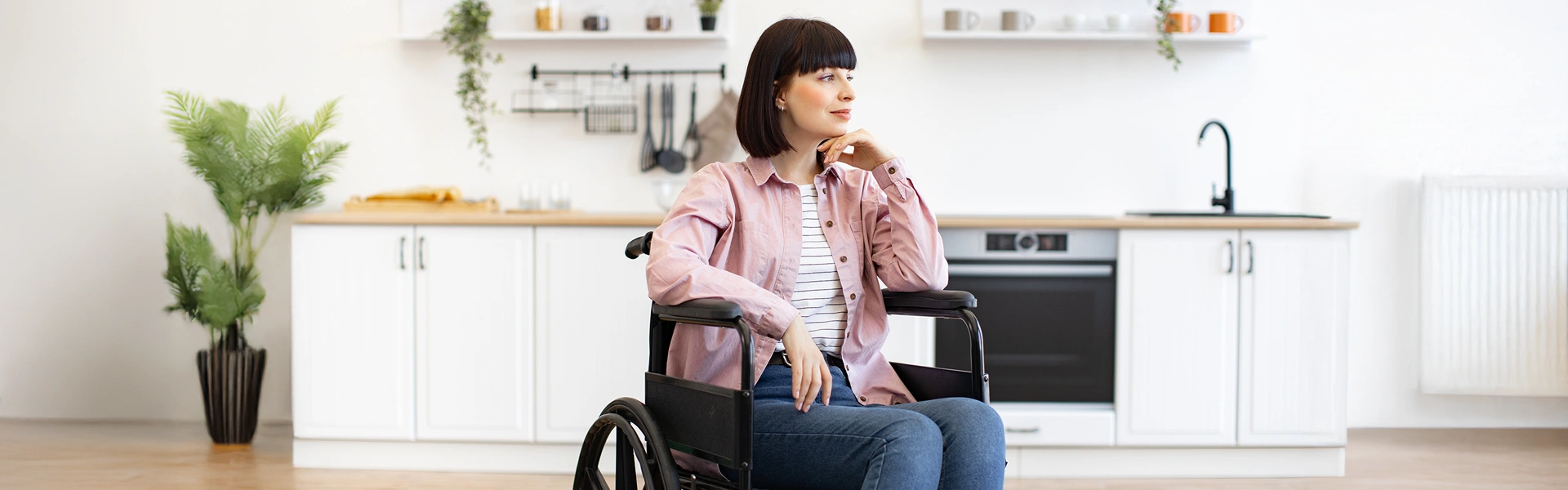
Accessible kitchens: factors for convenience and safety
An accessible kitchen needs to combine convenience, safety and functionality. Flexible solutions that can be adapted to individual needs are particularly important. Thoughtful planning makes everyday life noticeably more convenient – for every generation and physical situation. But which systems are particularly practical, and what should you pay attention to when planning?
The key points
- Accessible work surfaces: wheelchair-accessible and height-adjustable worktops enable convenient use – regardless of mobility.
- Ergonomic electrical appliances: ovens with telescopic rails, hobs with safety shut-off and voice-controlled appliances make operation easier.
- Freedom of movement: spacious passageways and sufficient space for wheelchairs or walking aids ensure unrestricted use.
- Intelligent lighting: well-placed light sources and automatic sensors improve orientation and enhance safety.
Height-adjustable kitchen for wheelchair users: more flexibility for everyone
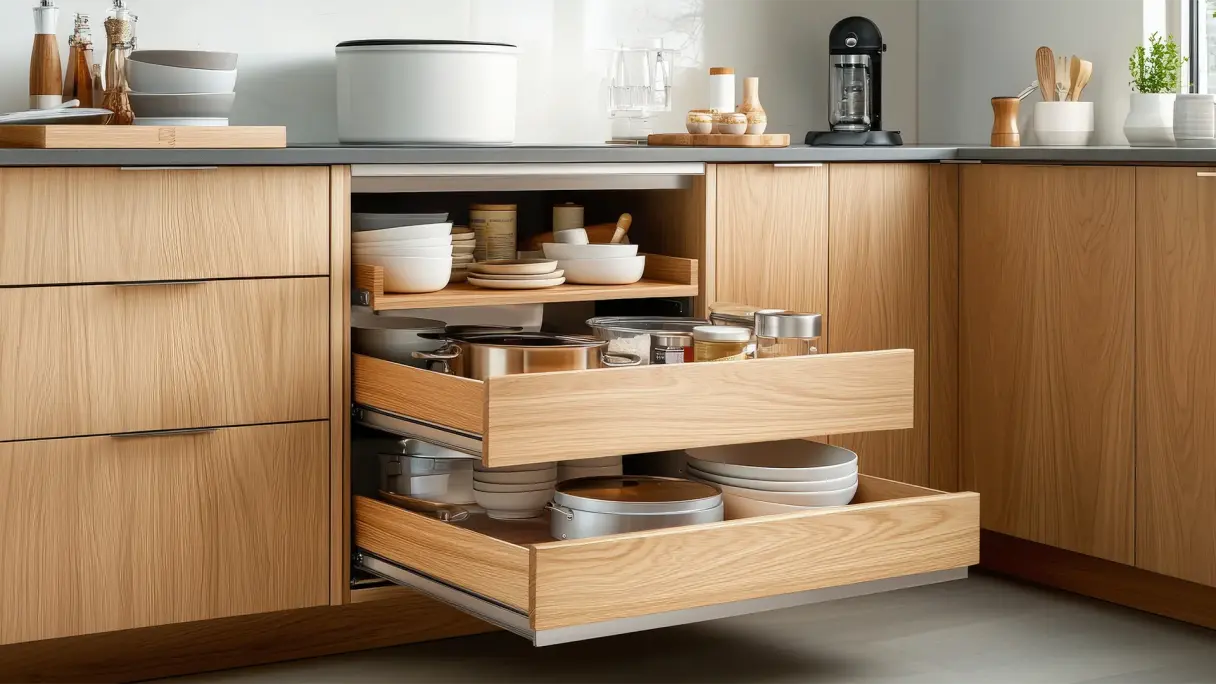
Modern kitchen systems allow the height of worktops, wall cupboards and electrical appliances to be adjusted at the touch of a button or mechanically. It’s particularly practical to have accessible work surfaces that can be adapted for wheelchair users without restricting use for others. Wall cupboards with a lowering mechanism also make it easier to access dishes and supplies without the need for additional assistance in a wheelchair-accessible kitchen.
Ergonomics in the kitchen – in a nutshell!
- Promote independence: height-adjustable and easily accessible furniture allows independent use of the kitchen.
- Promote health and well-being: ergonomic solutions reduce back and joint strain and prevent long-term posture damage.
- Enhance safety: fewer dangerous movements such as stretching, bending or balancing on chairs reduce the risk of accidents.
- Facilitating participation in social life: a functional, flexible and accessible kitchen makes it possible for you to cook together and spend time with family and friends.
Another advantage of height-adjustable furniture is the ergonomics in the kitchen: Whether you’re chopping, cooking or washing up – the right working height reduces back and joint strain and ensures convenient use. This flexibility pays off especially in multi-generational households or when living circumstances change.
During planning, attention should be paid to safe mechanisms, sufficient load-bearing capacity and ease of operation. Electrically height-adjustable systems offer maximum convenience, while manual solutions are often more cost-effective. In combination with easily accessible storage solutions, the kitchen becomes a place that remains flexible and everyone can use without any restrictions.
How to successfully convert an old building
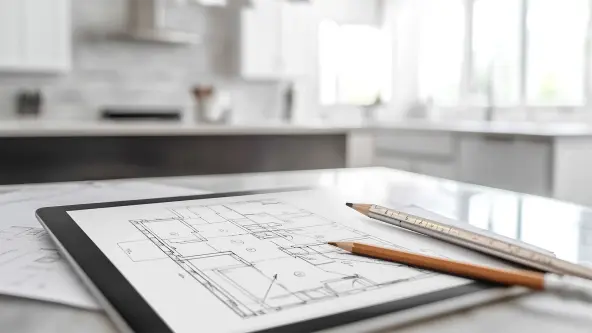
Limited space, load-bearing walls or existing connections make both the conversion and redesign as well as the conversion to an accessible kitchen in an old building difficult. Careful planning is therefore essential. It’s also particularly useful here to have accessible work surfaces, easily accessible cupboards and an appropriate height for electrical appliances.
If structural changes are not possible, retrofittable solutions offer an alternative: height-adjustable table tops, extendable work surfaces or mobile kitchen islands create flexibility. Accessible kitchen appliances such as ovens at easy-to-reach height or hobs with easily accessible controls also make everyday life much easier.
Accessible kitchen appliances: which functions are really important? FAM
An accessible kitchen relies on well-thought-out appliances that offer convenience and safety. It’s particularly helpful to have easily accessible ovens with telescopic rails, which allow hot food to be removed safely, as well as hobs with sensor controls that can be operated intuitively. Voice control or touch displays also make everyday life easier for people with limited mobility. With SmartDevice technology, Liebherr appliances can be easily controlled using your mobile device.
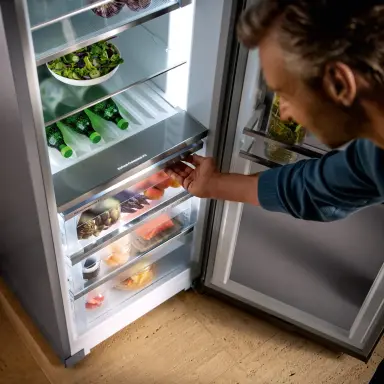
When it comes to refrigeration and freezing, ergonomic design is important. Modern appliances offer innovative solutions: smooth-running doors, pull-out shelves, and an intuitive interior layout ensure maximum ease of use. Thanks to our BioFresh technology, food stays fresh longer – ideal for those who can’t get to the shops very often. In addition, these energy-efficient models guarantee sustainable and cost-saving use.
FAQ: accessible kitchens
An accessible kitchen should offer wide passages of at least 150 cm between the kitchen appliances to allow wheelchair users to turn around. The space in front of the worktops, electrical appliances and sink should be at least 120 cm deep to ensure convenient use.
Handleless opening, electric sensor control or smooth-running folding doors make operation easier. Sliding doors are a good alternative to traditional revolving doors because they take up less space and are easier to move.
Automatic stove shut-offs, non-slip mats in front of the sink and hob, and clearly visible and tactile controls enhance safety. In addition, power sockets should be easily accessible and there should be no obstacles in the way.
Yes, ovens should be installed at a height that is easy to reach (approx. 80–100 cm above the floor) to ensure safe use. Hobs should have easily accessible controls on the front edge. Dishwashers with a raised installation position make loading and unloading easier.
This might also interest you
Kitchen planning: what to consider – important tips
Would you like to install a new kitchen in your home? We’ll show you what you need to consider when planning a kitchen. Read valuable tips.

Top 10 foods that provide energy!
These ten foods provide us with plenty of energy. Which foods are particularly suitable for breakfast and which for lunch? Find out more!
Organizing the refrigerator: clear, efficient and smart
From reusable containers to temperature zones: Organising the refrigerator, saving space and keeping food fresh for longer.