
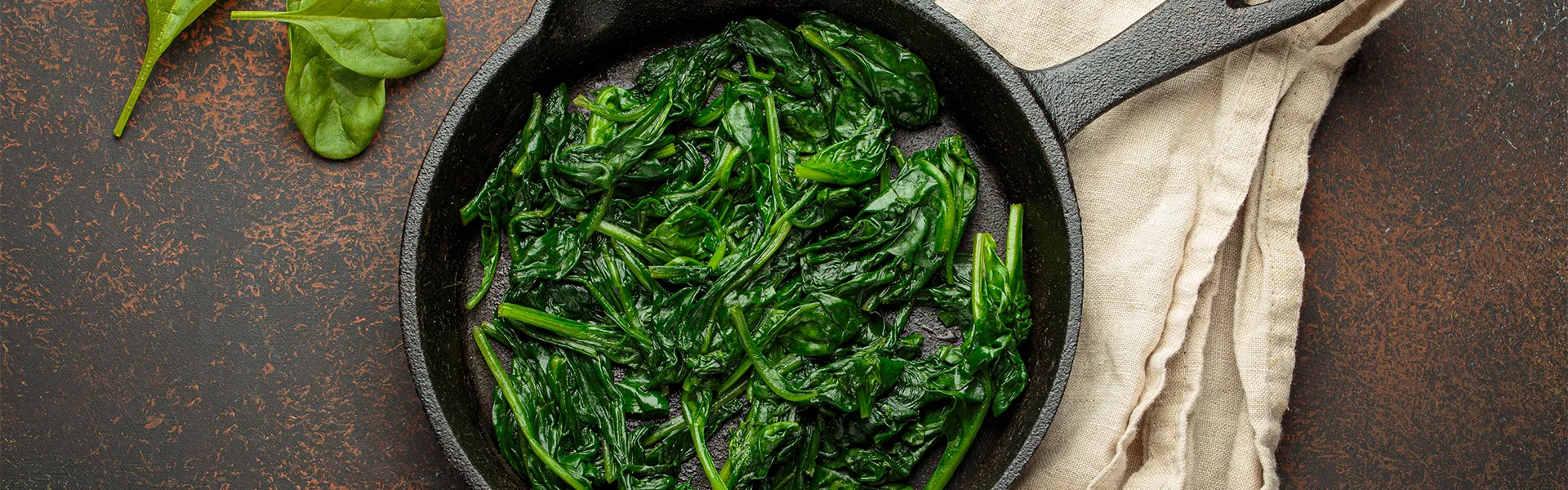
Fact or fiction – reheating spinach – just don’t do it!
Have you ever heard that reheating spinach is unhealthy? Many people are familiar with the old warning that this could be poisonous. But is this really true? Reheating spinach is not inherently dangerous; what matters is how it is stored and heated. In this article, you’ll learn why nitrate plays a role in spinach, how to minimise the risk of food poisoning, and how to store spinach safely and correctly.
The key points
- Spinach can be reheated safely if it is stored properly and heated sufficiently.
- Modern microwaves are ideal for heating spinach quickly and evenly.
- Important: do not reheat spinach repeatedly and only store it in the fridge for short periods to avoid the formation of nitrite.
Reheating spinach – yes or no? – list of contents
Reheating spinach – yes or no?
Many people believe that spinach should not be heated up in the microwave because it then becomes poisonous. This is actually a myth. Correct storage and proper heating are crucial.
Spinach naturally contains nitrate, which can convert to nitrite if it’s stored for long periods or heated improperly. Nitrite can block the red blood pigment haemoglobin, thereby disrupting the supply of oxygen to the cells. However, spinach can be eaten warm a second time without any concerns if it is only kept in the fridge for a short time and is not heated multiple times. Nitrite can be harmful, especially for young children, because it can affect oxygen absorption in the blood. However, if heated and stored correctly, you should have no reason to worry.
Leaf spinach is very tender and thin. Make sure you use a suitable container in the microwave that is loosely covered. While heating, it helps to stir the spinach once to prevent any cold spots where germs could grow.
Without a cover, the spinach will quickly lose moisture and its texture will change. Without a cover, the spinach will also lose its flavour more quickly.
So, reheating spinach is not poisonous if it is kept fresh, is refrigerated and is heated sufficiently. Leaf spinach can also easily be heated up in the microwave.
Reheating spinach – here’s how it’s done!
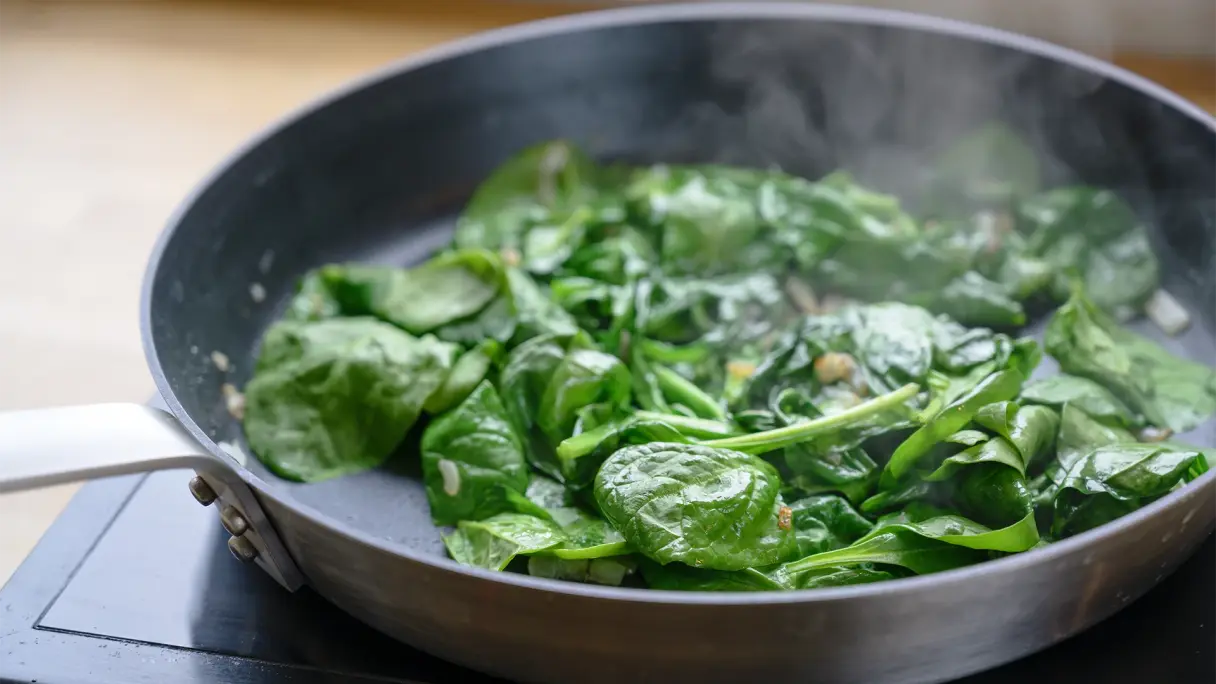
To reheat spinach safely, the vegetable should be cooled quickly after initial cooking and stored in the fridge at a temperature below 5 °C. When reheating, you should heat the spinach quickly and evenly to at least 70 °C. This will kill any germs and minimise nitrite formation.
Reheated spinach should be consumed within 24 hours. It is especially recommended that pregnant women, small children and people with weakened immune systems eat freshly prepared spinach.
Better to eat spinach cold?
There are plenty of myths surrounding spinach, and a common question is: Is it better to eat spinach cold? The reason for this question is the formation of nitrates, which plays a particularly important role when heating spinach. If it’s stored improperly or heated frequently, nitrate in spinach can be converted into nitrite. Nitrite can be harmful to health, especially if spinach is reheated repeatedly.
Especially in summer, spinach is an excellent choice as an ingredient in cold dishes such as salads, as it stays fresh and rich in vitamins. Enjoying spinach cold is therefore a good way to avoid the health risks of heating it and at the same time benefit from spinach’s many nutrients.
FAQ:
Spinach naturally contains nitrate, which can convert to nitrite if it’s stored incorrectly or heated repeatedly. Nitrite can be harmful, especially for young children, because it can affect oxygen absorption in the blood. You should therefore let spinach cool quickly after first cooking it and reheat gently only once. It’s important that you always work hygienically and store spinach at a maximum of 4 °C in the fridge.
Nitrite forms relatively quickly in spinach when the cooked vegetable is left at room temperature. A critical nitrite level can develop after just a few hours. Rapid cooling and storage in the fridge slow down this process considerably. It is especially important to refrigerate spinach within two hours of cooking to minimise the formation of nitrite and preserve the quality of the leafy green.
To reheat spinach properly, it should be heated quickly and evenly, ideally to at least 70 °C. Spinach is best reheated gently in a saucepan over a medium heat or in a microwave with a low wattage. You should avoid slow heating at too low a temperature to prevent the formation of nitrite.
Spinach should no longer be eaten if it has an unpleasant smell, feels slimy or if its colour has changed significantly. Even if the spinach has been cooked and stored for more than two days in the fridge, caution is advised. When it comes to fresh spinach, if it is wilted,spotty or shows signs of mould, it should be thrown away. Especially in warm temperatures, it’s important to process spinach quickly to avoid nitrite formation and to preserve the quality of this healthy vegetable.
This might also interest you
Spinach as a superfood – read on to find out about the nutritional values it contains
Would you like to learn more about the superfood spinach? We would love to tell you how healthy this green vegetable is and what nutrients spinach contains.

Fresh or frozen fruit and vegetables?
Fruit and vegetables are important for a healthy lifestyle. But what is actually better: fresh or frozen vegetables and fruit? We reveal all!

Lamb’s lettuce – calories, vitamins and nutrients
Would you like to find out more about the nutritional values of your salad? Read on to find out how many calories lamb’s lettuce has so that you can enjoy it without worrying.