
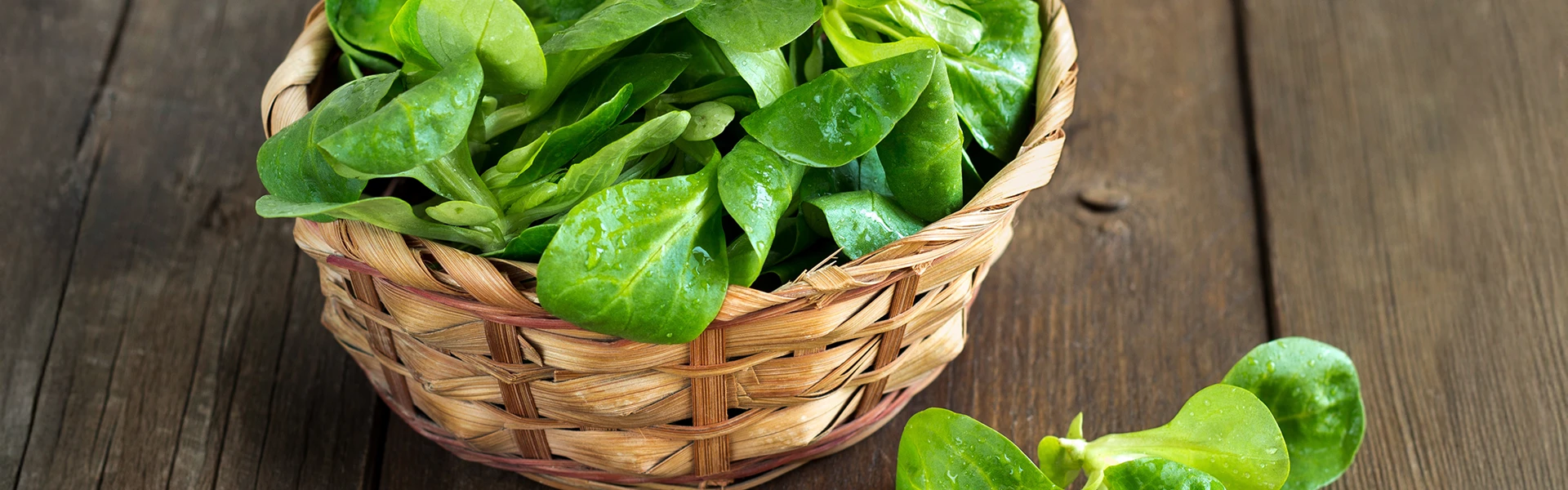
Lamb's lettuce – calories, vitamins and nutrients
Did you know that lamb’s lettuce has many different names in Germany? Whether it is Ackersalat (corn salad), Nüsschen (field salad) or Rapunzel (Rapunzel salad) the tender, dark green leaves of this popular winter salad are a taste sensation and packed with valuable minerals and vitamins. But what makes it so beneficial for our diet? And how should it be stored correctly so that it stays crisp for as long as possible? In this article, you will learn everything about the health benefits of lamb’s lettuce, as well as tips for optimal storage and preparation.
Storage time*
| BioFresh Fruit & Vegetable safe just above 0 °C with high humidity | 19 days |
| EasyFresh safe 7 °C with air regulation plate | 7 days |
| Fridge compartment 7 °C | 2 days |
| Freezer compartment -18 °C | not recommended |
Lamb's lettuce – the key points:
- Highest iron content among lettuces (2 mg/100 g)
- High vitamin C content (35 mg/100 g)
- Valuable minerals: potassium (421 mg/100 g), magnesium (13 mg/100 g) and calcium (35 mg/100 g)
- Low in calories: 18 kcal, 0.8 g carbohydrates, 1.8 g protein, 0.4 g fat per 100 g
- Optimal storage is important: innovative cooling technologies extend shelf life
Lamb’s lettuce and its health benefits
Lamb’s lettuce is not only a treat for the taste buds, but also a real nutritional powerhouse. It contains the highest iron content of all lettuce varieties – an essential mineral that transports oxygen around the body. With 2 mg of iron per 100 g, it makes a significant contribution to this. The body can absorb iron particularly well in combination with vitamin C. And lamb’s lettuce is particularly rich in this vitamin: its content (35 mg/100 g) is three times higher than that of lettuce, which strengthens the immune system and supports the development of bones and connective tissue.
In addition to these vitamins, lamb’s lettuce provides valuable minerals such as potassium (421 mg/100 g), magnesium (13 mg/100 g) and calcium (35 mg/100 g). Magnesium plays a central role in muscles, nerves and the immune system. With only 18 kcal, 0.8 g carbohydrates, 1.8 g protein and 0.4 g fat per 100 g, lamb’s lettuce is also an ideal choice for a healthy and calorie-conscious diet. Its fibre promotes good digestion.
However, there are also some aspects to consider. Like other leafy vegetables, lamb’s lettuce storesnitrates from the soil, which under certain conditions can be converted into nitrosamines, which are considered potentially harmful to health. Nevertheless, the Federal Institute for Risk Assessment does not advise adults against eating vegetables containing nitrates – on the contrary, a varied diet with plenty of fresh vegetables is expressly recommended. If you want to be on the safe side, choose organic lamb’s lettuce grown outdoors, as this usually has a lower nitrate content.
Eating healthily with lamb’s lettuce – storage and preparation
Lamb’s lettuce is one of the more delicate types of lettuce and should be eaten as fresh as possible. Lamb’s lettuce only keeps for three days in the normal fridge compartment. With the EasyFresh safe, you can extend the shelf life to seven days by regulating the air supply. In the BioFresh safe at just above 0°C, your lamb’s lettuce will stay fresh for up to 19 days. If your salad does start to go a little soft, you can refresh it with a quick ice bath to make it crisp again.
As sand and soil often accumulate between the delicate leaf rosettes, thorough cleaning is essential. The best way is to swirl the salad several times in cold water instead of rinsing it under running water, as the delicate leaves can easily be damaged. Then dry it in a salad spinner or leave the leaves to drain on a kitchen towel.
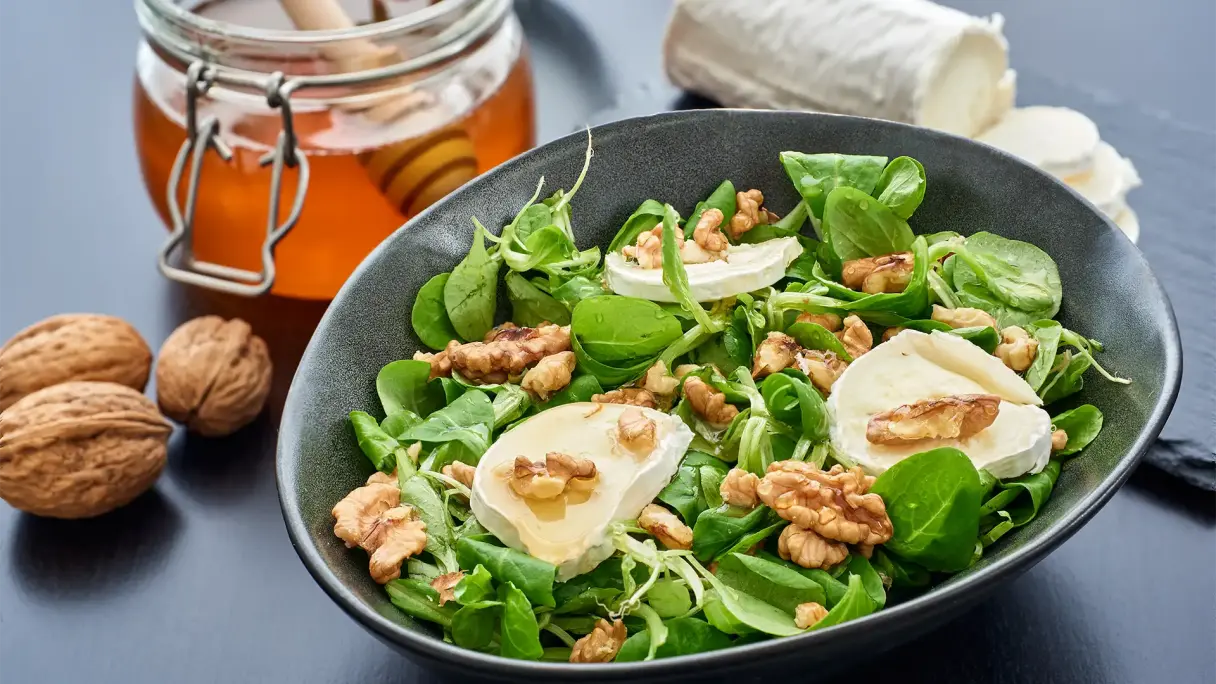
Lamb’s lettuce is traditionally eaten raw, but is also suitable as an ingredient in creative dishes. Its nutty aroma harmonises particularly well with strong and spicy ingredients such as bacon, goat’s cheese, roasted nuts or savoury dressings. Combinations with fruity components such as apple, pear or pomegranate are also very popular. In addition to being prepared in the traditional way as a salad, lamb’s lettuce can be used as a substitute for spinach in warm dishes. This green leafy vegetable can even be used as a base for aromatic pesto or in smoothies.
When eaten raw, its heat-sensitive nutrients, such as vitamin C, are optimally preserved.
To prevent the tender leaves from wilting before eating, add the dressing just before serving.
Pregnancy and lamb’s lettuce – vitamin C and folic acid
Lamb’s lettuce is a particularly valuable source of nutrients during pregnancy, as it is rich in essential vitamins and minerals. Its high content of folic acid, a B vitamin that plays a central role in cell division and the development of the baby’s nervous system, is particularly noteworthy.
With 145 µg of folic acid per 100 g, lamb’s lettuce makes a significant contribution to meeting the increased requirements of expectant mothers. During pregnancy, the recommended daily intake increases to 550 µg, which is why it is advisable to regularly include foods containing folic acid in your diet.
In addition, lamb’s lettuce contains large amounts of beta-carotene, which is converted into vitamin A in the body and is important for the healthy development of an unborn child’s eyesight.
Breastfeeding women also benefit from the nutrient richness of this lettuce, as their vitamin A requirement is even higher at 1500 µg per day. In addition, breastfeeding women need 450 µg of folic acid daily to meet the increased demand for milk production. Regular consumption of lamb’s lettuce can therefore help to provide the body with essential vitamins after childbirth.
However, expectant mothers should take particular care to wash lamb’s lettuce thoroughly to remove any traces of germs or pesticides.
FAQ – lamb’s lettuce
Its high vitamin C, folic acid and iron content in particular make it a valuable addition to a healthy diet. Thanks to its numerous minerals such as potassium and magnesium, it supports the cardiovascular system and promotes healthy digestion. Lamb’s lettuce is also low in calories but rich in fibre. With its high folic acid content, it contributes to the healthy development of the baby, especially during pregnancy. The best season for fresh lamb’s lettuce is autumn and winter, as it provides valuable vitamins even in cold months.
Lamb’s lettuce is generally healthy, but there are situations where caution is advised. If it is not washed thoroughly, it may contain germs or pesticide residues. It also contains oxalic acid and nitrate, which can be problematic in large quantities – especially for small children or people with kidney problems. If lamb’s lettuce looks wilted or smells unpleasant, it should not be eaten. Freshness and hygiene are also important during pregnancy.
Yes, lamb’s lettuce is a good source of plant-based iron and contains around 2 mg of iron per 100 g. The body can absorb the iron better particularly when combined with vitamin C, which is also abundant in lamb’s lettuce. This means that lamb’s lettuce supports blood formation and prevents fatigue and iron deficiency. Lamb’s lettuce can be a valuable addition to the diet, especially for people with increased nutritional requirements, such as pregnant women or vegans.
*All specifications given are to be considered as guideline values, and depend in each case on the type of food and on the proper storage without interruption of the cold chain from harvest/production through to the Liebherr appliance. Should food products have information about minimum shelf life, the date on the packaging always applies.
This might also interest you
Eating when you’ve got flu – speed up your recovery with these nutrients
Is there a full-blown flu outbreak and are you grappling with yet another annoying infection? We’ll tell you what food you should eat to combat flu.
Chard: what are the nutritional values of this colourful vegetable?

Which foods shouldn’t you freeze?
Many foods can be frozen without any problem, but this doesn’t work in some cases. So which foods shouldn’t you freeze?