
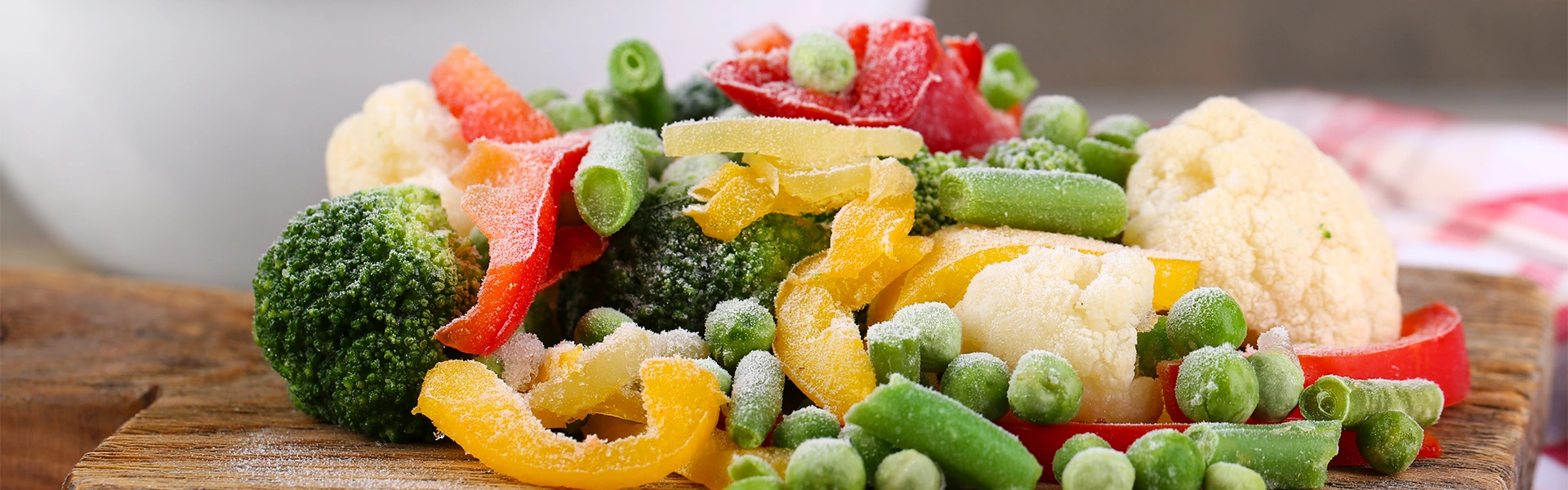
Freezing tips: how to store frozen food correctly
The advantages of frozen food remain revolutionary to this day: food has a longer shelf life and cooking has changed. Frozen food is not seasonal and can be prepared quickly. We have put together some tips on freezing for you.
The key points
- Always put frozen goods in your trolley last when shopping – this will keep them frozen for as long as possible.
- Use well-insulated bags or boxes with cooling elements for transport home.
- Packaging should be airtight and undamaged to prevent freezer burn.
- Defrost food in the fridge, preferably in its original packaging.
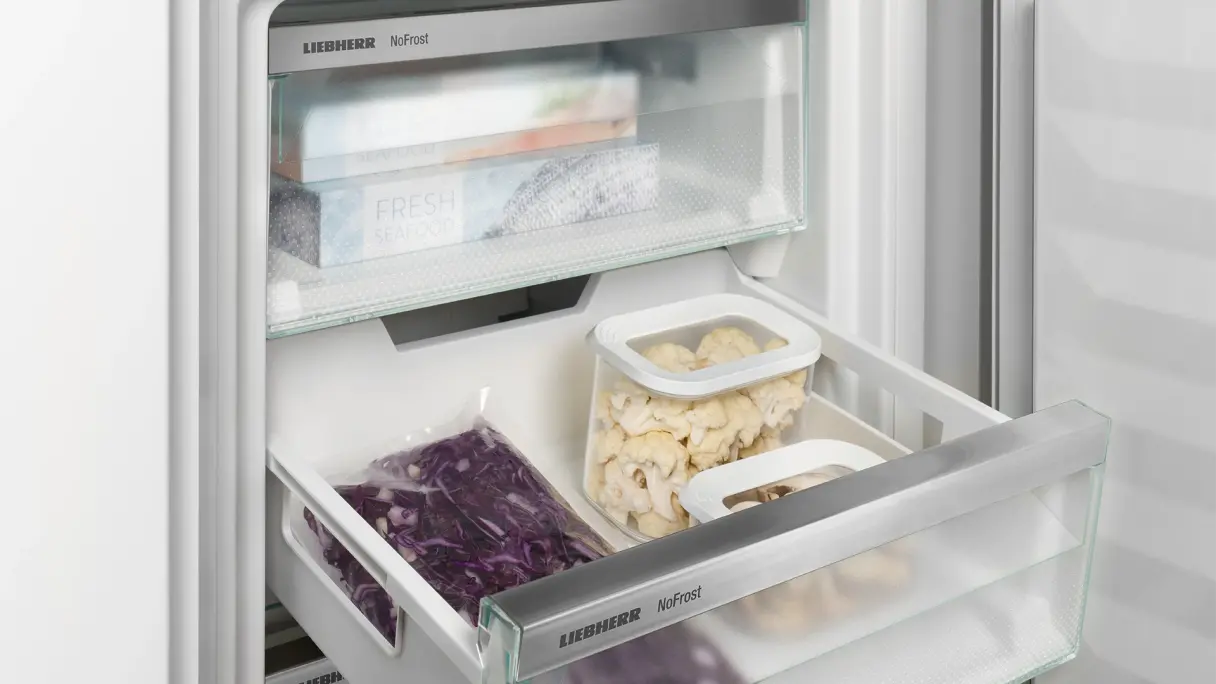
- Liebherr freezers feature NoFrost and SuperFrost functions to ensure optimum storage and quality assurance.
Shopping, transporting, storing: what you need to bear in mind with frozen goods
When purchasing frozen products, it is important to pay attention to the correct order when shopping: frozen goods should ideally be placed in the shopping trolley at the very end to prevent them from defrosting prematurely. For the journey home, it is advisable to use well-insulated transport containers, such as freezer boxes with cooling elements or padded bags. Fleece blankets or jackets are also suitable for wrapping the products tightly. Conventional insulated bags from the supermarket are often less effective.
Once you get home, the goods should be placed in the freezer as quickly as possible or prepared immediately. An important tip for freezing: Ensure that the packaging is as airtight and tight-fitting as possible to prevent freezer burn. When shopping, check that the packaging is undamaged. Portioning food wisely saves time later on: buy food in quantities that can be easily divided and freeze it. This way, you only take out as much as you actually need, making it much easier to defrost later.
Tips for freezing frozen food: defrosting and preparing correctly
Most frozen products can be prepared immediately without prior defrosting. If defrosting is necessary, the manufacturer will provide detailed instructions on the packaging on how to do this correctly. It is essential that you follow them to ensure quality and food safety. The fridge is recommended for gentle defrosting: this way, the cold is absorbed directly by the appliance, which also saves energy. At the same time, the low temperature greatly slows down the formation of germs. When defrosting frozen food, leave it in its original packaging if possible – this prevents cross-contamination, for example from meat juices dripping onto other foods. It also keeps the product juicier. If you have any leftovers after preparing your meal, you can easily freeze them again using our tips. Be sure to heat it thoroughly before eating it again.
Our fridge-freezers play a key role in ensuring the long-term quality of your frozen products. Thanks to state-of-the-art freezing technology and precise temperature control, a uniform freezing climate is created that minimises freezer burn and preserves vitamins and nutrients as effectively as possible. Features such as NoFrost also prevent ice from forming inside the appliance, saving energy and eliminating the need for manual defrosting. Intelligent features such as SuperFrost allow fresh food to be frozen particularly quickly and gently, ensuring that freshness, taste and texture are optimally preserved.
This might also interest you
Fresh or frozen fruit and vegetables?
Fruit and vegetables are important for a healthy lifestyle. But what is actually better: fresh or frozen vegetables and fruit? We reveal all!
Defrost properly for hygienic enjoyment
We’ve put together some tips on how you can defrost food properly to ensure that, in the case of frozen products, your enjoyment and food safety are not compromised.
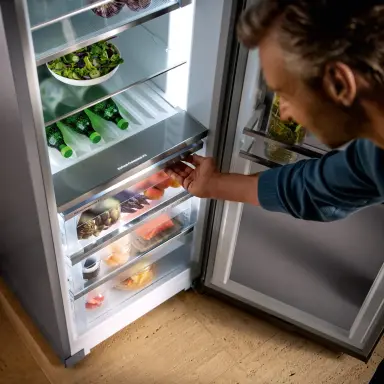
Organising the fridge: clear, efficient and smart
From reusable containers to temperature zones: Organising the fridge, saving space and keeping food fresh for longer.