
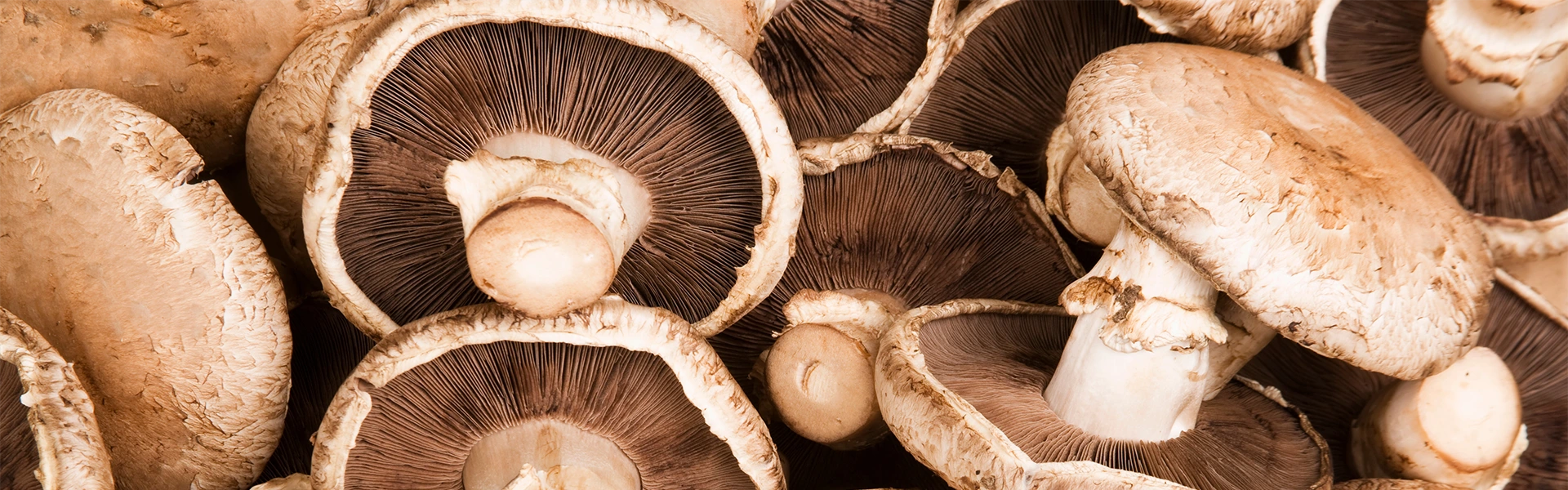
Portobello mushroom: tips, recipes and fascinating facts
Portobello is one of the most versatile edible mushrooms that exists, with good reason. With its meaty consistency, intense flavour and impressive size, it’s a real star feature of modern cuisine, whether it’s enjoyed stuffed from the oven, aromatically fried in a pan or as a tasty treat on the grill. It’s ideal as a plant-based substitute for meat and adds depth to any dish. In this article, you’ll find out what it tastes like, what makes it different from a button mushroom, how to clean it correctly and how you can prepare it.
Storage time*
| BioFresh Fruit & Vegetable safe just above 0 °C with high humidity | 7 Days |
| EasyFresh safe 7 °C with air regulation plate | 3 Days |
| Fridge compartment 7 °C | 2 Days |
| Freezer compartment -18 °C | 8 Months |
The key points
- The portobello is a mature, large brown mushroom with an intense flavour and meaty texture
- It’s ideal for grilling, stuffing or frying and a popular substitute for meat
- Don’t wash it, just clean it carefully with some kitchen towel or a brush
- Rich in B vitamins, vegetable protein, fibre and minerals
- Can be eaten raw, but it’s more flavoursome and digestible when cooked
Portobello mushroom – list of contents
- What does a portobello mushroom taste like? The aromatic all-rounder among the mushrooms
- What’s the difference between a portobello and button mushroom?
- How healthy are portobello mushrooms?
- What’s the correct way to clean portobello mushrooms?
- Recipe: Stuffed portobello mushrooms with quinoa
- This might also interest you
What does a portobello mushroom taste like? The aromatic all-rounder among the mushrooms
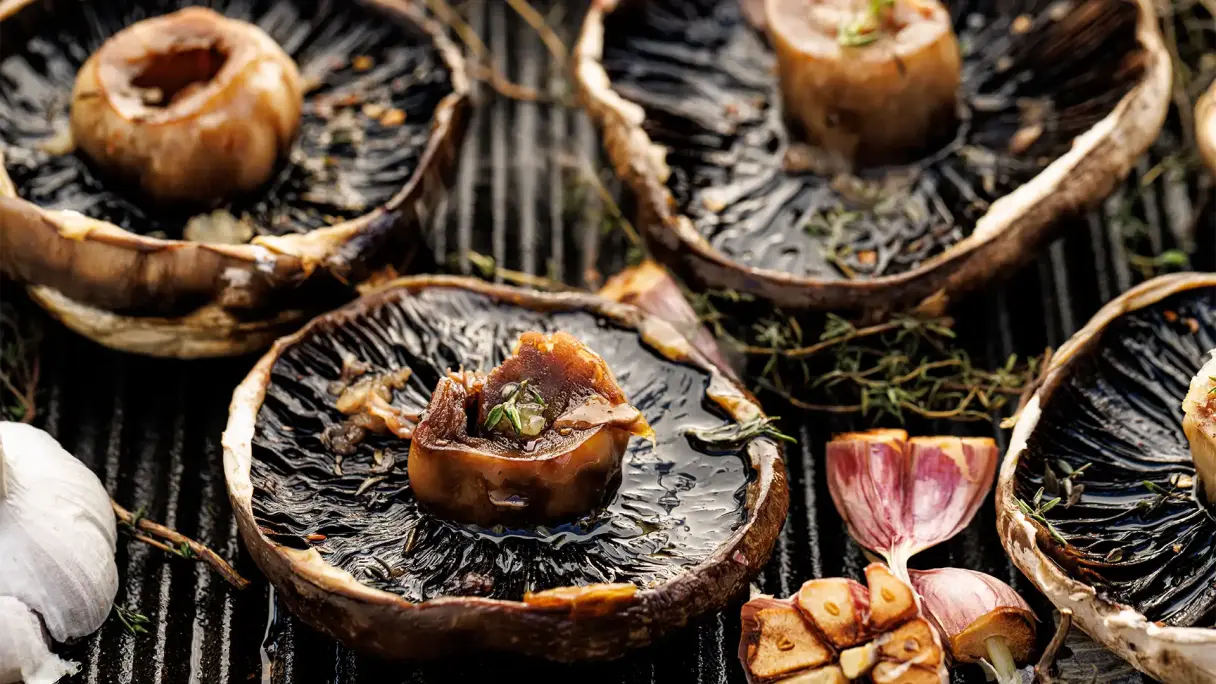
The portobello mushroom impresses with its solid, meaty consistency and its intense, earthy flavour. It’s a real delight for anyone – not just for vegetarians, but also for barbecue fans and true gourmets.
Whether it’s enjoyed as a juicy portobello burger, with a delicious stuffing from the oven or as the main ingredient in imaginative, vegan recipes, this big mushroom always delivers a real taste sensation. Its strong flavour makes it the perfect alternative to meat and a star attraction on the grill.
You can of course also eat the portobello raw, just like button mushrooms. It’s a cultivated mushroom, which is why eating it raw after cleaning it thoroughly is perfectly safe. When it’s raw, it contains even more vitamins and minerals. You should merely be aware that it is more easily digestible after it’s been heated.
Its taste and consistency are much more impressive when it’s cooked or fried. When it’s raw, the portobello tastes slightly bitter and firmer than buttom mushrooms. If you want to eat it raw, you should chop it wafer-thin and marinate it in a salad with lemon juice and olive oil.
The cooking time depends on how you intend to cook it: 4–6 minutes per side in a frying pan, approx. 5–7 minutes on the grill and roughly 20 minutes at 180 °C in the oven.
What’s the difference between a portobello and button mushroom?
The portobello is nothing other than a mature, large brown mushroom.
If the small mushroom is allowed to grow longer, its cap will open fully and reach an impressive size with a diameter of up to 12 centimetres. This makes the aroma stronger, the texture firmer and the mushroom ideal for frying, grilling or stuffing.
The name “portobello” does in fact originate from the English “Portobello Road” in London. It in turn was named after the Battle of Porto Bello (1739) – a victory by the British over the Spanish in what is today the town of Portobelo in Panama.
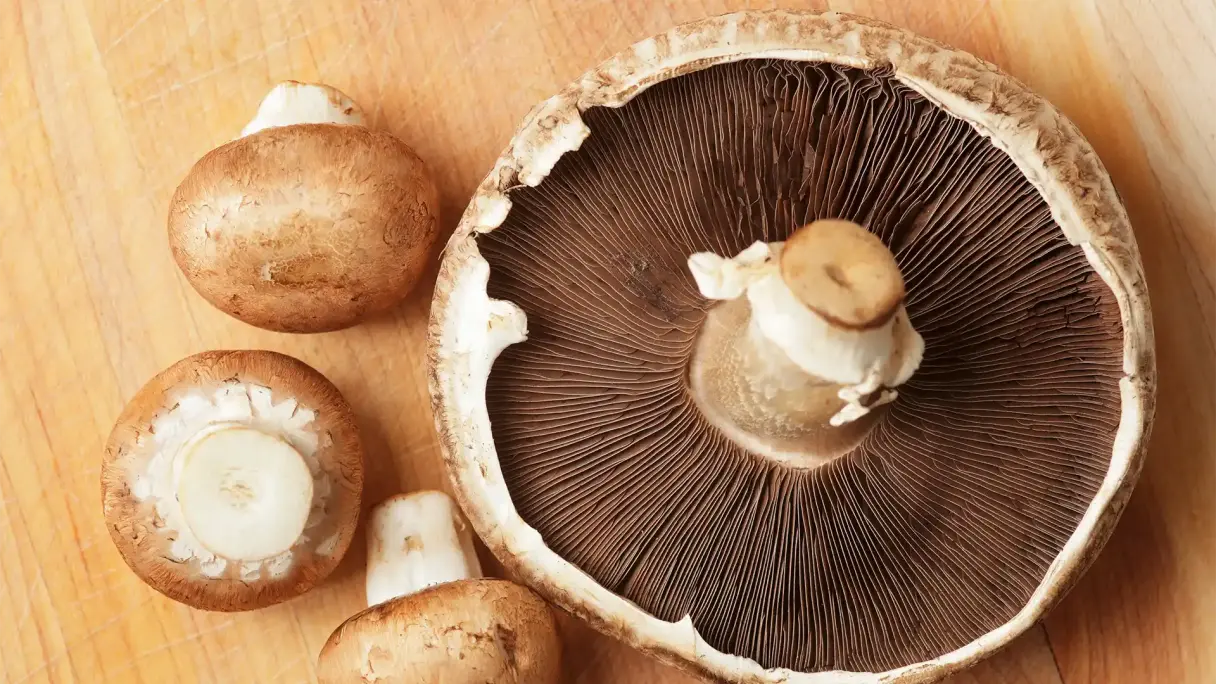
Comparison between portobello and button mushroom:
| Button mushroom | Portobello | |
|---|---|---|
| Size | Small to medium-sized | Much bigger (up to around 12 cm) |
| Colour | White or brown | Dark brown |
| Taste | Mild, slightly nutty | Strong, intensely earthly |
| Consistency | Soft | Firm, meaty |
| Use | Side dish, sauce | Grilled dish, meat substitute |
How healthy are portobello mushrooms?
Portobello mushrooms are packed full of nutrients and extremely low in calories. They contain just 110 kJ (26 kcal) per 100 grams, which makes them ideal for light cuisine.
They provide around 2.7 grams of high-quality vegetable protein, roughly two grams of carbohydrates and just 0.3 grams of fat – completely cholesterol-free. In addition, they score points with fibre to aid digestion, important B vitamins (B2, B3, B5) and minerals such as potassium and phosphorus.
Their high water content also ensures that they keep you feeling full for a long time without being heavy on the stomach, ideal for a health-conscious diet.
The nutrients in a portobello mushroom
| Vitamin | 100 G contains | Minerals | 100 G contains |
|---|---|---|---|
| Vitamin C | 4 mg | Iron | 1 mg |
| Vitamin B1 | 0.1 mg | Potassium | 430 mg |
| Vitamin B2 | 0.4 mg | Phosphorus | 130 mg |
| Vitamin B6 | 0.1 mg | ||
| Vitamin D | 2 μg |
What’s the correct way to clean portobello mushrooms?
You need to take care when cleaning them. Mushrooms are like little sponges and will soak up water, which can cause them to lose their flavour. How to do it right:
- Don’t wash them! Instead, rub them with some dry or slightly damp kitchen towel.
- Remove any soil: A small brush or paintbrush will help remove any stubborn spots.
- Trim the stem: If it’s stringy, simply cut off a piece.
- Gills? If you wish, you can carefully scrape them out with a spoon – this is simply a matter of taste, especially with stuffed portobellos.
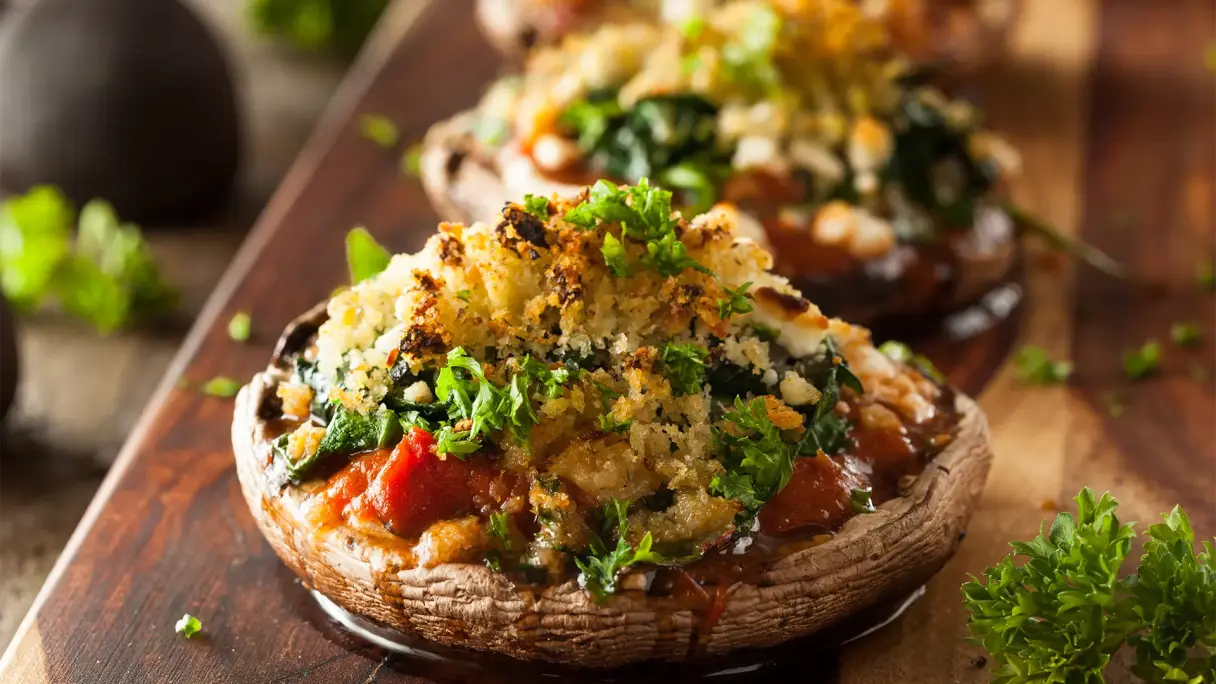
Ingredients:
- 85 g quinoa
- 4 large portobello mushrooms
- 1 tbsp olive oil
- 2 tbsp balsamic vinegar
- 1 tbsp lime juice
- 1 tsp cumin
- Chilli powder (as you like)
- Salt and pepper
- 200 g sweet potatoes
- 150 g red bell pepper
- 90 g red cabbage
- 1 teaspoon rapeseed oil
- 240 g black beans (ready to eat)
Recipe: Stuffed portobello mushrooms with quinoa (for four mushrooms)
Preparation:
1. Cook the quinoa by following the instructions on the pack.
2. Clean the portobello mushrooms and remove the stem.
3. Make a marinade from olive oil, balsamic vinegar, lime juice, cumin, chilli, salt and pepper and pour it over the mushrooms.
4. Wash the vegetables: slice the bell pepper and red cabbage into strips and dice the sweet potato.
5. Roast the vegetables in oil for around five minutes, add seasoning and then fry for another five minutes. Place them in a bowl.
6. Mix in the quinoa and beans, add salt and pepper to season.
7. Fry off the mushrooms in the same pan for three minutes on each side, then cook with the lid on for two minutes. Place on a greased baking tray with the gills facing upwards.
8. Pour the filling over the mushrooms and bake for around five minutes at 200 °C.
9. Serve with coriander, lime, tomato sauce or hot sauce.
*All specifications given are to be considered as guideline values, and depend in each case on the type of food and on the proper storage without interruption of the cold chain from harvest/production through to the Liebherr appliance. Should food products have information about minimum shelf life, the date on the packaging always applies.
This text has been machine translated from English.