Mushrooms and their nutritional values: what’s in the different varieties
Mushrooms are considered true all-rounders in the kitchen – they’re not only tasty, but also healthy. But just how nutritious are button mushrooms, porcini mushrooms and oyster mushrooms? In this article, we take a closer look at the nutritional values of various mushrooms and show why they should be a regular part of your diet.
Storage time*
| BioFresh Fruit & Vegetable safe just above 0 °C with high humidity | 7 days |
| EasyFresh safe 7 °C with air regulation plate | 3 days |
| Fridge compartment 7 °C | 2 days |
| Freezer compartment -18 °C | 8 months |
The key points
- Mushrooms are low in calories, high in protein and ideal for a healthy diet.
- Like all mushrooms, button mushrooms, porcini mushrooms and other varieties offer valuable nutritional benefits and a wide range of flavours.
- To clean mushrooms, do not wash them but rub them instead – this preserves their aroma.
- Storing in the BioFresh Fruit & Vegetable safe preserves freshness and nutritional values for up to a week – mushrooms will stay fresh for two days in the normal fridge compartment.
Healthy mushrooms – an overview of the different varieties
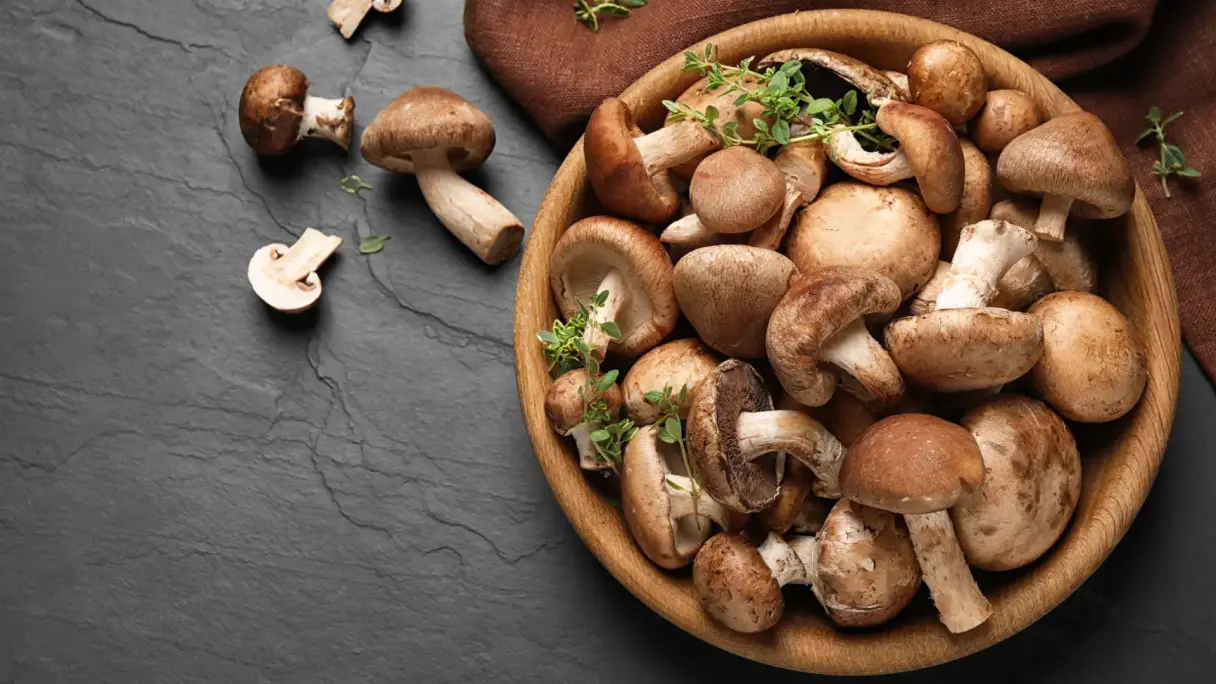
Even though they are used in similar ways – mushrooms are not vegetables. Botanically speaking, these forest dwellers are in a league of their own, known as fungi. Edible mushrooms are, strictly speaking, only part of the complete fungus. These are the parts growing above ground – the fruiting bodies. These consist of a cap and stem, creating the typical mushroom shape. The vegetative part of the mushrooms is however located underground and is a network of fungi called mycelium. This part of the plant is not consumed by humans though.
Mushrooms belong to the second-largest group of organisms after animals. There are over 100,000 scientifically-recorded types of mushrooms to date. Their appearance can vary greatly depending on type. The cap is what differs mostly between varieties of mushrooms. Yet not all types of mushrooms are suitable for human consumption. We’ve listed the best-known types for you:
Button mushroom:
Everyone is familiar with these: the mushrooms with the brown or white caps. They often come from Germany or France. Wild meadow and forest mushrooms are also often available in shops. These have a much more intense flavour than commercially-cultivated mushrooms. There is a huge variety of button mushrooms and they taste great boiled, fried, steamed and in stews.
Porcini:
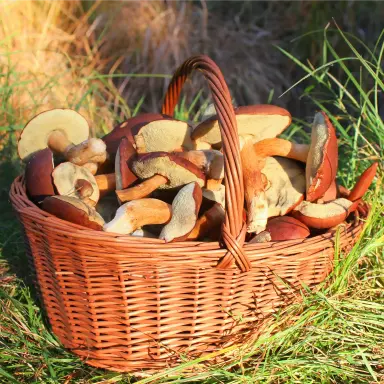
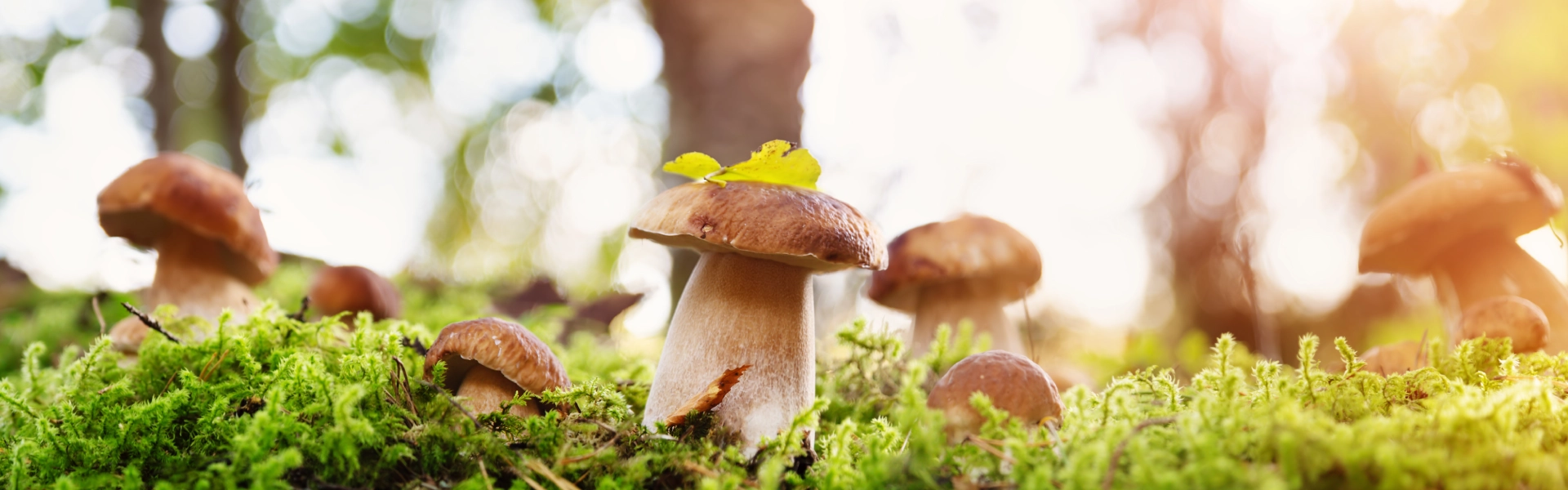
In contrast to button mushrooms, porcini can’t be commercially cultivated and only grow in the wild. Porcini mushrooms are very flavoursome, so even a small amount is enough to give wonderful flavour to a dish. Another characteristic of porcini is their firm consistency. Before cooking, remove any dark spots and the bottom part of the stem.
Chanterelle:
This golden mushroom with a wavy cap is also only found growing in the wild. These mushrooms have a distinctive and subtle peppery note. It’s best to fry chanterelle whole in butter with a pinch of salt. Season with a little cream and they’re ready to eat!
Oyster mushroom:
This variety has a very striking appearance! With its hand-sized, shell-like shape, these white or brown mushrooms are visually appealing. As the taste of oyster mushrooms is slightly reminiscent of veal, they are particularly suitable for adding to hearty dishes. You should remove the bottom part of the stem before cooking.
Shiitake mushroom:
This mushroom, which originates from China and has good nutritional values, has now been cultivated in Europe for around 50 years. It is popular thanks to its strong umami taste and that’s why it is also sometimes called “vegan bacon” in its dried and roasted form. Due to its origins, it goes particularly well with Asian dishes.
How to preserve the aroma and nutritional values of mushrooms
Mushrooms are low in calories, making them ideal for a light diet. Depending on the variety, they contain an average of just 15 to 35 kilocalories per 100 grams. At the same time, they impress with a surprisingly high protein content: Button mushrooms, for example, contain around 3 grams of protein. This makes mushrooms a valuable ingredient for vegetarian and calorie-conscious dishes.
It is important to know Mushrooms are very sensitive to pressure and should therefore be stored with as much air-flow as possible. Remove the film on packaged mushrooms as otherwise they will go off faster. In the regular fridge compartment of the fridge, mushrooms and their nutritional values can be preserved for up to two days at approx. 7 °C. Mushrooms can even be stored in the Biofresh Fruit & Vegetable safe for up to a week. Thanks to the high humidity and a temperature just above 0 °C, fruit and vegetables keep for significantly longer in this freshness compartment. This also preserves the nutrients in mushrooms for longer.
*All specifications given are to be considered as guideline values, and depend in each case on the type of foodstuffs and on the proper storage without interruption of the cold chain from harvest/production through to the Liebherr appliance. Should food products have information about minimum shelf life, the date on the packaging always applies.