Discover the pomelo: the healthy citrus fruit and its uses
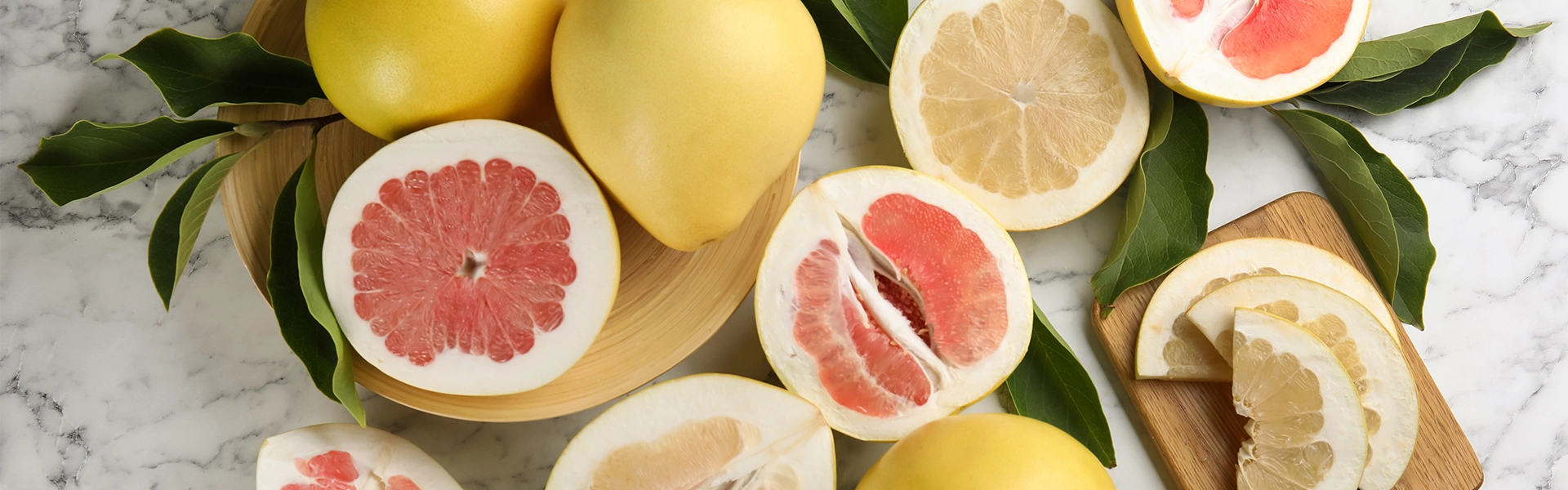
The pomelo is an impressive citrus fruit that stands out not only for its size but also for its health benefits. Originally cultivated in Israel, it has quickly spread around the world. This fruit is rich in vitamin C and contains valuable ingredients that aid digestion and promote well-being. In this article, you will learn everything you need to know about pomelos, their origins, nutritional values and how to use and store them optimally.
Storage time*
| EasyFresh safe 7 °C with air regulation plate | 70 days |
| Fridge compartment 7 °C | 56 days |
| Freezer compartment -18 °C | 12 months |
The key points
- Pomelos are rich in vitamin C
- They aid digestion thanks to the bitter substance limonin.
- The fruit can be stored in the fridge for up to 70 days.
- Pomelos are versatile in the kitchen, their use ranging from salads to cocktails.
- Be careful when taking medication, as pomelo can cause interactions.
Pomelo: origin and cultivation
The pomelo was cultivated in Israel in the 1970s and is probably a backcrossing of the pomelo and the grapefruit. This citrus fruit quickly spread around the world. The main season for pomelos is from November to April, but they are now available almost all year round.

Pomelo: nutrient-rich digestive aid
In addition to its high vitamin C content of 40–60 mg per 100 g, pomelo also contains other beneficial nutrients. It contains the bitter substance limonin, which stimulates digestion. Eating the fruit helps to promote healthy digestion and stimulate intestinal activity. If your lunch has left you feeling a bit heavy, a little pomelo could not only be a delicious, healthy dessert, but also aid the gastrointestinal tract in the digestion process. Naringin, which is also found in pomelo, is said to counteract high blood pressure.
Pomelos are low in calories and ideal for a healthy diet. With only about 38 calories per 100 g, they are an ideal snack option.
However, as is the case with the grapefruit, be sure to not consume too much if you are taking certain medications. The furanocoumarins and the naringin contained in the fruit can block various enzymes. And these enzymes are needed to transport substances of various medications from the intestine to the liver, Where the substances are to be broken down. If these enzymes become blocked, the medications cannot be broken down and they become less effective. If you regularly take cholesterol-lowering drugs, tranquillisers or calcium channel blockers, you should discuss the consumption of pomelo and similar sorts of citrus fruit with your doctor. Likewise, citrus fruit consumption should be coordinated with a physician for menstruating women who are using the pill as a method of contraception.
Buying pomelos: how to recognise the sweetest fruits
Depending on what you are planning on using it for, you may want a particularly sweet fruit. This can already be identified in the supermarket. If the skin of the pomelo is slightly shrivelled and dull, this indicates particularly sweet fruit. In addition, heavier fruit that yields slightly when you press into the peel are said to be sweeter than others. There may be perhaps varieties with different flesh colours on offer in the supermarket. If so, we recommend selecting the white-fleshed pomelo, as these are said to be somewhat more aromatic.
Using and storing pomelos: tips for this citrus fruit

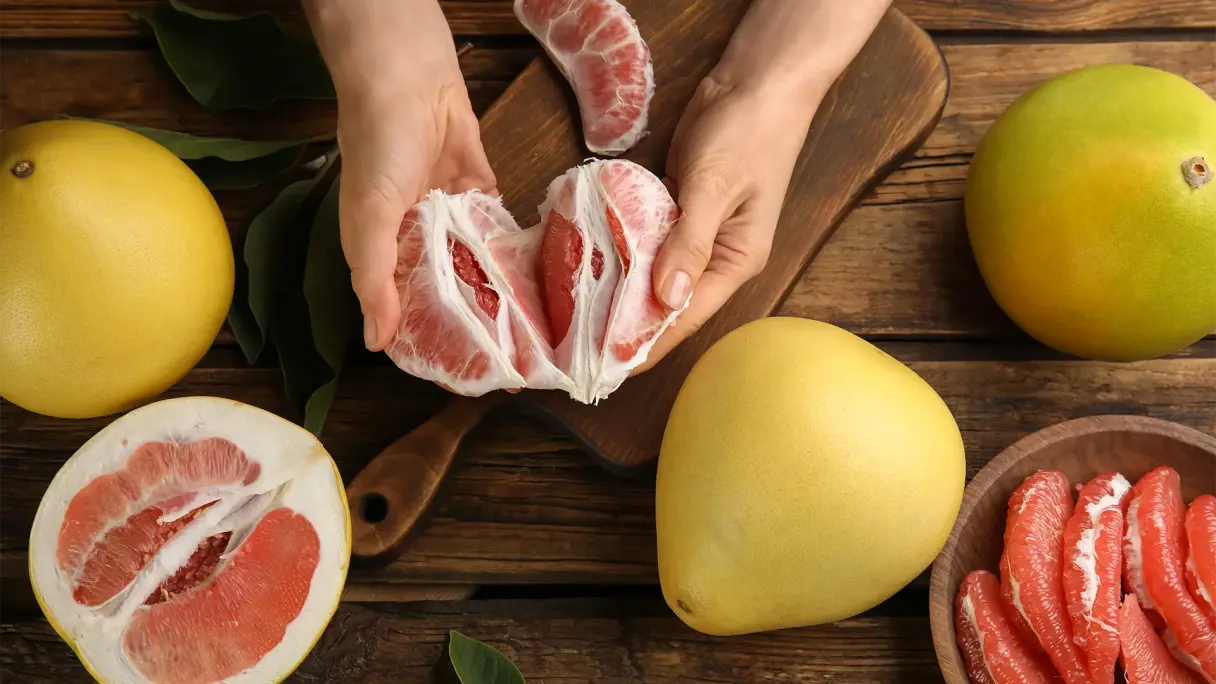
Pomelos are extremely versatile and can be used in many dishes. To enjoy the fruit, the yellowish or pink flesh must first be removed from the thick skin, which varies in colour from pale yellow to a greenish hue. To do this, you should cut off the ends of the pomelo, then peel off the peel in strips, as with oranges. After that, you can also remove the white outer skin from the flesh as you prefer.
They are ideal for salads, fruit salads or as a refreshing snack. Pomelo are also great for juicing and their juice can also be enjoyed directly or used in cocktails. If you want to experiment a little, you can also use the pomelo to make wonderful chutneys, creative jams, delicious spreads or even aromatic ice cream.
At room temperature, pomelos can be kept for up to 16 days. Sealed airtight in the EasyFresh safe, they stay fresh for up to 70 days. For longer storage, you can also freeze the pulp in a freezer and keep it for up to a year.
*All specifications given are to be considered as guideline values, and depend in each case on the type of food and on the proper storage without interruption of the cold chain from harvest/production through to the Liebherr appliance. Should food products have information about minimum shelf life, the date on the packaging always applies.