
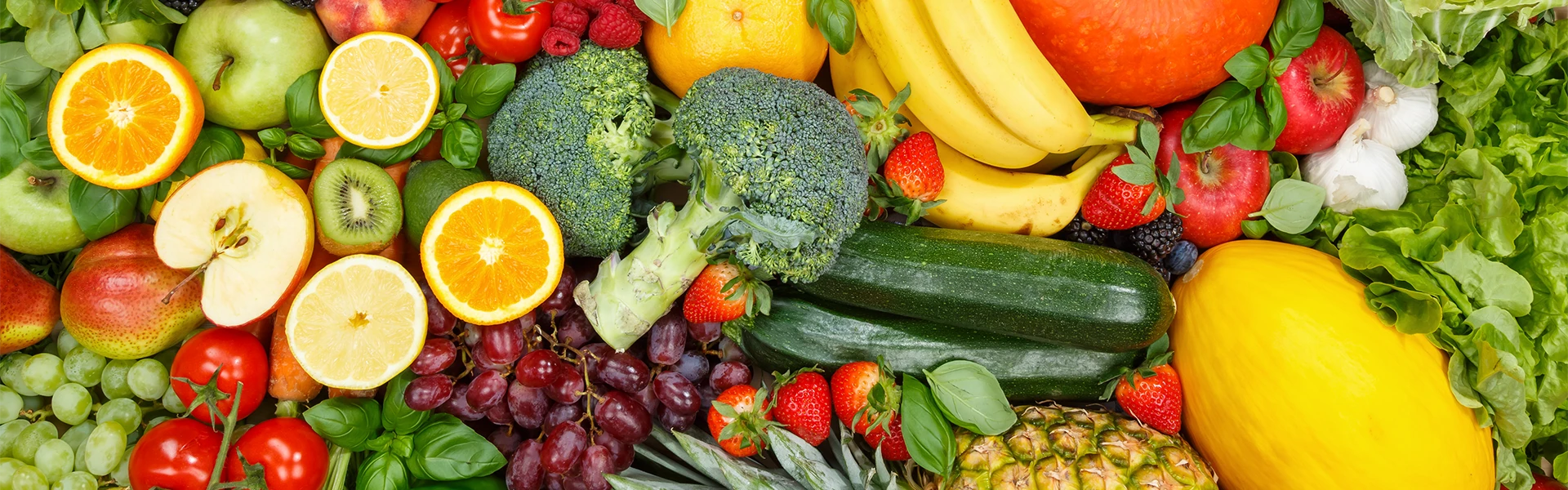
Storing fruit and vegetables – fridge or room temperature?
Fruit and vegetables are part of a healthy and balanced diet. But how can we ensure that fruit and vegetables stay fresh for as long as possible to provide the desired nutrients? In the following article, you will learn how to store fruit and vegetables correctly and what measures you can take to repel fruit flies and prevent mould on food.
The key points
- Store tropical fruits at room temperature; citrus fruits keep better when lightly chilled
- Keep berries as well as pome and stone fruits preferably in the refrigerator
- Store ethylene‑producing fruits (e.g. apples, pears, avocados) separately from other fruit
- Most vegetables are ideally stored in the BioFresh Fruit & Vegetable safe
- Store tomatoes and peppers outside the refrigerator; keep potatoes in a dark place
- Dispose of mouldy fruit and vegetables immediately
Fruit storage: a question of the right neighbourhood
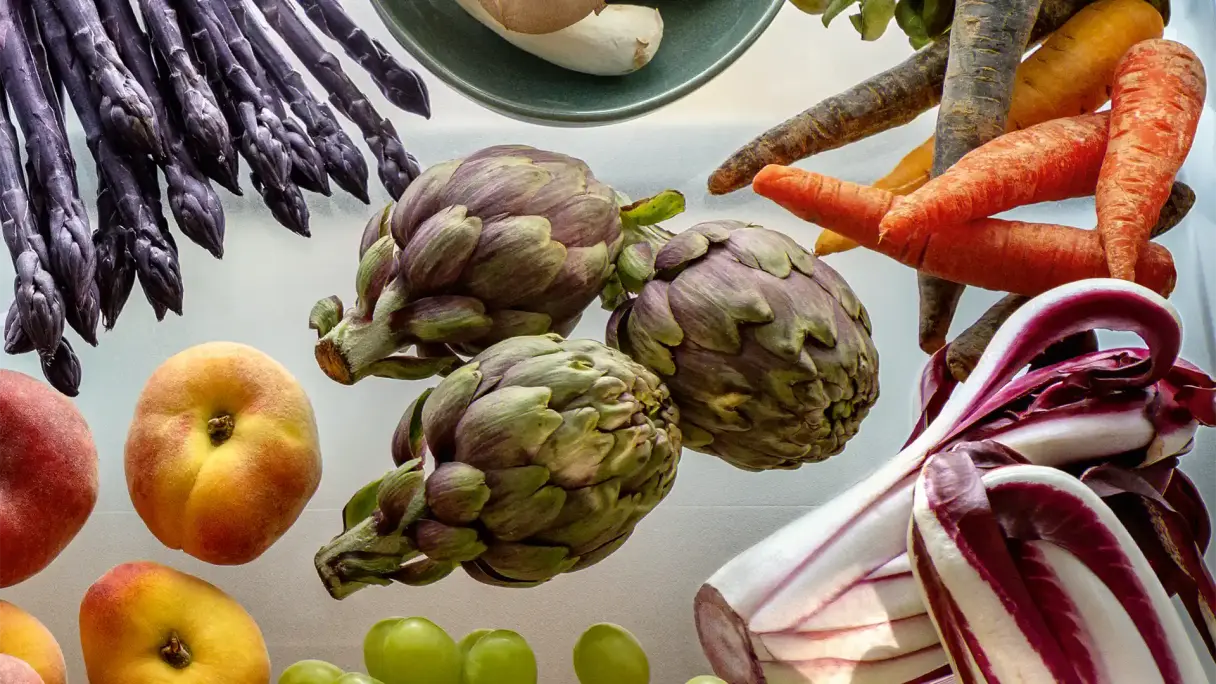
Fruit should generally be stored in a cool and dry place. After all, this prolongs the ripening process of the fruit and thus also its shelf life. A place that is too warm, on the other hand, accelerates the ripening process and causes the fruit to spoil more quickly. Note: this does not mean that you should keep all your fruit in the fridge – there are also varieties that prefer warmer temperatures. This includes tropical fruits, such as mangoes, pineapples, papayas, and bananas. These foods are best enjoyed at comfortably warm room temperatures. This is the only way they can develop their full flavour and reward us with their sweet taste and good quality! If you store bananas in the fridge, for example, you risk a cold shock and brown spots.
The storage of citrus fruits is not clear-cut. Although they keep a little longer in the fridge, they also only fully develop their flavour at room temperature. We therefore recommend taking lemons, oranges and the like out of the fridge for a while just before eating them. However, always wash fruit only once you have taken it out of the fruit basket – otherwise the fruit will spoil more quickly as the natural protective layer against germs will have already been removed.
Nevertheless, the most fruit varieties prefer cooler temperatures. This includes, for example, fruits such as apples, berries, cherries, and plums. Apples, for example, quickly become wrinkled at room temperature and also lose valuable vitamins.
As lovely as a colourful fruit bowl may appear, having the right neighbours also plays a key role in their storage. For example, some varieties emit the ripening gas ethylene, which accelerates the ripening of other varieties and thus leads to premature spoilage. Apples, avocados, pears, ripe kiwis, peaches, and plums, for example, have particularly high ethylene development. Store them separately from other fruit in a fruit bowl to ensure they stay fresh for longer.
Storing vegetables: little tricks for longer shelf life
Much like their fruity cousins, vegetables with southern roots also prefer to be outside the fridge. This includes tomatoes, courgettes, aubergines, and peppers, for example. The ideal storage temperature here is 13 °C. Various places are therefore suitable for storage. As with the fruit bowl, vegetables can also be used for decorative purposes. Beautifully placed in various baskets, storage tins or hanging containers, your vegetables can be a real eye-catcher!
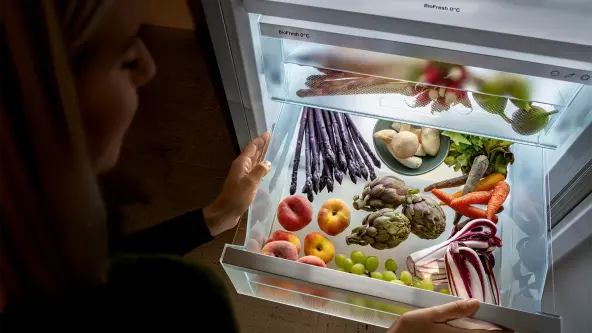
Most other varieties such as broccoli, lettuce, cucumbers, and spinach stay at their freshest in your Liebherr BioFresh Fruit & Vegetable safe. But it is not just the temperature that is important to ensure a long shelf life for your vegetables. Light also has an influence on the ripening process. Potatoes and onions, for example, prefer to be stored in a completely dark place, whereas most other varieties require only a light-protected location to have a long shelf life. Dark storage ensures that the potatoes do not develop the toxic substance solanine, which can be recognised by the green spots on the potato. This keeps potatoes fresh for longer.
For vegetables with leaves, such as beetroot, radishes or carrots, it is also advisable to remove the greens for a longer shelf life. That’s because: the foliage draws water from the vegetables, causing them to wilt and spoil more quickly.
The best home remedies against fruit flies
These uninvited guests are particularly prevalent in summer – we are talking about fruit flies, also known as vinegar flies. As the name suggests, the little creatures love fermenting fruit – but vegetables are also a favourite treat. The sweet odour attracts fruit flies and can lead to an infestation of the creatures in no time at all. We therefore recommend keeping your fruit and vegetables in the fridge on particularly hot days or eating them as quickly as possible. You can cover cold-sensitive varieties with a cotton cloth or a fine mesh cover. Fruit and vegetables that are already rotting should be disposed of as quickly as possible and the rubbish bin emptied regularly. Open containers of sweet juices and empty glasses should also be put away and rinsed as soon as possible to avoid attracting fruit flies unnecessarily.
However, if it is too late and you are already struggling with a fruit fly infestation, there are a few home remedies against fruit flies to get rid of the pests. The best-known trick here is a bowl with a mixture of vinegar, sweet juices, leftover sparkling wine or wine and a dash of washing-up liquid. The sweet mix attracts the little creatures and the washing-up liquid ensures that the fruit flies can no longer fly thanks to the surface tension and drown.
Another, less brutal, solution is the use of various fragrances, which keep the fruit flies away thanks to essential oils. Basil, cloves, as well as cotton lavender and sandalwood, drive away the pesky little animals.
Mould on food
If the tips for long storage have not helped, another uninvited guest will appear – mould. Mould on food not only makes you lose your appetite, but can also pose a health hazard. In the case of fruit and vegetables, we therefore recommend disposing of all of that particular food even if there is only mould in spots, as it can be assumed that all of the fruit and vegetables are already tainted. Mouldy fruit should also not be used to make jam. Another tip: check the fruit and vegetables at the supermarket to avoid bringing mouldy specimens home and having them infest your other fruit and vegetables.
This might also interest you
Freeze-dried fruits – enjoying tasty treats containing maximum nutrients
Find out why freeze-dried fruits are a great alternative to fresh fruits and the best way to integrate them into your diet.
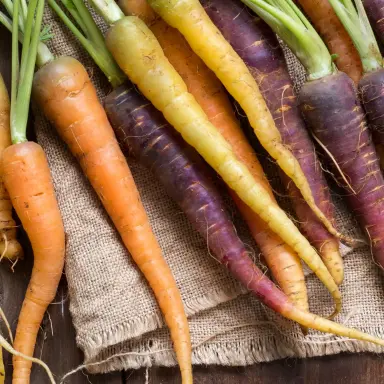
Storing and freezing root vegetables
Find out how to store carrots, parsnips and other root vegetables perfectly – in the fridge, cellar or storage pit. Find tips on how to keep your harvest fresh and how to freeze it.
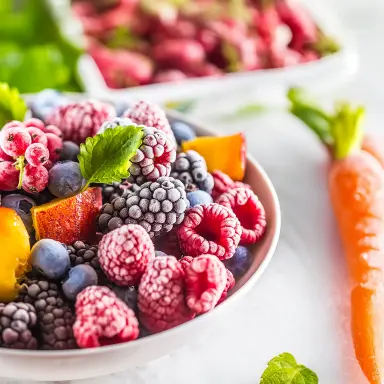
Fresh or frozen fruit and vegetables?
Fruit and vegetables are important for a healthy lifestyle. But what is actually better: fresh or frozen vegetables and fruit? We reveal all!