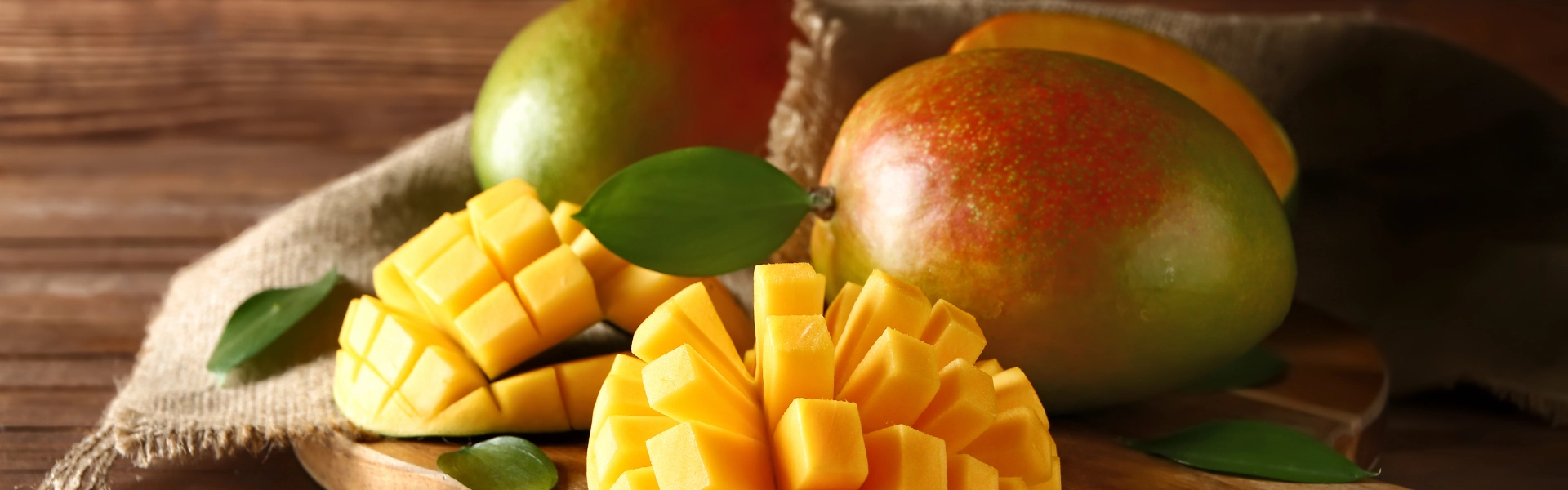
Mango: nutritional values, vitamins and calories of the fruit
Sunflower yellow, juicy and full of power: mangoes aren’t just a taste experience. They’re also bursting with nutrients. Discover what nutrients, vitamins and energy the exotic fruits contain and why they are ideal for a healthy meal plan.
Storage time*
| Larder compartment 12 °C | 20 days |
| Fridge compartment 7 °C | 4 days |
| Freezer compartment -18 °C | 5 months |
The key points
- Rich in nutrients: about 80 % water, approx. 60 kcal per 100 g, contains vitamin A, C, E, potassium and magnesium.
- Health benefits: anti-inflammatory mangiferin and enzymes that support the stomach and circulatory system.
- Recognising when they’re ripe: a scent at the base of the stem and soft skin – not the colour – show how ripe they are.
What nutrients and vitamins do mangoes contain?
Mangos consist of around 80 percent water. The second most important ingredient in terms of volume is sugar: the mango is approximately 16 % carbohydrate. 100 g mango contains around 60 calories of energy. Just under one percent of the mango is protein and fat.
In addition to outstanding amounts of vitamin A, mangoes contain significant amounts of vitamin C, vitamin E and various B vitamins (in particular B6 and folate). Their main minerals include potassium, magnesium and some calcium. They also contain trace elements of selenium. Another of mango’s strengths is secondary plant substances including polyphenols and carotenoids, which have antioxidative effects.
Incidentally, you may have already noticed that mangos sometimes smell and taste slightly of turpentine. This is due to the terpenes contained in the skin: a group of secondary plant substances. We recommend consuming mango chilled. To reduce this taste.
How can you tell if a mango is ripe?
You can tell if a mango is ripe when the base of the stem gives off a pleasant smell and it gives way somewhat when poked with a finger. First, the colour of the skin provides no indication of the ripeness of the fruit. This is because the skin colour differs from variety to variety - for example, there are varieties that are green even when they are ripe. A better indication of ripeness is the smell. If the fruit is already mushy or the skin is damaged when you buy it, it’s better not to take that particular mango home with you.

How healthy is mango?
Mangos can be incredibly healthy as they contain anti-inflammatory plant substances such as mangiferin, which can have a positive impact on the cardiovascular system. Enzymes in mangoes – in particular amylase – can help you to digest carbohydrates. That is why people with sensitive stomachs often see them as a good fruit. A low fat content makes mangoes ideal for a light diet. There are also some claims that they can help regulate blood sugar levels, which is particularly interesting for people with prediabetes. Clearly the nutrition in mangoes can be beneficial for your health.
How do you properly store mangoes?
Mangoes are best stored at around 12 °C, for example in the cellar compartment of a Liebherr appliance: There they will stay fresh for up to 20 days. Mangos are genuine exotics - and therefore they do not like cold weather very much. You should therefore not necessarily store your mangos among the other food in your fridge. They will only last about four days there.
An alternative is freezing. To do this, cut the mango open and either purée the flesh or cut it in pieces or slices and pop them in the chest freezer in freezer bags. You will then have delicious, frozen mangos with their impressive nutritional value for up to five months.
*All specifications given are to be considered as guideline values, and depend in each case on the type of food and on the proper storage without interruption of the cold chain from harvest/production through to the Liebherr appliance. Should food products have information about minimum shelf life, the date on the packaging always applies.