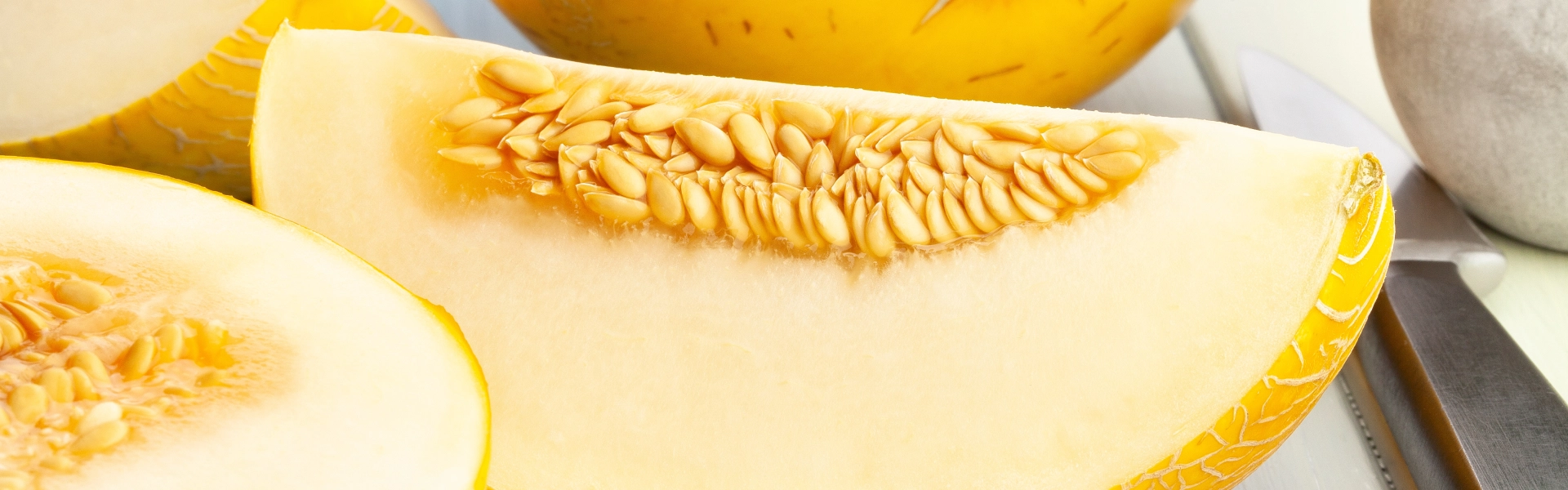
Honeydew melon – a power vegetable with few calories
The sky is bright blue, the weather entices you outside into nature, and at some point you develop a yearning for a juicy and healthy snack. On hot days, it is the ideal refreshment: honeydew melon. But apart from the fact that it is a vegetable rather than a fruit, this delicacy has other surprising qualities. You can find out exciting facts about the origin, name, ingredients and calorific value of honeydew melon in this article.
Storage time*
| EasyFresh safe 7 °C with air regulation plate | 17 days |
| Fridge compartment 7 °C | 14 days |
| Freezer compartment -18 °C | 8 months |
The key points
- Honeydew melon is a type of sugar melon and is juicy and sweet.
- It contains valuable vitamins such as vitamin C and provitamin A, as well as minerals.
- With only about 35 calories per 100 grams, honeydew melon is a low-calorie but nutritious snack.
- Under optimal conditions, honeydew melons can be stored for more than two weeks.
- The colour of the skin does not indicate the degree of ripeness.
Honeydew melon and calories: everything you need to know about this sweet fruit
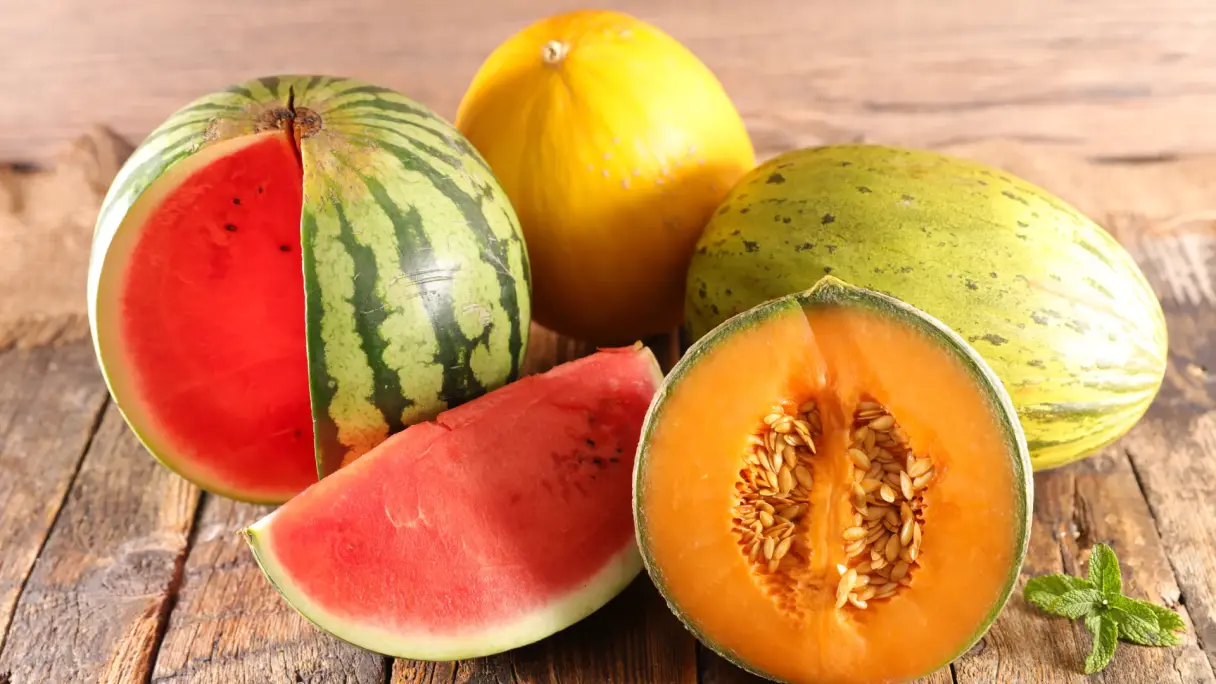
Vegetables are defined as coming from an annual plant, i.e. from a plant that dies after one year. This also applies to melons. They belong to the cucurbits and are subdivided into watermelons and sugar melons. Whereas watermelons are descended directly from the squash, sugar melons stem from the cucumber.
The healthy honeydew melon is a very popular variety of sugar melon. Usually, when we hear the name “honeydew melon”, we imagine the classic bright yellow melon. This so-called “Yellow Canary” is the best-known variety and is usually simply called honeydew melon. However, honeydew melons can also have a white, greenish or speckled skin. The flesh of honeydew melons is generally characterised by its juiciness and sweetness and is white or light green in most varieties.
Melon plants are old and well-established cultivated plants from the tropics or subtropics. However, opinions are divided on their exact origins. Since wild varieties can still be found in the Sahel region of Africa, it is often thought that the melon originated there. However, genetic analyses of the delicious cucurbit point to Asian origins.
Vitamins, nutritional values and calories in honeydew melon
Refreshing, pleasantly sweet and healthy, too: it contains many vitamins, minerals and secondary plant substances, making it a real powerhouse. Compared to watermelons, it has higher levels of these nutrients. These nutrients are generally higher in sugar melons than in watermelons.
The high potassium content is particularly impressive. This is also the cause of the honeydew melon’s diuretic effect. Vitamin C and provitamin A are also contained in larger amounts in melons. These two substances give honeydew melon its antioxidant effect in the body. This strengthens the immune system and cardiovascular system. Further constituents are, for example, iron, phosphorus, zinc and B vitamins. With only about 35 calories per 100 grams, honeydew melon is an ideal snack for calorie-conscious foodies.
Contrary to popular belief, the colour of the skin does not indicate the ripeness of the melon, as it depends on the variety. Important characteristics for ripeness are the smell, the hardness of the skin and the sound. When buying honeydew melon, you can test the ripeness by smelling the end of the stem and gently pressing the skin there.
Slight cooling prevents the vegetable from continuing to ripen too quickly and thus losing freshness and spoiling. However, melons do not like it too cold. It can be stored uncut in the fridge at 7 °C for up to two weeks, or even up to 17 days in the Liebherr EasyFresh safe. You can also store honeydew melon in the freezer for up to eight months.
*All specifications given are to be considered as guideline values, and depend in each case on the type of food and on the proper storage without interruption of the cold chain from harvest/production through to the Liebherr appliance. Should food products have information about minimum shelf life, the date on the packaging always applies.