
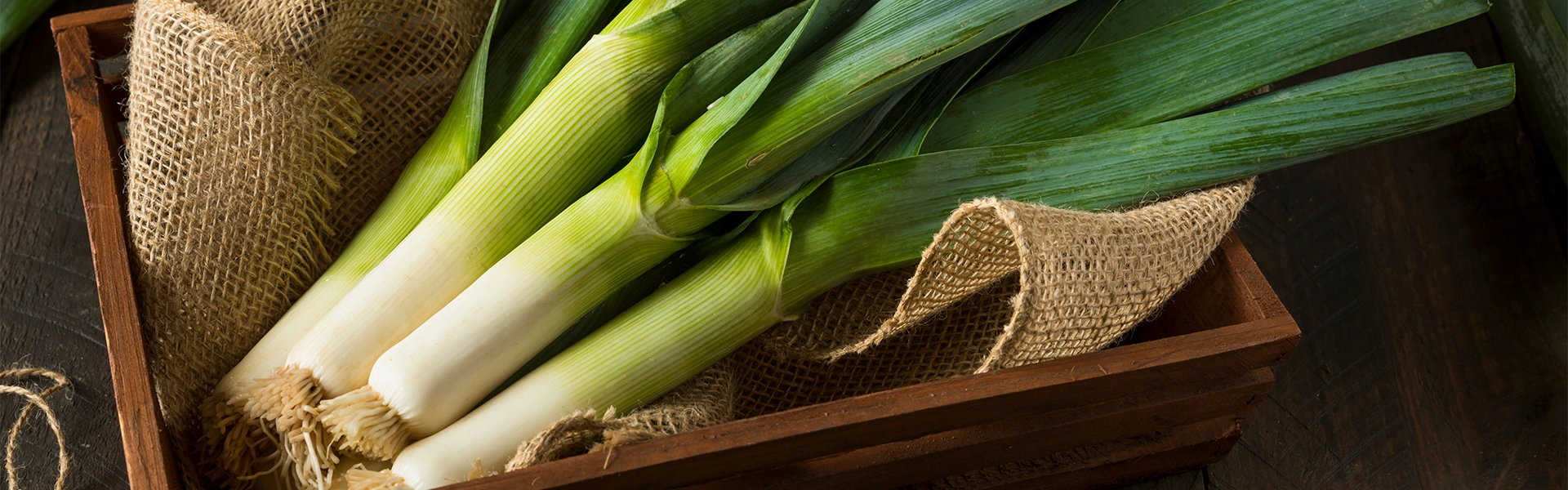
Leeks – nutritional values, uses and botany
Leeks are an indispensable part of local cuisine and add a special flavour to many dishes. This stalk vegetable is not only tasty, but also considered a real superfood. We provide and overview of the botany and uses of leeks.
Storage time*
| BioFresh Fruit & Vegetable safe just above 0 °C with high humidity | 29 days |
| EasyFresh safe 7 °C with air regulation plate | 15 days |
| Fridge compartment 7 °C | 7 days |
| Freezer compartment -18 °C | 8 months |
The key points
- Low in calories: only 27 kcal per 100 g
- Rich in vitamin K (blood clotting) and vitamin C (immune system)
- Contain folic acid, potassium and anti-inflammatory allicin
- Green leaves especially rich in nutrients – do not throw away
Calories, nutritional values, vitamins – leeks are a superfood
Whether as a soup vegetable, oven dish or raw, leeks are not only flavoursome, but also a real superfood. With just 27 kcal per 100 grams, they are very low in calories and at the same time packed with important nutrients. Particularly noteworthy are the high content of vitamin K, which contributes to blood clotting, and vitamin C for a stronger immune system. Folic acid, potassium and secondary plant substances, such as allicin, have an anti-inflammatory effect and therefore support digestion.
The green parts of leeks contain more nutrients than the white end part. So don’t cut them off, but use them. The green leaves are ideal for vegetable stocks, leek soup, vegetable sauce or green smoothies.
Tip: many people don’t realise that Leeks store well if you handle them correctly. In the BioFresh safe of a Liebherr fridge, leeks stay fresh for up to 29 days at just above 0 °C and high humidity – without losing any flavour or vitamins. For longer-term storage, freezing is recommended. The NoFrost technology prevents the formation of ice, which preserves texture and flavour.
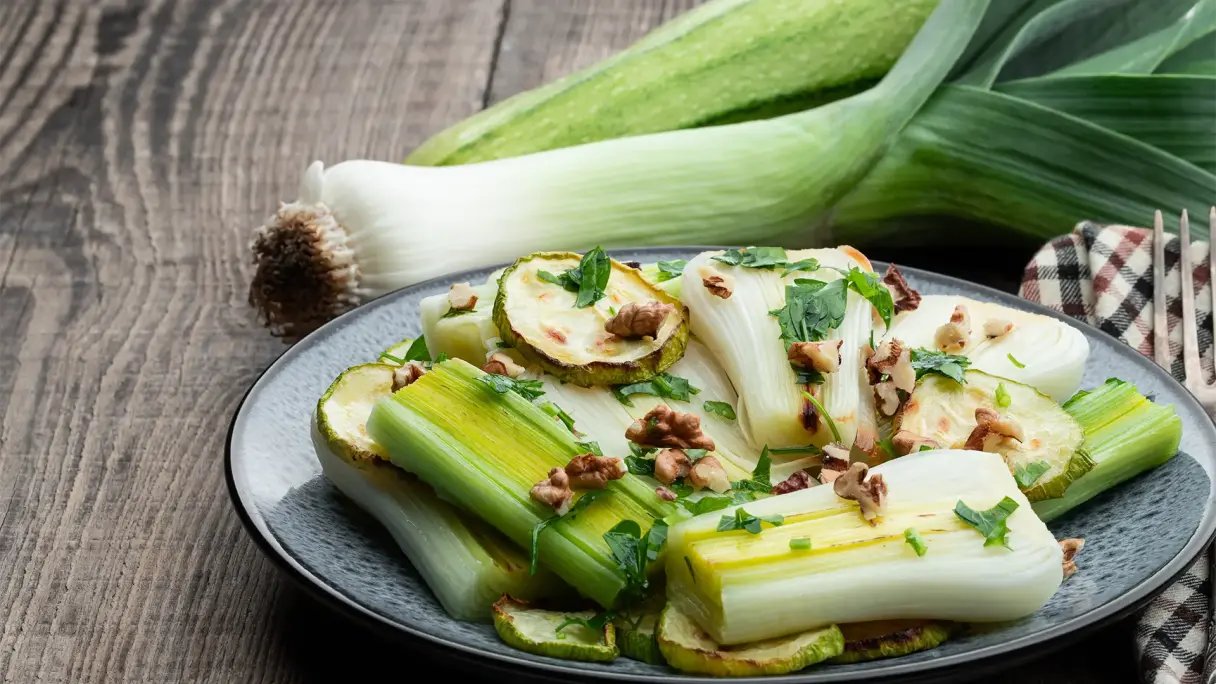
Leeks and their anti-inflammatory effect
Leeks are not only a real all-rounder in the kitchen, but also a valuable part of a bowel-friendly and anti-inflammatory diet. Thanks to their high fibre content, they promote healthy digestionby supporting the intestinal flora and stimulating natural intestinal movement. Regular consumption of leeks can also help to prolong the feeling of fullness.
Secondary plant substances such as allicin, which have an anti-inflammatory effect and also strengthen the immune system, are particularly valuable. The folic acid they contain also support cell regeneration, which is particularly important for a gut-conscious diet.
Pickled leeks, a hearty vegetable preserve in a jar, are also a sustainable way to preserve leftovers and have them ready to hand at any time.
Raw leeks – healthy or poisonous?
Eating leeks raw sounds healthy, but many people wonder whether it is really safe. In principle, raw leeks are not poisonous and you can eat them raw without hesitation. For example, they can be finely chopped and eaten in salads, on bread or in a green smoothie.
Nevertheless, there are a few things to bear in mind. Raw leeks have an intense pungency due to the sulphur compounds they contain, such as allicin. These compounds are beneficial to health as they have an antibacterial and anti-inflammatory effect. However, raw leeks can lead to gastrointestinal discomfort, flatulence or an unpleasant aftertaste for sensitive people. So if you have a sensitive stomach, it is better to shortly steam or blanch leeks.
Another point is hygiene. Leeks often have soil and sand residues between their dense layers. They should therefore be washed thoroughly before being eaten raw. Make sure you use fresh leeks if possible, as longer storage can increase the nitrate levels. Nitrates are problematic in large quantities, especially for small children. So raw leeks are healthy as long as they are well cleaned, fresh and consumed in moderate amounts.
FAQ – leeks
Yes, leeks can replace spring onions, but with some caveats. The flavour of leek is more intense and spicy, especially when raw. When cooking, you can use the white end of the leek as an alternative, ideally in finely chopped form. In salads or as a garnish, spring onions are more suitable as they are milder and more tender. For hot dishes, such as stir-fries or soups, a swap is no problem.
Foods that are similar to leeks usually belong to the allium family (Alliaceae). These include primarily:
- Spring onions (milder, more tender)
- Onions (much more intense)
- Shallots (fine flavour)
- Garlic (strong flavour)
- Wild garlic (wild vegetable with similar flavour)
They all contain health-promoting sulphur compounds such as allicin.
*All specifications given are to be considered as guideline values, and depend in each case on the type of food and on the proper storage without interruption of the cold chain from harvest/production through to the Liebherr appliance. Should food products have information about minimum shelf life, the date on the packaging always applies.
This might also interest you
Spring onions – calories, vitamins and other nutritional values
Would you like to find out more about spring onions as a vegetable? In this article, you will learn all about the nutritional values, season and uses of the vegetable.
Wild garlic – the garlic alternative in spring
Are you curious about wild garlic as an alternative to garlic? Read on to find out all about its effects, vitamins and nutrients.
Storing fruit and vegetables – fridge or room temperature?
Find out how to store fruit, how to keep fruit flies away and how to store vegetables correctly.