Coconut and its nutritional values for your health
Coconut is on everyone’s lips. No wonder, because this stone fruit, which smells so aromatic and makes us dream of beaches, also has a lot to offer. Whether coconut flakes, coconut water or rich coconut milk, it is just the thing for connoisseurs! We reveal facts about coconuts, their nutritional values and tips on how to store them.
Storage time*
| BioFresh Fruit & Vegetable safe just above 0 °C with high humidity | 30 days |
| EasyFresh safe 7 °C with air regulation plate | 19 days |
| Fridge compartment 7 °C | 15 days |
| Freezer compartment -18 °C | 12 months |
The key points
- The coconut is the stone fruit of the coconut palm (Cocos nucifera) and has many uses, from coconut water to coconut oil.
- It contains approx. 37 % fat, 9 % fibre and 3–4 g protein per 100 g of flesh.
- With around 350–370 kcal per 100 g (fresh), it is high in calories.
- It also provides valuable vitamins and minerals such as biotin, manganese and B vitamins.
Coconut and its nutritional values: origin, ripeness and use of tropical fruit
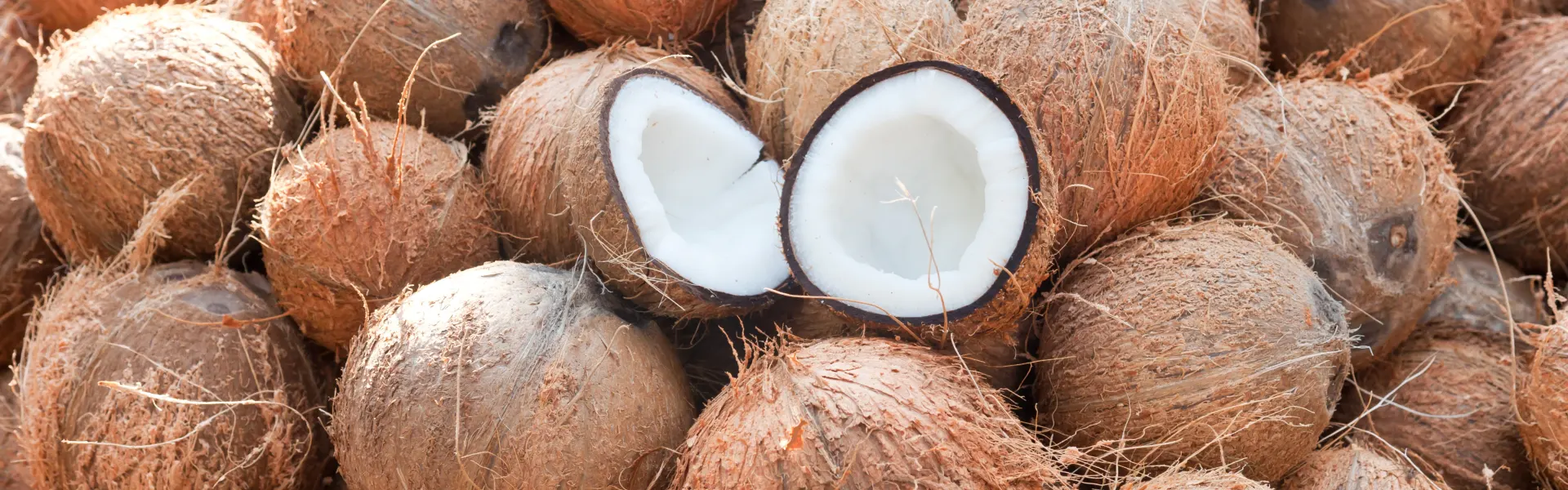
Let us now turn our attention to the coconut palm, which is an important cultivated plant in many tropical countries. Its botanical name is Cocos nucifera. It is the only species of the genus and belongs to the palm family. The fruit of the coconut palm – the coconut – is a drupe (stone fruit). One plant produces 50 to 80 nuts per year, which ripen on the palm for about a year. The fruit has a green, leathery skin, under which there is a layer that is initially fleshy and later fibrous. Underneath is the stone with a very hard shell and the characteristic three points, known as “eyes”. Outside the countries where they are grown, the healthy coconuts are usually sold shelled, so that the hard, fibrous nut shell is visible.
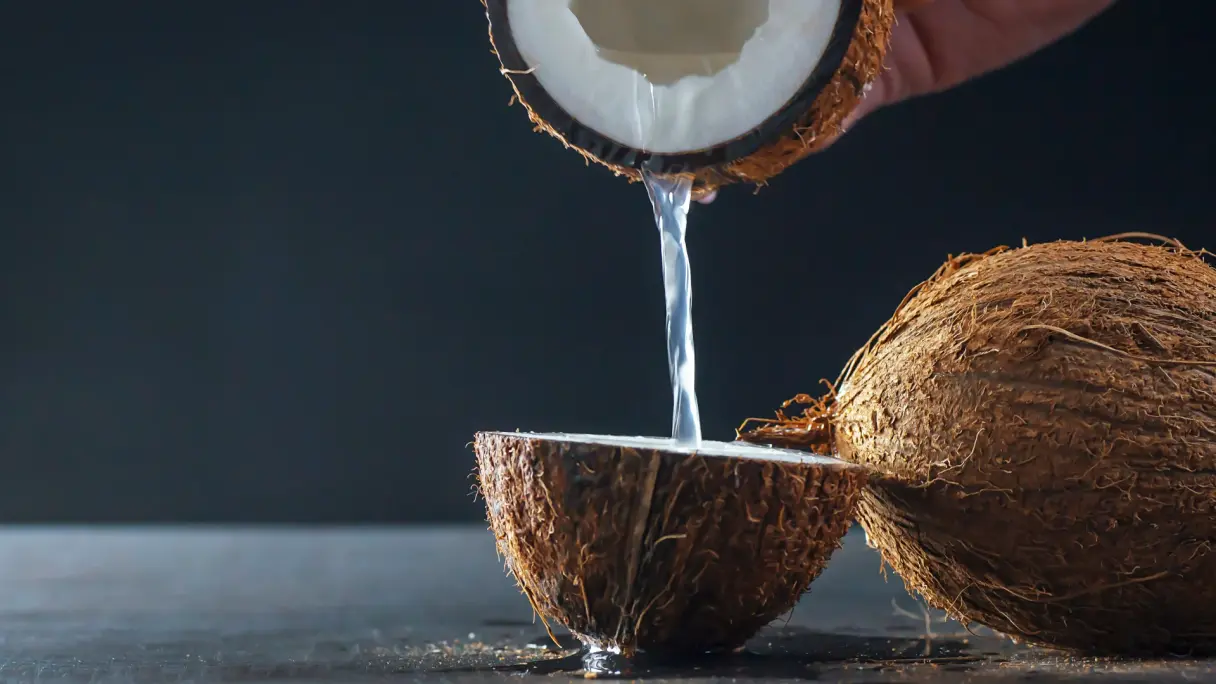
To find out if a coconut is ripe, all you have to do is pick it up and shake it. If the fruit feels heavy and you can hear the coconut water inside, you have found a good coconut. The background to this “shake test” is the coconut’s ripening process. The fruit contains fatty coconut water, in which a firm, white flesh gradually forms as the fruit develops. When the coconut is ripe, the fruit is now only half filled with coconut water.
Coconut water – the liquid inside the fruit – is often falsely referred to as coconut milk. However, coconut milk is obtained from the coconut pulp. The fruit pulp is puréed with water and then sieved; the result is coconut milk.
Coconut: nutritional values and shelf life
The popular coconut oil is obtained from the pulp of the coconut, as it contains about 37 % fat. But the fruit pulp is not only rich in fat: the drupe also contains 9 % fibre. In addition to fat and fibre, the fruit pulp also impresses with its moderate protein content: 3–4 grams per 100 grams of coconut. However, it is no lightweight when it comes to calories: Fresh coconut flesh provides approximately 350 to 370 calories per 100 grams – when dried, it can even contain over 600 calories. The vitamin and mineral content is also impressive: coconut contains biotin (vitamin B7), which is important for skin, hair and energy metabolism, as well as manganese, which is involved in bone formation and regulating blood sugar levels.
Whole coconuts stay fresh at room temperature for about 6 days, but with the right fridge technology, their shelf life can be significantly extended. The fruit will remain edible for up to 15 days in the normal fridgecompartment at around 7 °C. However, the coconut will stay fresh for much longer in Liebherr’s BioFresh Fruit & Vegetable safe: Thanks to a combination of high humidity and a temperature just above freezing, this special freshness compartment preserves the natural properties of the fruit particularly effectively. Here, coconuts can be stored for up to 30 days without losing any of their nutritional value. Grated coconut flesh that is packaged in an airtight container also benefits from this environment and stays aromatic and juicy for longer – ideal for sustainable storage.
*All specifications given are to be considered as guideline values, and depend in each case on the type of food and on the proper storage without interruption of the cold chain from harvest/production through to the Liebherr appliance. Should food products have information about minimum shelf life, the date on the packaging always applies.