Chickpeas: nutritional values and calories of these pulses
Chickpeas are becoming increasingly popular. Pulses have so many points in their favour that deserve greater attention. The nutritional values of chickpeas in particular are well worth a second look. We tell you how healthy chickpeas are and what valuable nutrients and vitamins the little pulses contain.
The key points
- Nutritious and healthy: Chickpeas provide plenty of vegetable protein, fibre and important minerals such as iron, magnesium, zinc and potassium – ideal for energy, nerves and the immune system.
- Important vitamins: particularly rich in B vitamins, especially folic acid, which is crucial for cell division and haematopoiesis.
- Filling: with 364 kcal per 100 g and little fat, chickpeas promote long-lasting satiety.
- Practical and safe: whether they’re dried or tinned, cooked chickpeas are safe and have a long shelf life.
Chickpeas and their nutrients – list of contents
Origin and nutritional values of chickpeas
People have grown chickpeas as a crop for more than 10,000 years and it is assumed that their origins are in Asia. They belong to the pulse family and are a faboideae plant. The beige, round, relatively large chickpeas are particularly well known. However, the diversity of chickpea varieties extends far beyond this type. There are for instance also black chickpeas, which are mainly cultivated in India.
Chickpeas are true nutrient bombs. They provide plenty of vegetable protein as well as numerous important vitamins and minerals. Particularly noteworthy is their high content of iron, magnesium, zinc and potassium – all minerals that play a central role in energy metabolism, nerve function and the immune system. Chickpeas also contain a good portion of vitamin B, especially folic acid (vitamin B9), which plays an important role in cell division and haematopoiesis. There is also plenty of fibre, which makes chickpeas a valuable food for digestion and long-lasting satiety. Chickpeas have 364 calories per 100 grams. Despite their high nutritional value, they are low in fat. If you regularly include chickpeas in your diet, you provide your body with many valuable micronutrients that are otherwise mainly found in animal products.
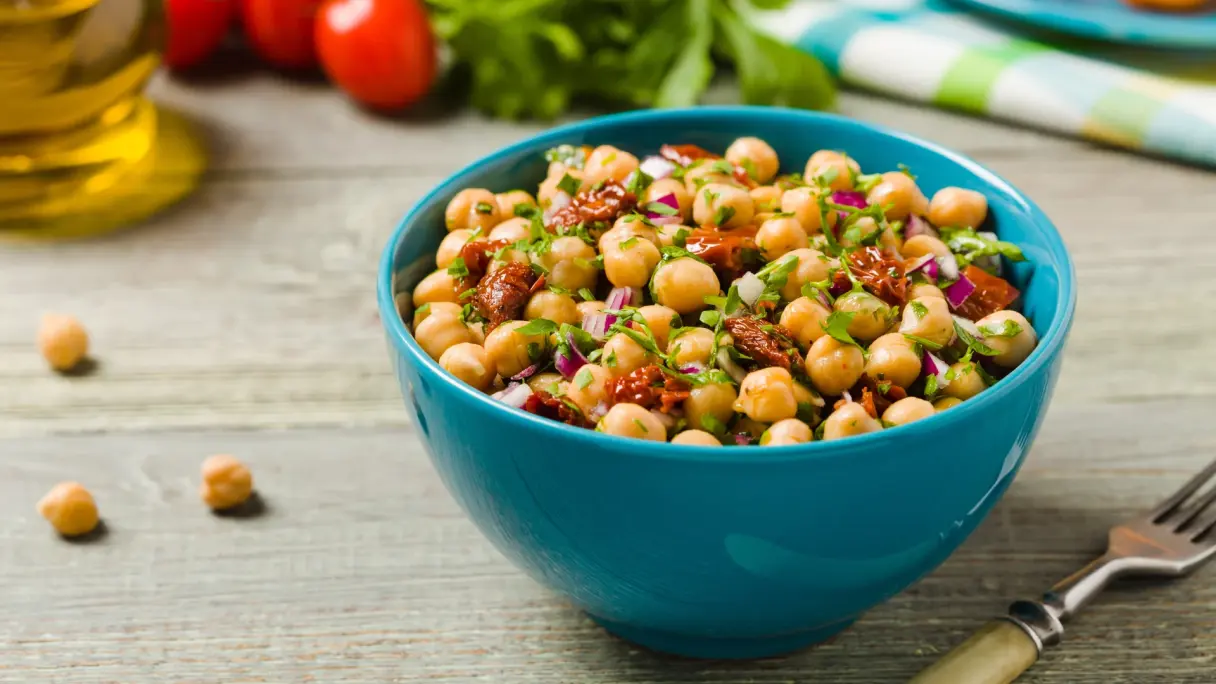
What contains more nutrients: tinned chickpeas or dried ones?
Chickpeas are particularly suitable for storing – either dried or cooked and then preserved in a jar or a tin. Both versions of chickpeas, along with their nutrients, keep for a very long time and are therefore a must-have in every pantry. However: the older the dried pulses are, the longer it takes to cook them. Dried chickpeas have to be soaked first, preferably overnight, and then cooked until they are soft, which takes up to three hours. Cook a larger portion of chickpeas so you only need to reach for the freezer the next time you need them. If you want to save time and benefit directly from the excellent nutritional values of chickpeas, you should reach for a jar or tin. If you don’t use a whole tin of chickpeas, they will keep for 1–2 days in the fridge.
Have you ever heard that chickpeas can be poisonous? The reason behind this is that many pulses contain toxic substances, such as lectins. However, these are denatured at high temperatures, which means that the lectin proteins in the chickpeas are destroyed during cooking. And as we only ever eat cooked chickpeas anyway, we don’t have to worry about poisoning.
Indigestible carbohydrates in chickpeas and other pulses, while not poisonous, can still be unpleasant. Some of these water-soluble carbohydrates can collect in the soaking water or liquid in the tin or jar and therefore this water should be drained off. This is because the carbohydrates our body can’t digest are broken down by gut flora – which is accompanied by gas forming, and as a consequence, stomach aches and flatulence. To benefit from the nutrients in chickpeas without any complaints, you should take this simple tip to heart.