



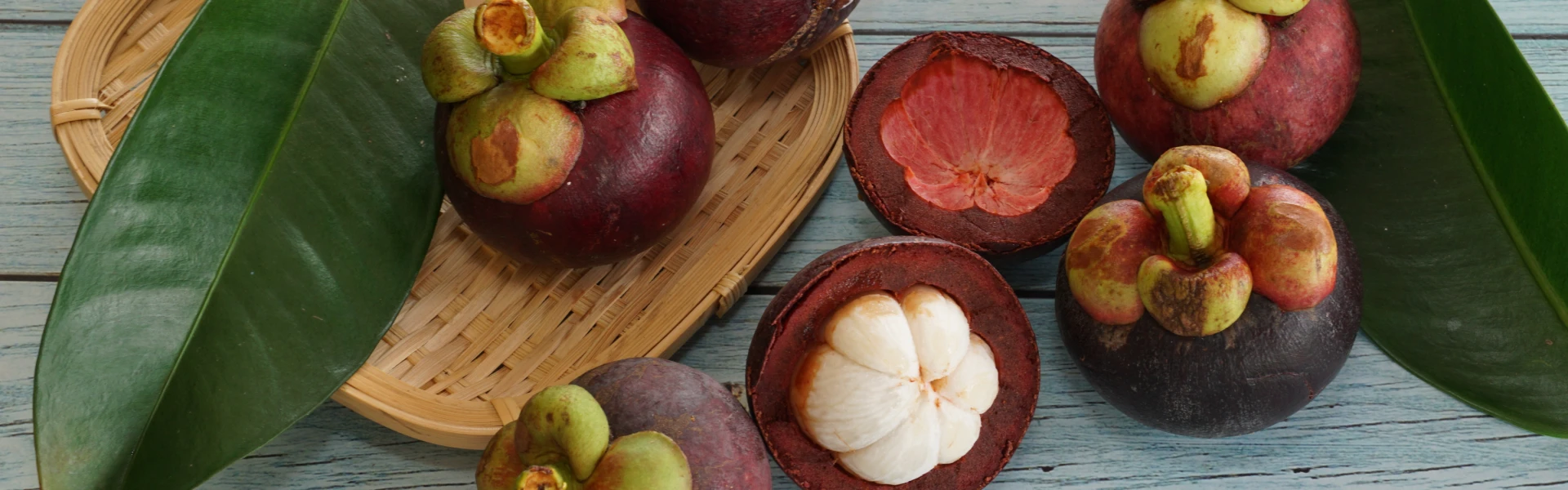
Mangosteen – an exotic tropical fruit with a unique flavor
The mangosteen is one of the best known exotic fruits from Southeast Asia, and is often called the “Queen of Fruits”. For centuries it has been regarded as a delicacy in its home region. Its thick, dark purple skin protects a light, subtle fruit that is vastly different to other tropical fruits. In addition to its delicate flavor, a lot of claims have been made about potential health benefits, which should be regarded cautiously. This article gives you an overview of the mangosteen and shows you how to work with this delicate fruit.
Storage time*
| BioFresh Fruit & Vegetable safe just above 0 °C with high humidity | Not recommended |
| EasyFresh safe 7 °C with air regulation plate | 10 days |
| Refrigerator compartment 7 °C | 8 days |
| Freezer compartment -18 °C | 12 Months |
The key points
- Mangosteen comes originally from Southeast Asia and grows in tropical trees.
- It has a thick, purple skin and soft, white fruit.
- Its flavor is sweet and sour, and very aromatic.
- Many of its claimed benefits have not been definitively proven by science.
- The fruit is usually eaten fresh and raw.
What is mangosteen and where does it come from?
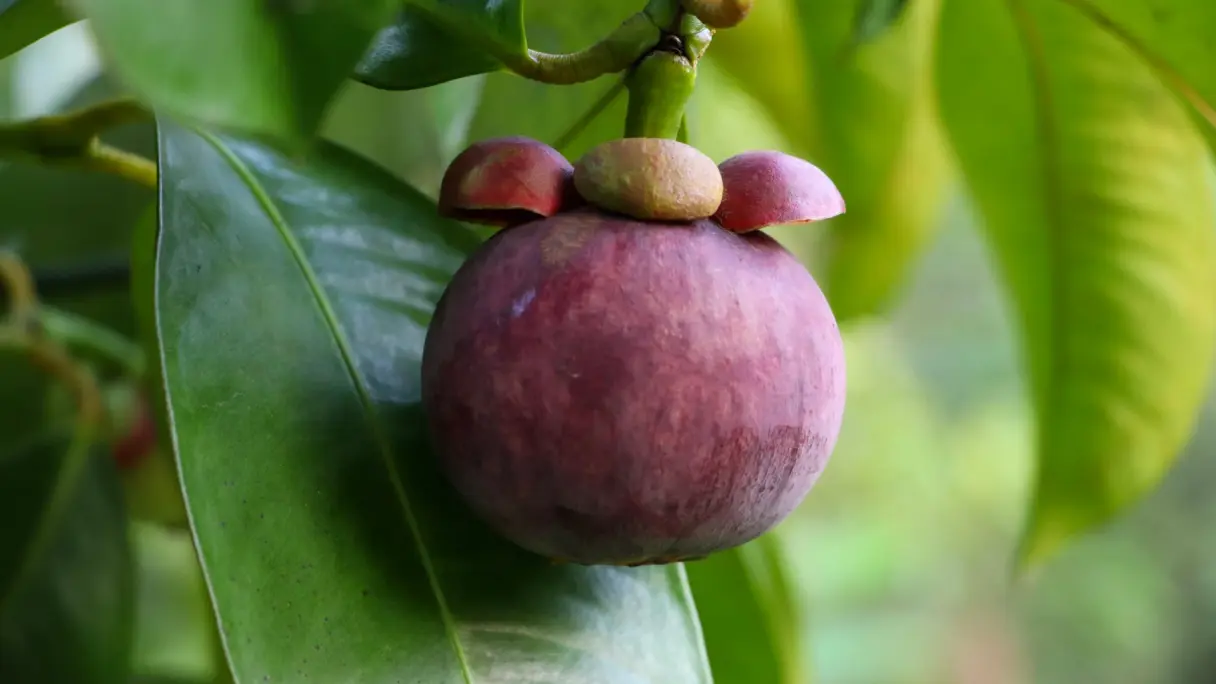
Mangosteen is the fruit of the tropical mangosteen tree (Garcinia mangostana), which is cultivated primarily in Thailand, Indonesia, and Malaysia. It is thought to originate in Indonesia Today it is found across large areas of Southeast Asia, with smaller cultivation areas in Brazil. The tree grows very slowly and often only bears its first fruit after eight to 15 years, which makes mangosteen a comparatively dear fruit.
Its appearance is striking with a hard, dark purple skin that protects the delicate fruit inside. Inside are several white segments, which are soft and juicy. Don’t be fooled by the name. They have no botanical relation to mangos. In Europe the mangosteen is available almost exclusively as an imported good, which means long transport routes and limited availability.
How healthy is mangosteen really?
Mangosteen is often seen as healthy or even as a superfood. However, science has not confirmed this. The fruit does indeed contain vitamin C, fibre, potassium, magnesium, and antioxidant plant substances, but not in greater quantities than other fruits. Often xanthones are cited, which may contain antioxidant and anti-inflammatory properties. This substance is, however, primarily to be found in the bitter skin, which is not eaten.
Even in relation to the skin, potential benefits are debated: antioxidants may help protect against free radicals, while vitamin C aids normal collagen formation. As such, mangosteen extracts are sometimes used in cosmetic products. Reliable scientific studies into a direct effect on the skin have so far been limited.
A lot of the research also relates to laboratory experiments and isolated substances, and does not directly relate to eating the fruit. So health claims in advert slogans have not been clearly proven in humans. The mangosteen is an aromatic fruit, not a medicine in food form.
When is a mangosteen ripe and how can you tell the quality?
Ripeness plays a central role in taste and consistency for mangosteen. Ripe fruit has dark violet to purple skin.If the skin gives slightly when you poke it, this means the inside is juicy. Very hard skins can indicate a mangosteen that isn’t ripe or has been stored for too long. Even the tiny leaf at the top should be fresh and green.
The shelf life of the fruit is limited, so you should eat it soon after buying it. In Europe, fresh mangosteen isn’t available all year round, which also limits buyers’ choice. Carefully examine the outside to avoid sacrificing quality and to ensure you can fully enjoy the flavor of the fruit.
How to eat mangosteen and enjoy its sweet and sour flavor
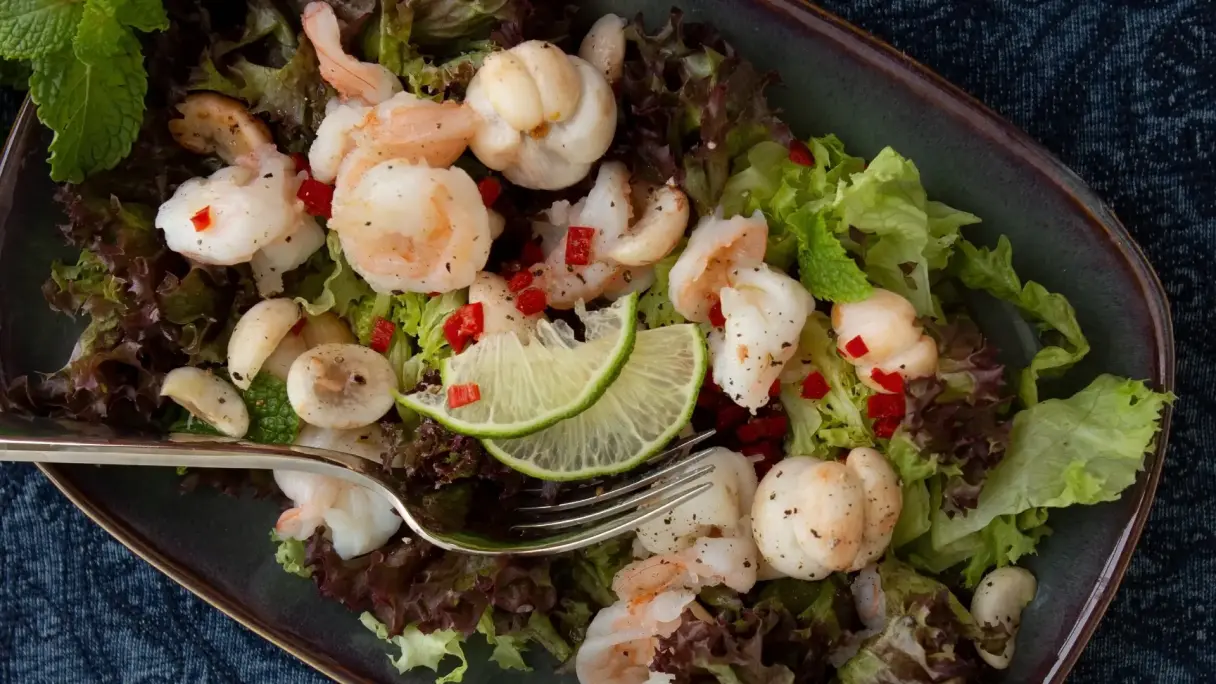
Mangosteen is almost always eaten raw and fresh. Before eating, wash the fruit and then carefully slice open the thick skin using a knife, and pull it apart. The white flesh can be easily scooped out. Don’t eat the larger seeds.
The mangosteen tastes sweet and sour, very aromatic, and subtle. Often the flavor is described as a mixture of peach, lychee,pineapple, and strawberry. The consistency is soft, juicy, and subtle. In addition to enjoying it on its own, the fruit works well in fruit salads, desserts, smoothies, and exotic bowls. The skin is not eaten raw, as a rule.
*All specifications given are to be considered as guideline values, and depend in each case on the type of food and on the proper storage without interruption of the cold chain from harvest/production through to the Liebherr appliance. Should food products have information about minimum shelf life, the date on the packaging always applies.
This text has been machine translated from English.