
Aluminum foil and food: useful or harmful?
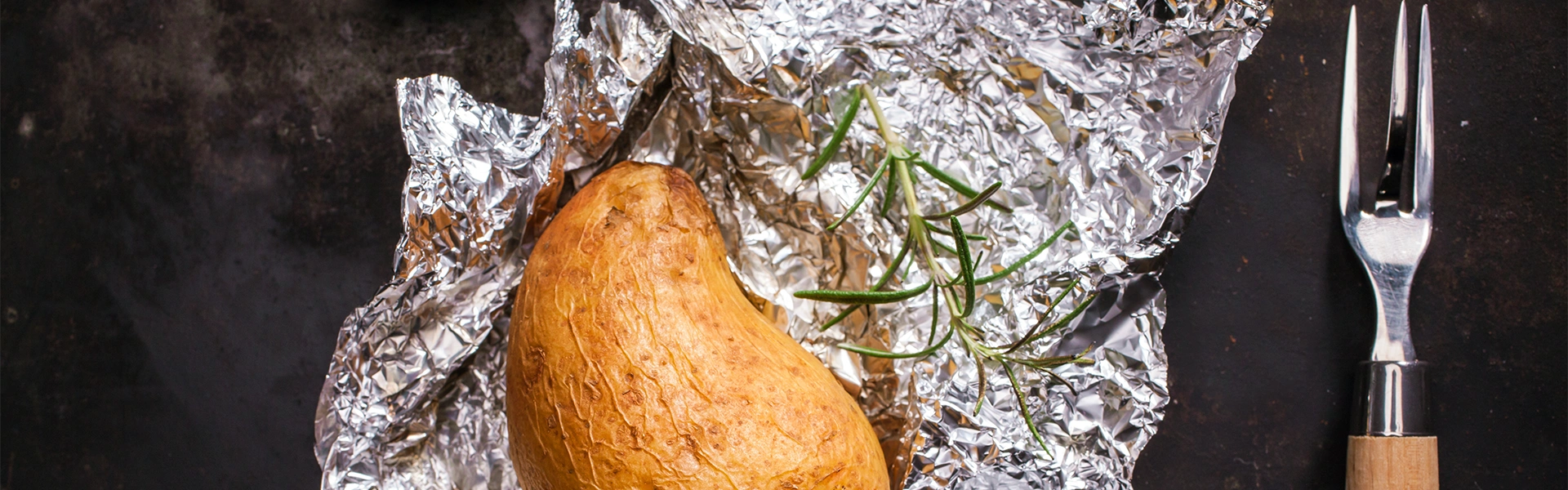
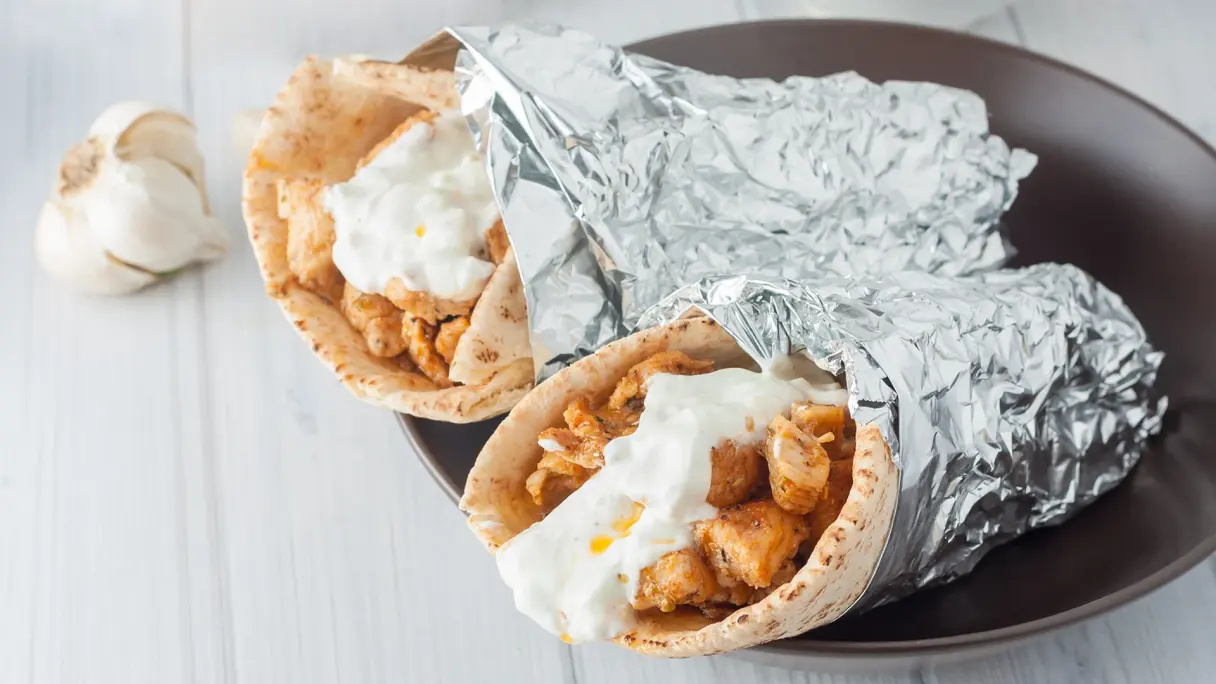
Aluminum foil is a familiar sight at a summer barbecue – there’s the vegetables wrapped up in aluminum foil and the leftover dips and sausages which end up in the refrigerator covered with aluminum foil. Aluminum foil is without doubt convenient and, for decades, has been much loved in the kitchen for good reason. But should aluminum foil be used in the kitchen without restriction? We've put together some useful information for you on this topic.
The key points
- Aluminum foil is made from the aluminum ore bauxite, whose extraction is land-intensive and leaves behind toxic residues (“red sludge”).
- When you buy your foil, you should choose recycled aluminum foil.
- Aluminum foil is impermeable to oxygen and moisture.
- Salty, strongly acidic and alkaline substances and contact with other metals promote chemical corrosion of the aluminum foil, posing health risks.
- Alternatives to aluminum foil are air-tight containers, covering food with plates or using wax cloths.
- Grill trays help to reduce harmful substances. If you use aluminum trays, make sure they don’t come into contact with salt or acidic or alkaline substances.
In the beginning there was ... bauxite.
Bauxite is an aluminum ore, i.e. a mineral containing metal found in the Earth's crust. In the large bauxite deposits in Australia, West Africa and China, large-scale machinery is used to strip away the Earth's surface in order to extract the ore. As with all non-renewable raw materials, the Earth's reserves are limited, and this is also the case with bauxite, the raw material for aluminum. This, as well as the land-intensive mining of the ore and the resulting “red sludge” which must be deposited in landfills, are aspects repeatedly referred to by environmentalists when it comes to aluminum. A greatdeal of energy is also required to extract aluminum from bauxite ore. Almost 15,000 kilowatt hours of electrical energy are required to extract a single tonne of aluminum.
On the other hand, one positive aspect is that aluminum is fantastic when it comes to recycling. For environmental reasons, our first tip is therefore to always look out for recycled aluminum foil when shopping. Using aluminum foil sparingly also helps to conserve the resource of bauxite.
From the earth’s surface to the plate: aluminum foil
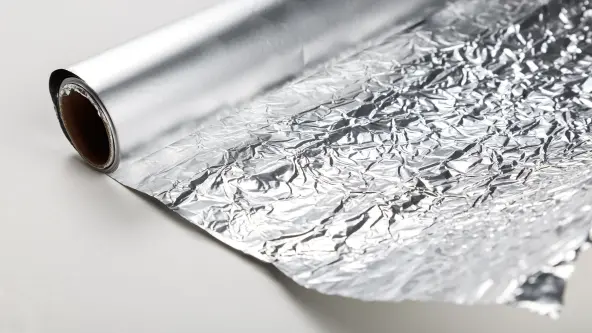
The extracted aluminum is rolled thinly and heated in factories until we get the aluminum foil we’re familiar with. Aluminum is very popular in the food packaging industry. The foil has two important properties: it is impermeable to oxygen and moisture. That’s why a thin layer of aluminum is used in many types of packaging to extend the shelf life of food. This applies to coffee bags, packet soups, crisp packets, juice cartons and cans.
Oxygen and moisture are extremely important factors influencing food spoilage as it is these factors which the spoilage organisms need for their growth. If we deprive them of oxygen and moisture, we prolong the shelf life of the food. In addition, we preventoxidation processes that make food inedible. Conversely, aluminum foil also helps to prevent moisture from escaping and, for example, keeps meat juicy.
When is it best to do without aluminum foil?
Aluminum foil can keep food fresh and flavorsome for longer, but also carries risks. One well-known problem is the corrosion of metals. In the case of iron we refer to this as rust, but a comparable process also occurs with aluminum. Under certain circumstances, aluminum constituents are released from the aluminum foil and may deposit themselves on the food. If we then consume the food, we ingest the aluminum into our bodies at the same time. The health risks associated with this are not yet fully understood. The debate concerns whether our nervous system is affected and whether there is an adverse impact on fertility and bone development. Since such serious implications cannot yet be ruled out, the German Federal Institute advises caution and that aluminum products be used correctly in combination with foodstuffs.
Salty, strongly acidic and alkaline substances and contact with other metals promote the chemical corrosion of aluminum foil. Example: wrapping up a sliced lemon in aluminum foil is not a good idea. However, less obviously acidic food should also not be wrapped in metal foil - For example, a slice of pizza with tomato sauce, salted food and snacks which come into direct contact with foil. Covering metal serving plates with aluminum foil should also be avoided as this can also cause aluminum ions to detach from the foil and get into the food. You can carry out a practical test yourself. Store sliced lemon wrapped up in aluminum foil for a few days and you will see the effect the acid has on the foil.
What are the alternatives to aluminum foil?
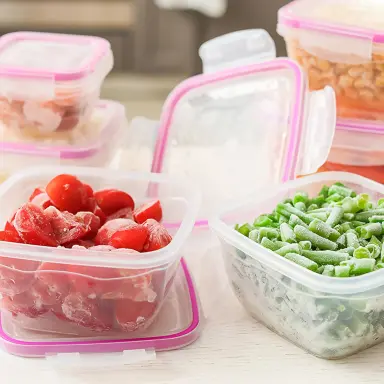
If you want to reduce the use of aluminum foil in your household, you have a number of options. Air-tight containers are the ideal replacement: they offer the same advantages as aluminum foil if they can be sealed in an airtight manner. They barely allow any moisture to escape from the container, oxygen to penetrate and keep the food fresh for a long time. They can also be used again and again and are therefore an environmentally friendly alternative to aluminum foil.
This old-school method also works: simply cover cooked food with a plate and put in the refrigerator. This alternative is not airtight, but if the meal leftovers are eaten the next day anyway, then this is a simple option.
Have you heard of the wax cloth trend? For some years now, wax cloths have been available as an alternative to cling film and aluminum foil. But you can also make these practical wax cloths yourself. Take a washed piece of cotton, spread small pieces of beeswax on it and – protecting it with baking paper - melt the beeswax with an iron. Once the wax has set again, the home-made wax cloth is ready. It can now be used as a clever substitute for aluminum foil - for wrapping up a sandwich for example. A home-made wax cloth is also a great gift idea.
Is barbecuing on aluminum containers a good idea?
Meat, fish and vegetables are often wrapped in aluminum foil or placed in aluminum trays on a charcoal barbecue. Grill trays help prevent fat from dripping into the embers. This avoids harmful substances known as PAHs (polycyclic aromatic hydrocarbons). These substances are carcinogenic and should be avoided. Although aluminum trays are one solution, barbecued food should only be salted and sprinkled with lemon juice after the barbecuing. This will minimize the release of aluminum ions from the foil or trays.
This might also interest you
Vegetarian barbecuing – delicious alternative to meat and fish
Discover delicious vegetarian barbecuing recipes! Delicious grilled vegetables, marinades and creative tips for a healthy barbecue party with no meat.

Freezing without plastic using these alternatives
Freezing without plastic: discover sustainable alternatives such as glass, stainless steel and wax wraps to keep food fresh in an environmentally friendly way!
Freezing: it’s all about the packaging
Find out what you should look out for when choosing the packaging to freeze food in. Discover the most important criteria such as food safety, cold resistance and leakproofness to avoid freezer burn and preserve the freshness of your food.